
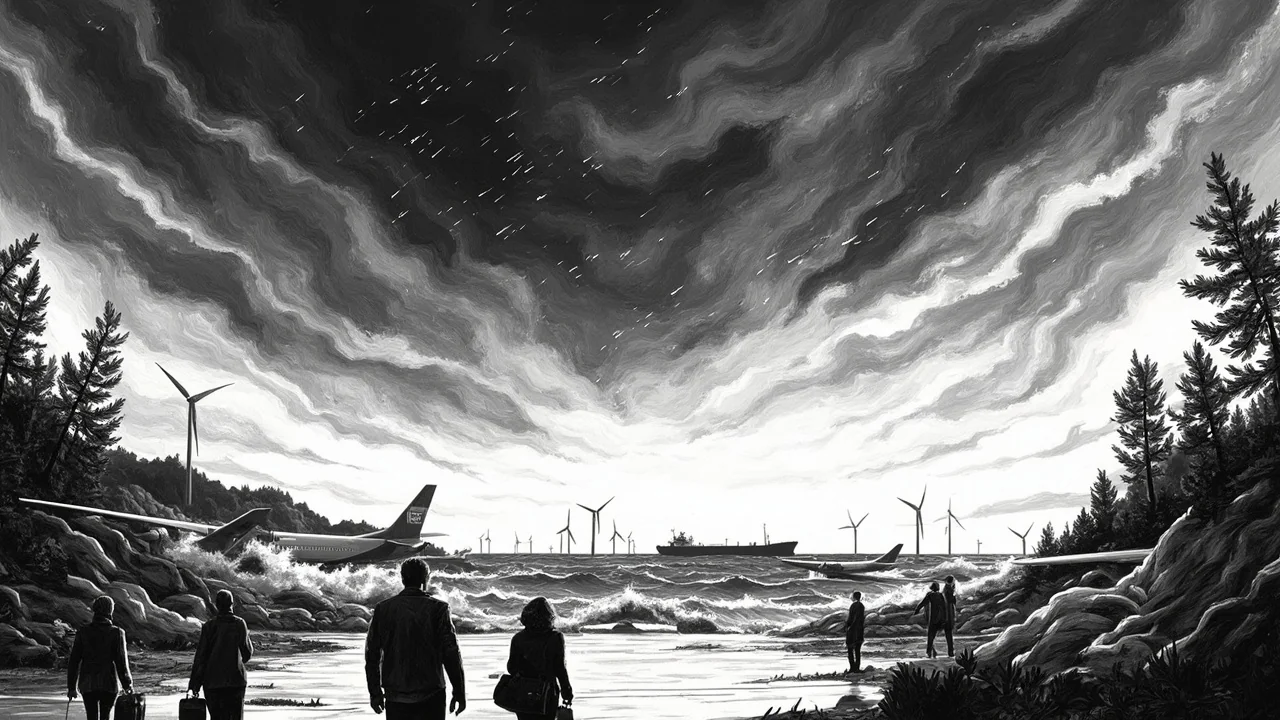
Norway's western coast faces severe travel disruption as a powerful storm system cancels over 40 commercial flights and delays critical North Sea helicopter traffic. The storm, bringing wind gusts forecast to reach 40 meters per second, has grounded flights at Bergen's Flesland Airport and Stavanger's Sola Airport, stranding passengers and impacting international routes to Frankfurt and Copenhagen. Simultaneously, energy giant Equinor reports significant delays to offshore helicopter services, a vital link for the nation's oil and gas industry, though it urges offshore workers to report for travel as scheduled.
A Region Grounded by the Elements
The cancellations began early Monday, targeting both domestic and international routes. At Stavanger Sola, approximately ten arrivals and departures were scrapped. Bergen Flesland saw a similar pattern, with multiple flights removed from the schedule. The disruption highlights the vulnerability of coastal infrastructure to North Atlantic weather systems. Passengers faced uncertainty, with airlines scrambling to rebook travelers on later services. The storm's timing, at the start of the work week, maximized its impact on business travel and logistics across the economically vital Rogaland and Vestland regions.
Meteorologists have issued a severe weather warning for the area, forecasting "little to full storm" conditions along the coast and in the mountains. The core threat is the wind, with the potential for extremely strong gusts. In a contrasting alert, the outer parts of Agder county to the south received an orange-level warning for heavy snow, with up to 40 centimeters predicted in some locations. This creates a bifurcated crisis: a wind-lashed west coast and a snow-buried southern coast, testing the response capabilities of local and national authorities.
The Ripple Effect on Norway's Economic Engine
The storm's impact extends far beyond airport terminals. Equinor's announcement of delayed helicopter traffic to North Sea platforms is a significant development with economic implications. Helicopters are the primary means of transporting personnel to and from offshore installations. Any prolonged disruption can affect shift changes, maintenance schedules, and ultimately, production stability. While Equinor stated operations were continuing, the delays introduce a risk factor for the tightly coordinated logistics of offshore energy production.
This event underscores a critical tension in Norwegian policy: the nation's commitment to its oil and gas sector, a cornerstone of its wealth, is inherently tied to operating in one of the world's most challenging maritime environments. The safety protocols that halt flights and helicopter services are non-negotiable, but each cancellation carries a financial cost. It serves as a real-time reminder of the physical challenges facing Norway's offshore industry, even as political debates in the Storting focus on the sector's future in a greener economy.
Infrastructure and Preparedness Under Scrutiny
Norway is no stranger to harsh weather, and its aviation and offshore industries have robust safety cultures built around it. The immediate cancellation of flights is a standard precautionary measure, prioritizing passenger and crew safety above all else. However, repeated or prolonged disruptions can strain the system and raise questions about resilience. Analysts note that while individual storms are weather events, their cumulative impact on transportation networks and economic activity is a climate-related concern for planning authorities.
For residents of the affected counties, the storm is a major inconvenience. For local businesses, especially those reliant on tourism or just-in-time deliveries, it can mean lost revenue. The concurrent snow warning in Agder further complicates the national picture, potentially blocking roads and isolating communities. The varied nature of the warnings—extreme wind in one region, extreme snow in another—demonstrates the complex forecasting challenges posed by Norway's long coastline and varied topography.
The Human Element of the Disruption
Behind the statistics of canceled flights are hundreds of individual plans upended. Travelers bound for business meetings, family visits, or connecting international flights found themselves in limbo. At the airports, customer service staff worked to manage queues and provide information, while airline operations teams adjusted crew rotations and aircraft placements. Offshore, workers awaiting transport to or from platforms faced extended waits, impacting their carefully planned rotations and time at home.
The directive from Equinor for passengers to report at the usual time, despite known delays, is a standard procedure to maintain order and ensure personnel are ready when weather windows open. It reflects the industry's operational mindset, where schedules are fluid and dictated by the sea state. This creates a unique form of travel anxiety, distinct from that of commercial airline passengers, where delays are measured not in hours but potentially in days.
Looking Ahead: Recovery and Resilience
The immediate focus for authorities is on safety and managing the disruption until the storm passes. The Norwegian Meteorological Institute will continue to update its warnings, which guide all operational decisions. Airport operators will work to clear backlogs as soon as conditions permit, a process that can take 24-48 hours after a major weather event. For the offshore sector, the return to normal helicopter traffic is equally weather-dependent.
In the longer term, events like this feed into ongoing discussions in Norway about infrastructure hardening and climate adaptation. While not directly attributable to climate change, the intensity of North Sea storms is a key area of scientific study. For a nation whose economy and identity are so linked to its coastline and adjacent seas, understanding and mitigating these risks is paramount. The canceled flights and delayed helicopters are more than a day's news; they are a snapshot of the environmental forces that will continue to shape life and business in Norway for decades to come. The true test is not just weathering this storm, but preparing for the next one.