
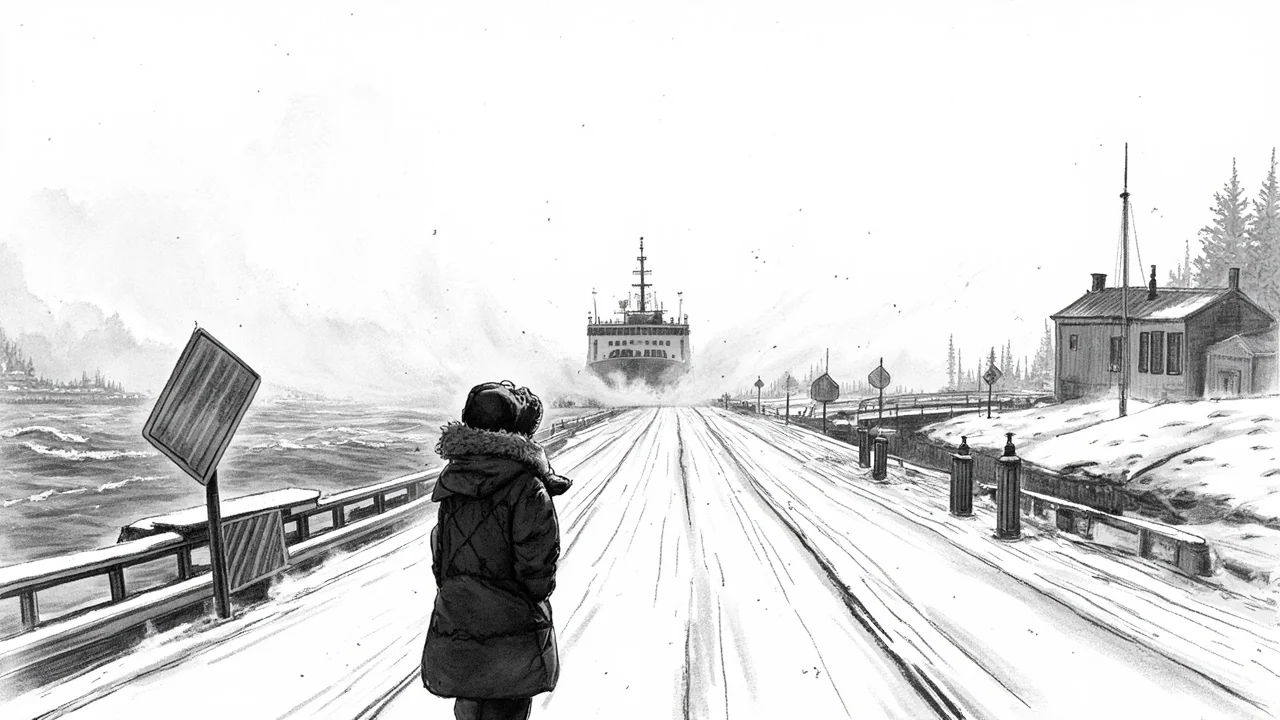
Norway's transportation network is reeling from a severe Arctic storm that has forced the closure of at least 10 major roads and cancelled numerous ferries and flights. Gale-force winds exceeding 50 meters per second were recorded overnight, triggering avalanche risks and widespread disruptions across Western Norway. Key infrastructure including the Hardanger Bridge and Sotra Bridge face imminent shutdowns, while mountain passes like Vikafjellet are already impassable.
Transport authorities have issued urgent warnings for travelers to avoid non-essential journeys. "Even with above-zero temperatures, conditions can still be dangerously icy," cautioned traffic operator Rolf Einar Vågheim in a morning statement. The Norwegian Public Roads Administration reports that wind conditions are expected to worsen throughout Monday, with additional closures likely.
Critical Mountain Passes Shut Down
Route 13 over Vikafjellet mountain is completely closed after a snow avalanche hit the Lodalen area near Bødalen. County Road 50 between Hol and Aurland is also blocked, isolating several communities in the inner fjord regions. On the E134 Haukelifjell and Route 7 Hardangervidda, convoy driving is mandatory for all vehicles—a rare measure indicating extreme hazard levels.
These closures disrupt vital east-west corridors connecting Oslo to Bergen and Stavanger. The Vikafjellet pass alone carries approximately 3,000 vehicles daily during peak seasons, highlighting the economic impact. Avalanche control teams are on site assessing the slide, but reopening timelines remain uncertain.
Ferry Cancellations Strand Coastal Communities
Multiple ferry services along the Vestlandet coast are suspended indefinitely. The strong winds and high wave heights make operations unsafe for both passenger and car ferries. This paralyzes island communities reliant on maritime connections for supplies and commuting.
Ferry cancellations in regions like Hordaland and Sogn og Fjordane often precede longer supply chain issues. Fresh produce deliveries to coastal towns may be delayed, and medical transport requires emergency coordination. Local officials are advising residents to monitor updates from the Norwegian Coastal Administration.
Air Travel Chaos Hits Regional Airports
Bergen Airport Flesland has cancelled several domestic flights, including two SAS departures to Stavanger. At least three inbound flights from Stavanger are also grounded. Regional airports in Sogndal and Florø report significant delays and cancellations, with one Florø-to-Bergen flight postponed by three hours.
Aviation authorities attribute the disruptions to crosswind limits exceeding safety thresholds. "When winds reach this magnitude, even modern aircraft cannot guarantee safe takeoff and landing," explains a veteran pilot familiar with Nordic conditions. The backlog could affect thousands of passengers as airlines reschedule services.
North Sea Energy Operations Disrupted
Equinor has announced delays in helicopter traffic to North Sea oil platforms due to challenging weather conditions. The state energy giant advises all passengers to arrive at terminals as scheduled, but acknowledges that flights may be postponed. This impacts shift changes for offshore workers and could subtly affect production logistics at fields like Statfjord and Troll.
Heliport services from Bergen Flesland and Florø have cancelled today's tours, indicating that search-and-rescue readiness is also heightened. Norway's offshore industry maintains strict safety protocols during such storms, often rerouting supply vessels away from the worst conditions. Any prolonged disruption might influence daily extraction rates in Europe's second-largest gas supplier.
Government Response and Infrastructure Resilience
The Norwegian Water Resources and Energy Directorate (NVE) has activated its emergency monitoring systems. While no national crisis level has been declared, local traffic centers are operating with increased staffing. The Directorate for Civil Protection (DSB) emphasizes that municipalities have pre-storm plans for isolated communities.
This event tests Norway's much-vaunted infrastructure resilience. The country invests heavily in avalanche protection and wind-resistant bridge design, yet Arctic storms remain unpredictable. "Our mountain roads are engineered for harsh weather, but nature still holds the upper hand," says a Storting transport committee member. Parliament recently approved additional funding for climate adaptation on national routes.
Analysis: Climate Pressures on Arctic Networks
As Norway's correspondent, I see this storm as part of a broader pattern. Increasingly frequent extreme weather events challenge the durability of transport links crucial for both tourism and industry. The Hardanger Bridge—a key tourism artery—facing closure highlights vulnerabilities in regions promoting year-round travel.
The oil sector disruptions underscore how North Sea operations remain at nature's mercy. Equinor's contingency plans are comprehensive, but persistent bad weather could necessitate discussing strategic reserves with European partners. Norway's role as a stable energy supplier faces environmental pressures beyond geopolitical ones.
Looking ahead, the Transport Ministry may accelerate plans for alternative routes or tunnel expansions. Projects like the proposed Ullandhaug tunnel near Stavanger gain urgency when existing passes close for days. Climate models suggest stronger winter storms for Western Norway, prompting debates on infrastructure spending versus green transition priorities.
For now, authorities urge caution. The storm's full economic impact will emerge once winds subside and damage assessments begin. Norway's ability to recover quickly will depend on coordinated efforts between national agencies and local responders. Travelers should expect lingering disruptions even after the weather clears.