
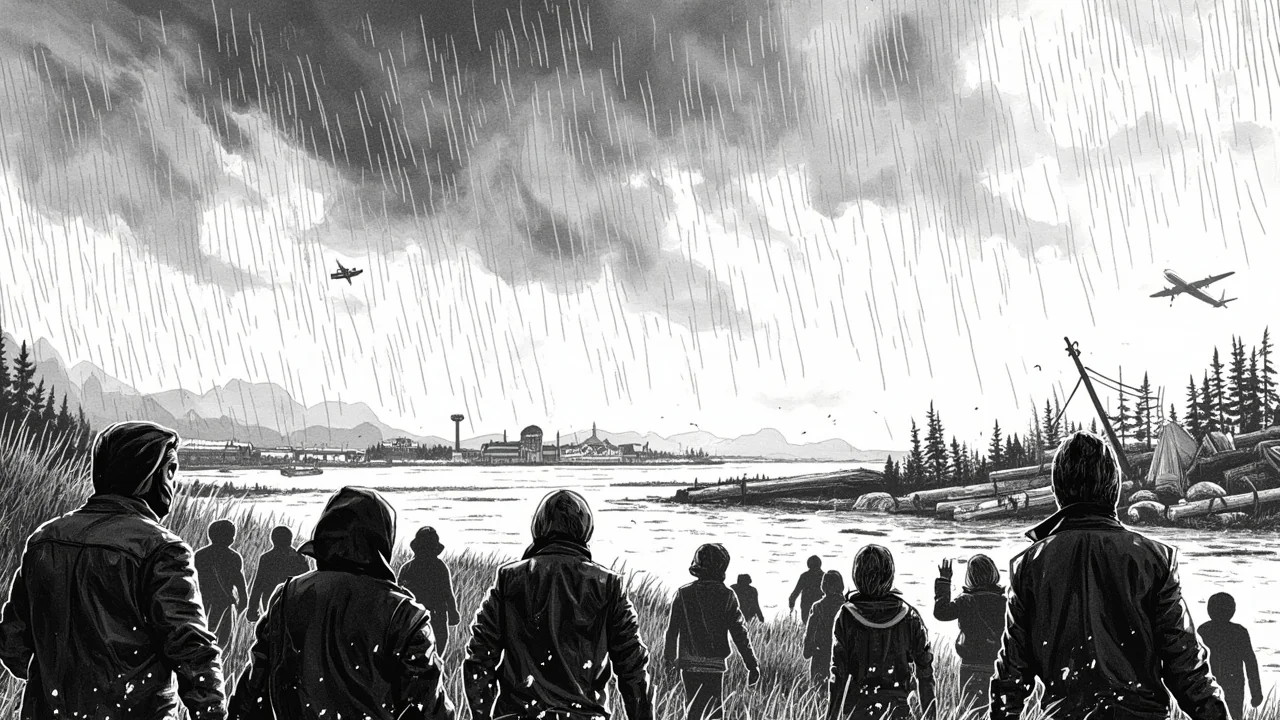
Norway’s aviation network is battling severe disruptions as a powerful storm slams the Vestlandet region. Over 50 flights, including key SAS services to Stavanger and Widerøe connections to Florø, were canceled or delayed Monday morning. The storm, with gusts reaching hurricane force at higher altitudes, has grounded aircraft, triggered a dangerous log spill, and caused localized property damage, exposing the vulnerability of critical infrastructure to extreme weather.
Chaos at Coastal Airports
Airline operations entered a state of flux as meteorologists tracked the intense low-pressure system. A SAS flight to Stavanger and multiple regional Widerøe services, including the route between Bergen and Florø, were abruptly canceled. Widerøe’s press officer, Lina Lindegaard Carlsen, confirmed one aircraft was stranded at Hovden airport near Ørsta due to the conditions. She described the operational challenge with pragmatic clarity. ‘We have learned that with this exact weather, we must make ongoing evaluations,’ Carlsen said. ‘Suddenly, a small pocket of calm might appear that allows us to take off after all.’ This statement underscores the minute-by-minute decisions airlines face, balancing safety with the pressure to maintain connectivity for remote coastal communities reliant on air links.
The meteorological data paints a picture of a formidable storm. Susanne Moen Olsen, a duty meteorologist at StormGeo, reported sustained powerful winds continuing for several hours. At 4 a.m., a gust of 29.5 meters per second was recorded at Florø airport. While not a record, the storm's peak intensity was severe. ‘The strongest wind in the country is at the top of Folgefonna, with a gust of 55.9 meters per second,’ Olsen noted. That measurement equates to hurricane-force winds. Such conditions make take-offs and landings, particularly for the smaller turboprops serving regional routes, impossible and unsafe.
Ripple Effects Beyond the Tarmac
The storm’s impact extended far beyond airport terminals. In Bergen, the city’s fire department was dispatched to Lars Hilles gate. A large scaffolding cover on a building had torn loose and was flapping dangerously in the high winds. Acting watch manager Frode Eide reported the structure was stable but required urgent securing by construction workers. Separately, police opened an investigation after an empty car parked below residential buildings burst into flames around 2:30 a.m. The vehicle was completely destroyed, and a nearby car suffered significant heat damage. The cause remains undetermined, though high winds can exacerbate electrical faults or spread accidental fires.
A particularly hazardous situation developed in Osterfjorden. Approximately 40 cubic meters of timber—a significant volume—spilled into the fjord from the Eknes timber quay on Sunday. Robert Sævereid, the duty port inspector for Bergen Harbour, explained a timber retaining structure gave way. ‘It’s scary stuff. You can’t see it in the dark,’ Sævereid warned the public, advising extreme caution for boat traffic until daylight allowed for a cleanup operation. Such spills pose a serious navigational hazard and an environmental risk, with logs capable of damaging vessels and littering shorelines.
The Infrastructure Stress Test
This event acts as a real-time stress test for Norway’s transport and logistics infrastructure. The immediate aviation disruption highlights a critical dependency. For regions like Vestlandet, where geography makes air travel essential, prolonged cancellations can isolate communities, delay business, and hinder emergency medical transport. The response from emergency services—fire departments securing urban hazards, police investigating incidents, and port authorities managing maritime dangers—shows a coordinated system under pressure. However, the log spill at a commercial quay points to potential vulnerabilities in industrial preparedness for such storms.
Experts note that while Norway is accustomed to harsh weather, the intensity and frequency of extreme events are a growing concern. Infrastructure, from scaffolding protocols in cities to the design of coastal storage facilities, must be evaluated for resilience. ‘We have learned we must make ongoing evaluations,’ Carlsen’s comment about flight operations can be applied more broadly. Municipalities, transport operators, and industries are forced into continuous risk assessment as weather patterns evolve.
Looking Ahead: Resilience and Adaptation
As the winds gradually subside, the focus shifts to recovery and lessons learned. Airlines will work to re-accommodate stranded passengers, a complex task given the network-wide ripple effects. Cleanup crews will address the log spill in Osterfjorden, and investigators will work on the car fire. Each incident, while localized, forms part of a broader pattern of climate-related disruption affecting a modern, industrialized nation.
The storm’s legacy may be its demonstration of interconnected risks. A weather system can simultaneously halt air travel, threaten urban safety, and create maritime environmental hazards. For Norway, a leader in environmental technology and sustainability, these events reinforce the need to integrate climate adaptation into every layer of planning—from urban construction sites and port logistics to the very flight schedules that bind the country together. The question moving forward is not if another such storm will hit, but how swiftly and effectively all sectors can adapt to an era where ‘ongoing evaluations’ become the permanent norm.