
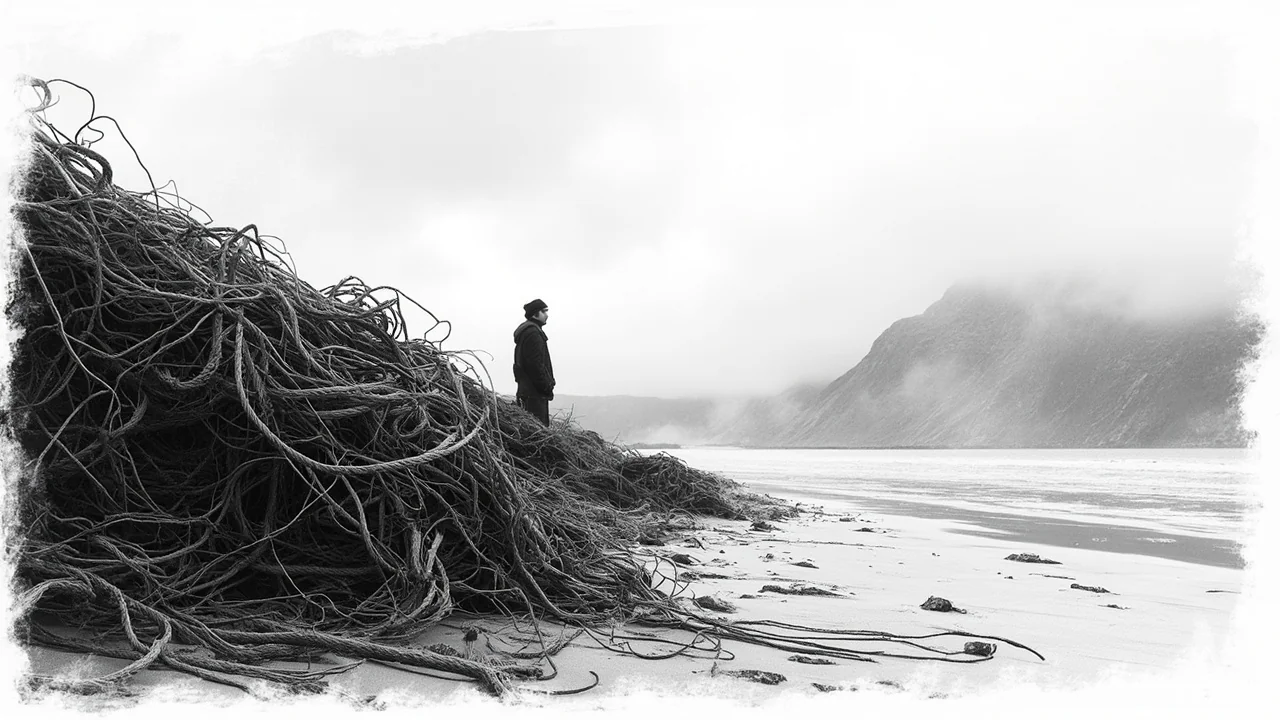
Norway's government has enacted new rules requiring producers of fishing gear to collect and recycle their waste, aiming to tackle a major source of ocean plastic. From January, manufacturers must ensure used nets, ropes, and traps are properly handled and bear the financial responsibility for their disposal. Climate and Environment Minister Andreas Bjelland Eriksen stated the move directly addresses the 46 percent of plastic waste on Norwegian beaches originating from fishing equipment.
"We are making it mandatory for all who produce this type of equipment to be part of a producer responsibility scheme," Eriksen said. "They are obligated to ensure the waste is handled. And most importantly: that we avoid this ending up on our beaches." The policy shifts the economic burden from municipalities and volunteer clean-up crews to the industry itself. Eriksen acknowledged this will be a cost for producers but framed it as a necessary investment against a far greater environmental price.
The Scale of the Problem
Norwegian coastlines, from the skerries of the Oslofjord to the remote shores of Finnmark, are littered with synthetic remnants of the nation's most important export industry. The minister's cited figure—46 percent—highlights a stark domestic accountability. While global images of ocean plastic often focus on consumer bottles and bags, in Norway, the debris is largely industrial. Ghost nets continue to trap marine life, and fragmented ropes and buoys wash ashore for decades.
This producer responsibility model is not new to Norway. The country has successfully applied similar systems to electronics, cars, and packaging. Extending it to fishing gear, however, strikes at the core of a traditional and economically vital sector. The policy covers manufacturers and importers, compelling them to establish or join a collective system for collection, transport, and recycling. Failure to comply will result in penalties.
Industry Costs Versus Environmental Debt
Minister Eriksen was clear that the new rules will impose direct costs on fishing gear producers. "This will be an expense for the producers, and Eriksen expects they will have to cover it," he stated. He contrasted this with the current, hidden cost borne by society and the environment. "It is also a great cost for our nature and for our environment today. All the plastic that ends up in the ocean ends up on our beaches. And that cost we must be willing to pay to avoid it in the future, and to manage to clean up better."
The economic logic follows the polluter-pays principle. By internalizing the end-of-life cost, the policy aims to incentivize innovation. Producers may seek to design gear that is more durable, easier to repair, or simpler to recycle. It could also spur development of new recycling technologies for complex materials like treated nylon nets. The alternative—leaving the cleanup to municipal budgets and non-profits—has proven insufficient against the relentless tide of lost and discarded equipment.
Implementation and Expected Challenges
The success of the scheme hinges on practical execution across Norway's vast and rugged coastline. Establishing efficient collection points in remote fishing communities from Lofoten to the Varanger Peninsula will be a logistical challenge. The system must be accessible for small-scale coastal fishermen as well as large industrial trawler operators. Another key question is recycling capacity. While some plastic from fishing gear can be processed into pellets for new products, the market for recycled maritime plastics is still developing.
Storting members from coastal districts have expressed cautious support, emphasizing the need for a system that does not unfairly burden fishermen themselves. The government insists the obligation lies with the producers upstream, not the end-users on the boats. However, there is concern that costs could be passed down the supply chain. Monitoring and enforcement will also be critical, requiring coordination between the Climate and Environment Ministry, the Norwegian Environment Agency, and coastal authorities.
A Broader Arctic Commitment
This national policy carries significance beyond Norway's territorial waters. Plastic pollution is a transboundary Arctic issue, with currents carrying debris across the Barents Sea. As a leader in Arctic policy and ocean governance, Norway's domestic actions set a precedent. The move aligns with its advocacy in international forums like the OSPAR Commission for the protection of the North-East Atlantic and the Arctic Council.
Reducing fishing gear pollution is also a matter of fisheries management. Lost gear, known as ghost fishing, kills fish and crustaceans indiscriminately, undermining sustainable stock management. By tackling waste, Norway is also protecting the long-term health of the fish stocks its economy depends on. This creates a rare alignment between environmental and commercial interests, though the initial financial imposition may be contested.
Analysis: A Necessary Step in a Blue Economy
This policy represents a maturation of Norway's approach to its blue economy. For decades, the nation has harvested the sea for oil, gas, and fish with immense economic success. The environmental consequences, however, have often been treated as an externality. By mandating producer responsibility for fishing gear, the government is forcing a key industry to account for its full lifecycle impact.
The move is politically astute. It addresses a visible problem that resonates with the Norwegian public, who have a deep cultural connection to the coast. Beach clean-up initiatives are popular volunteer activities. By targeting industrial plastic rather than consumer behavior, the government avoids political friction with the electorate while applying pressure to a concentrated industrial sector.
The real test will be in the measurable results. Will the 46 percent figure see a significant drop in the coming years? Effective recycling and a reduction in beach litter will be the ultimate metrics. The policy also opens the door to future expansions of producer responsibility, potentially to aquaculture equipment—another major source of maritime plastic. Norway's coastline is its front yard. This new rule is an attempt to stop the fishing industry from littering in it, finally making the sector pay for the mess it has long left behind.
Will this producer-pays model clean Norway's famed fjords and beaches, or will it become another well-intentioned regulation lost in the bureaucratic depths? The answer will wash ashore in the years to come.