
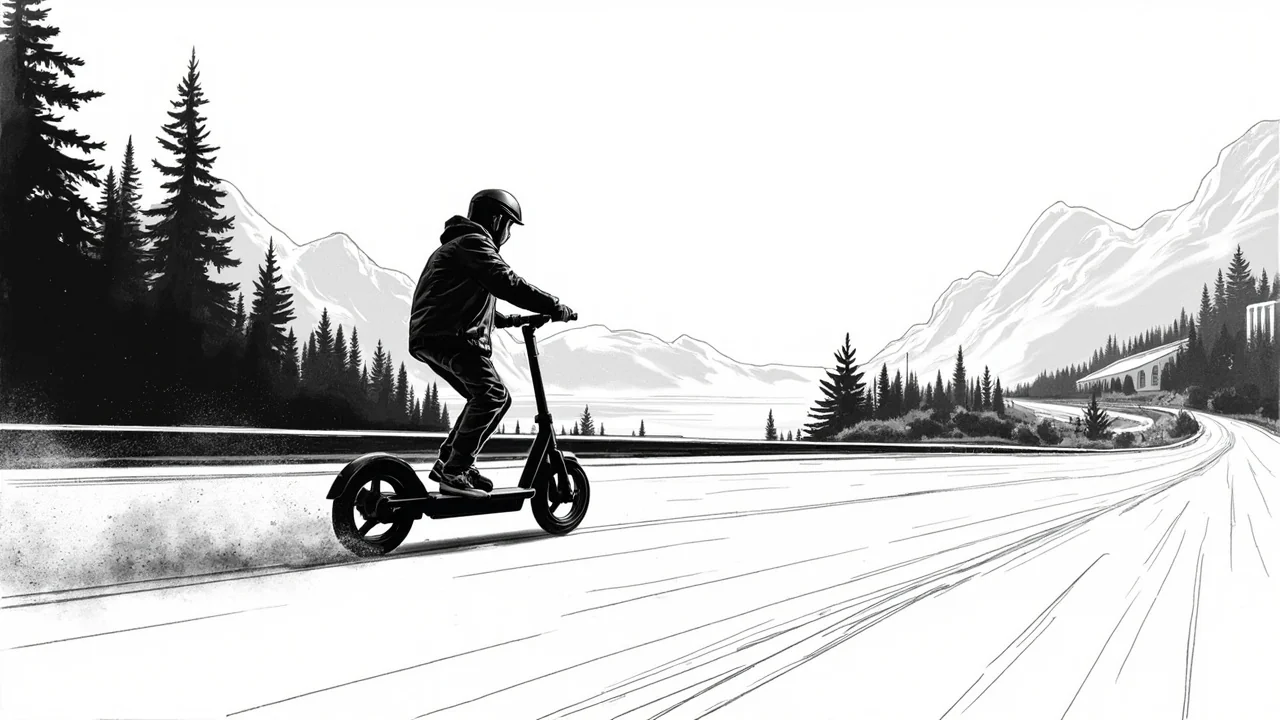
Norway police seized a high-speed electric scooter after three teenage boys were observed sharing a ride on one vehicle reaching an estimated 90 kilometers per hour in a residential zone. The incident occurred near the Vindafjord library in Ølen town centre, where the youths allegedly overtook other cars. Operations leader Steinar Knudsen confirmed police patrols stopped the scooter. 'The scooter has been confiscated and guardians have been notified,' Knudsen said. According to police, the boys were riding in an area with a posted speed limit of either 40 or 50 km/h.
A Dangerous Joyride in Ølen
The event unfolded in the municipality of Vindafjord in Rogaland county, a region familiar with stringent safety regulations for its maritime and energy industries. The contrast between the regulated industrial environments and this uncontrolled urban incident is stark. The police response was immediate, highlighting the serious risk posed by such extreme speeds on a lightweight, shared micro-mobility device. The act of three individuals sharing one scooter further complicated the vehicle's stability and control, creating a scenario police describe as profoundly dangerous for the riders and other road users.
The Legal Landscape for E-Scooters
This case touches a nerve in Norway's ongoing national debate about integrating new forms of personal transportation into existing traffic frameworks. Norwegian law currently sets clear limits for electric scooters available for public rental, typically capping their maximum assisted speed at 20 km/h. However, the market for privately owned scooters is less restrictive, allowing for the import and sale of models with vastly higher power outputs and potential speeds, like the one involved in this incident. This creates a significant enforcement gap, where the vehicle itself may not be illegal to own, but its use on public roads at such speeds blatantly violates traffic laws.
The seizure of the vehicle is a standard police procedure in cases where a device is used in a manner that constitutes a severe traffic violation or immediate danger. The notification of the boys' guardians underscores the juvenile nature of the offenders and shifts the matter into both a legal and a parental responsibility sphere. The incident raises practical questions about how guardians can be aware of the capabilities of vehicles their children access, and where such high-speed rides can even be conducted legally, if at all.
Enforcement Challenges in Local Communities
For local police districts, incidents like these present distinct operational challenges. The scooters are quiet, agile, and can be used in pedestrian areas, bike paths, and roads, making them difficult to monitor consistently. The high speed described—more than double the local limit—would require a significant distance to stop safely, increasing the risk of a catastrophic accident. Police must balance proactive monitoring with reaction to reports, as happened in Ølen. The decision to dispatch a patrol and confiscate the scooter represents a direct and costly intervention for a single violation, pointing to the perceived severity of the act.
Community reaction in small towns like Ølen often focuses on the safety of shared public spaces. The location near the local library, a hub for families and children, amplifies community concern. Such events can fuel local political pressure for clearer municipal ordinances or increased police visibility, diverting resources from other duties. It also places the onus on local retailers and online marketplaces regarding the sale of such high-powered equipment to minors, a topic that occasionally surfaces in the Storting without resulting in comprehensive national legislation.
A National Conversation on Micromobility
While this is a local police matter, it reflects a broader Scandinavian and European dilemma. Cities like Oslo have struggled with cluttered sidewalks and accidents involving rental scooters, leading to tighter rules and designated parking zones. However, the problem of powerful privately owned scooters is less addressed. Each high-profile incident, such as this one in Vindafjord, adds to the argument for a national review of vehicle type-approval for personal light-electric vehicles (PLEVs). Potential measures could include mandatory registration, insurance, or a power output cap for scooters intended for use on public roads, similar to rules for mopeds.
The Norwegian Public Roads Administration (Statens vegvesen) continuously assesses traffic safety data, and input from police reports on violations and accidents shapes their recommendations. A pattern of serious violations involving high-speed scooters could prompt them to advise the Ministry of Transport to reconsider the regulatory framework. For now, enforcement remains ad-hoc and reactive, dependent on police intervention as occurred in Ølen.