
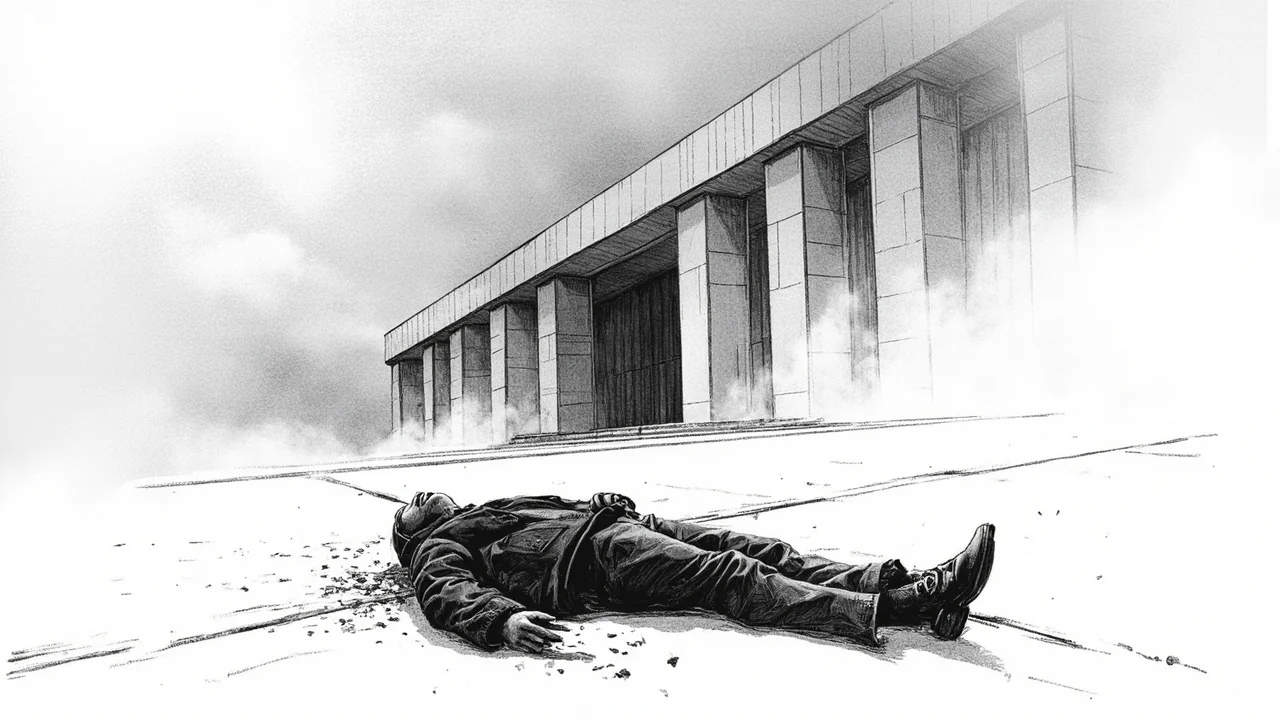
Norway workplace safety faces scrutiny after a municipal employee was declared dead following an accident at Askvoll town hall Tuesday morning. Emergency services responded to reports of an industrial accident at the municipal building in Vestland county. 'It is a possible fall accident,' operations manager Terje Magnussen said in a statement to press. Approximately one hour after the initial alert, police confirmed the individual had died. The victim was an employee of the municipality, and police are investigating how the accident occurred.
The Fatal Morning at Askvoll Rådhus
Police and emergency medical teams descended on Askvoll rådhus Tuesday morning after receiving an urgent call. Details remain sparse, but authorities confirmed the incident involved a fall. The operations manager for the responding emergency services relayed the basic nature of the call to media. The swift declaration of death, within an hour of the first response, indicated the severity of the injuries sustained. The community of Askvoll, a municipality of roughly 3,000 residents on the western coast, was confronted with a tragedy in its most public building.
A Community in Mourning
The immediate impact of the death resonates through the small municipal workforce and the wider community. The victim was a colleague and a public servant, a person integral to the daily operations of local government. Town halls in Norway are not just administrative centers, they are the physical heart of civic life, where residents pay taxes, register life events, and seek public assistance. An accident within its walls shatters the presumption of safety in a place dedicated to public service. The incident triggers automatic investigations by both the police and the Norwegian Labour Inspection Authority (Arbeidstilsynet), which is standard procedure for all fatal workplace accidents.
Norway's Workplace Safety Record
This fatal accident occurs against the backdrop of Norway's generally strong workplace safety statistics. The country consistently reports one of the lowest rates of fatal occupational accidents in Europe, a point of national pride tied to stringent regulations and a robust safety culture. However, the statistics offer little comfort in the face of a single, preventable tragedy. Each year, despite comprehensive regulations, several dozen workers still lose their lives on the job. Sectors like construction, fishing, and transportation are historically the most dangerous, but this incident underscores that risk can exist in any workplace, including public administration.
The Role of Arbeidstilsynet
The Norwegian Labour Inspection Authority will play a critical role in the coming weeks and months. Their investigation will run parallel to the police inquiry but with a distinct focus: determining whether health and safety regulations were breached. Inspectors will examine the scene, interview witnesses and colleagues, and review the municipality's internal safety protocols and documentation. Their mandate is not to assign criminal blame but to uncover systemic failures and prevent future accidents. The findings can lead to orders for corrective measures, improvements in safety procedures, and, in cases of severe negligence, significant fines for the employer—in this case, Askvoll Municipality.
The Human Cost of Regulatory Failure
Beyond the legal and procedural aftermath lies a profound human cost. A family has lost a loved one. Colleagues have lost a coworker and may grapple with trauma from witnessing the accident or its aftermath. The municipal administration must now manage its grief while continuing to provide essential services to the public. These events force a painful reckoning with the fact that safety protocols, no matter how comprehensive, depend on consistent implementation, vigilance, and a culture where every worker feels empowered to voice concerns. A single lapse can have irreversible consequences.
A Look at Municipal Maintenance Risks
While the specific cause in Askvoll remains under investigation, fall accidents in buildings often involve routine maintenance, repair work, or access to technical installations. Municipal buildings, many of which are older structures, require constant upkeep. Tasks like changing light fixtures in high ceilings, cleaning windows on upper floors, accessing roof spaces for inspection, or working on ventilation systems all carry inherent fall risks. Proper risk assessment, the use of correct equipment like scaffolding or harnesses, and adequate training are non-negotiable requirements. The investigation will scrutinize whether these standards were met for the task being performed.
The Path Forward for Askvoll
For Askvoll Municipality, the immediate tasks are clear: cooperate fully with investigating authorities, provide support to the bereaved family and affected staff, and conduct an urgent internal review of all safety practices. The psychological well-being of employees will be as important as the physical inspection of the building. The tragedy will likely prompt other municipalities across Vestland and Norway to double-check their own safety routines, a somber but necessary form of peer learning. The ultimate goal of the lengthy investigation process is to extract clear lessons that can prevent an identical tragedy elsewhere.
A Somber Reminder of Universal Risk
The death at Askvoll rådhus is a stark reminder that workplace safety is a continuous challenge, not a solved problem. It disrupts the narrative of predictable safety in white-collar public service jobs. It highlights that regulations on paper must translate into unwavering practice on the ground, every single day. As the police and Arbeidstilsynet work to piece together the exact sequence of events, the Norwegian model of tripartite cooperation between government, employers, and unions will be tested. The hope is that from this profound loss, clearer and more enforceable standards will emerge, ensuring that no other family has to receive such devastating news from their local town hall.