
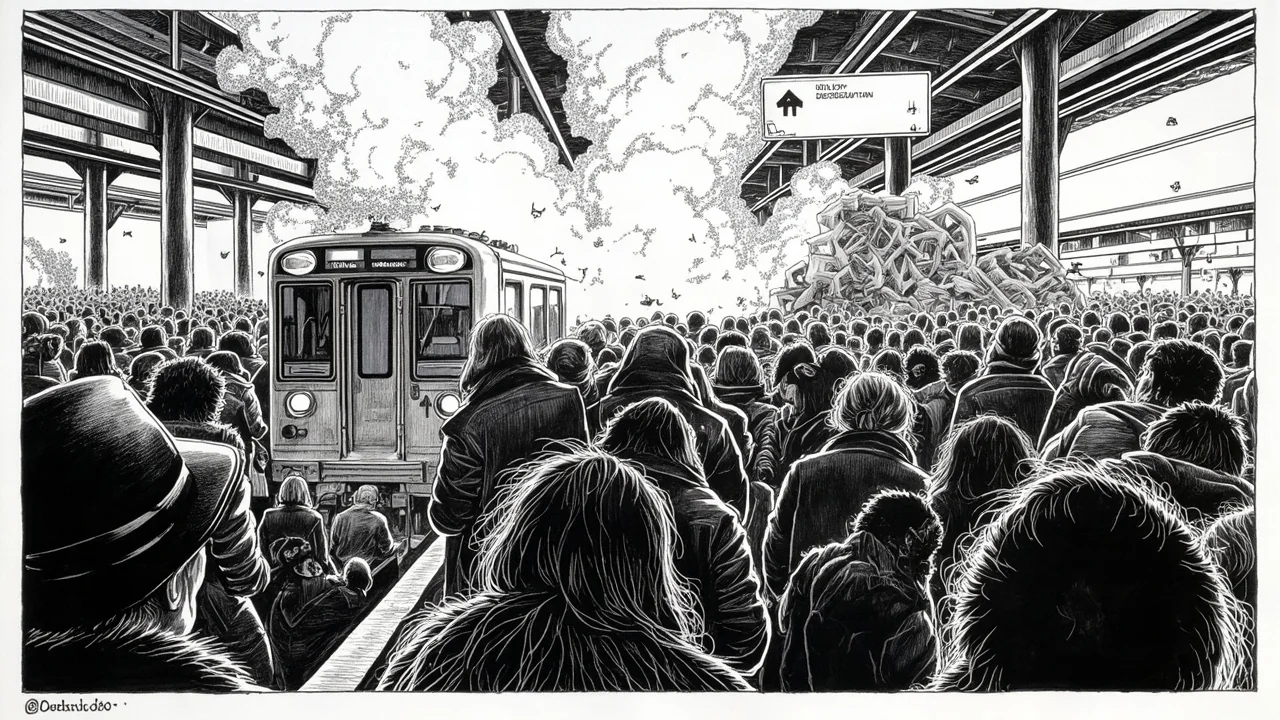
Norway's critical Oslo Central Station corridor faced major disruption Tuesday morning after smoke was reported from a train at Nationaltheatret station. Emergency services responded to the incident, which has now been resolved, but the ripple effects will cause significant delays and cancellations throughout the day, according to rail infrastructure manager Bane Nor.
The situation between Oslo Central Station (Oslo S) and Skøyen is now under control, Bane Nor confirmed in an 11:10 a.m. update. However, the agency warned passengers to expect continued delays and train cancellations as the system recovers from the morning's halt. The incident highlights the fragility of a rail network that is central to Norway's green transition and urban mobility goals.
A Fragile Artery Halts
The Nationaltheatret station is not a minor stop. It sits at the heart of Oslo's public transport system, a key interchange between the city's metro (T-bane) and the national rail network. Disruption here doesn't just affect a single line; it severs the primary north-south rail artery through the capital. This corridor connects the central hub at Oslo S with major western suburbs and the important junction at Lysaker, where lines branch toward Drammen, the airport, and beyond.
When smoke was detected from a train set near the platform, the response was immediate and necessary. Passenger safety is the absolute priority. Yet, the cascading effect of stopping all traffic through this choke point is immense. Hundreds of scheduled services, from local commuter trains (L1, L2, L3) to regional and airport express trains, were thrown into disarray within minutes. The incident demonstrates how a single technical fault in a critical node can paralyze a significant portion of Norway's most densely used railway.
The Ripple Effect Across the Network
Bane Nor's warning about ongoing delays is a standard but crucial message. Resolving the initial safety issue is only the first step. The real challenge is untangling the logistical knot created by the stoppage. Trains and crews are out of position. The carefully synchronized timetable, especially during the busy morning rush hour, is shattered.
This means cancellations are necessary to gradually reset the system. Some trains will be turned back early. Others will run express to make up time, bypassing stations and leaving passengers stranded. The delays will propagate outward from Oslo, affecting services in Vestfold, Østfold, and Gjøvik as the day progresses. For commuters, this translates to missed meetings, late arrivals at work or school, and extended, stressful journeys home. For the economy, it means lost productivity and logistical headaches for businesses reliant on just-in-time logistics or shift workers.
Systemic Pressure and Political Scrutiny
This incident, while isolated, will inevitably feed into a larger political debate about Norway's rail infrastructure. Bane Nor and the state-owned passenger operator Vy are perennially under scrutiny for punctuality and reliability. The national railway is a cornerstone of Norway's ambitious climate policy, intended to shift freight and passengers from road to rail. Repeated disruptions undermine public confidence in this transition.
Members of the Storting's Transport Committee frequently grill transport ministers and agency heads over network resilience. Incidents like today's provide concrete ammunition for opposition parties and concerned backbenchers. They will ask what contingency plans exist for such choke points and whether investment in alternative routing or improved rapid-response protocols is sufficient. The social democratic government, led by Prime Minister Jonas Gahr Støre, has pledged billions to rail modernization, but voters experience the daily reality of a strained system.
The Human Cost of Disruption
Beyond the statistics of delayed train-minutes lies the human inconvenience. Picture the student with a final exam, the parent racing to daycare before it closes, the tourist with a non-refundable flight from Oslo Airport. For them, a generic announcement about "delays and cancellations" is a source of significant anxiety and potential financial loss. The social contract of public transport relies on a basic expectation of reliability. When it fails, especially at a central hub in the nation's capital, it erodes trust.
Norwegian commuters are generally patient, but their tolerance has limits. Many will today be searching for alternative routes, crowding onto substitute bus services or packing into the T-bane lines that remain operational. This creates secondary congestion. The economic cost is diffuse but real, from lost work hours to increased spending on taxis and ride-shares.
Looking Ahead: Resilience vs. Reality
The key question for authorities is not if such incidents will happen again, but how the system responds. Technical faults are inevitable in any complex mechanical system. The test of a modern rail network is its resilience—its ability to isolate problems, implement effective contingencies, and communicate clearly with passengers. Today's event will be analyzed by Bane Nor's internal safety investigators. They will examine the cause of the smoke, the effectiveness of the emergency response, and the subsequent traffic management.
For the traveling public, the immediate need is for accurate, real-time information. Apps and journey planners must update swiftly. Station staff need clear talking points to assist confused passengers. The true measure of today's handling will be how smoothly the evening commute proceeds. Can the network absorb the morning's shock and return to normal by peak afternoon hours, or will the disruption linger into the night?
Norway's dependence on its rail network is only set to grow as urban centers expand and climate targets tighten. Incidents like the Nationaltheatret smoke scare are sharp reminders that infrastructure is more than steel and concrete; it is the vital, often vulnerable, circulatory system of national life. When it falters, the whole body feels the strain. The resolution of today's fault is welcome, but the broader conversation about building a more robust system continues, fueled by the experiences of thousands of inconvenienced passengers.