
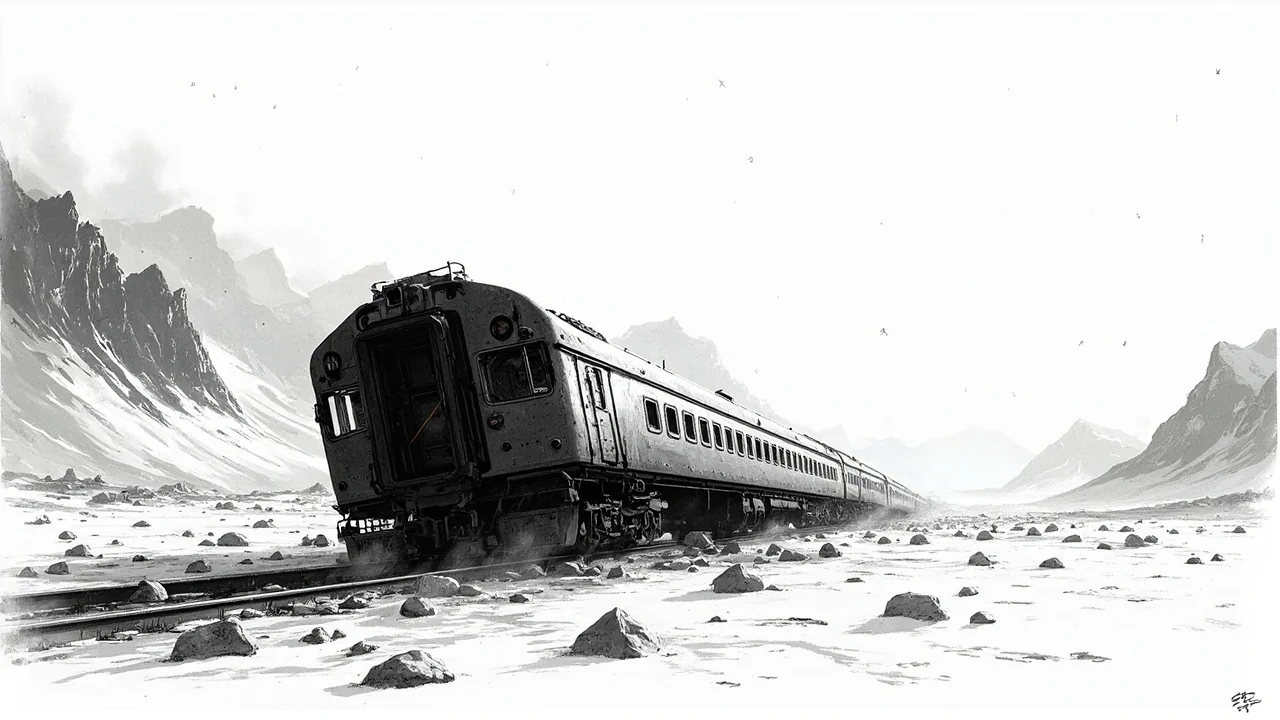
Norway’s critical Nordland Line will remain closed for 48 hours following a dramatic passenger train derailment near Bodø on Monday afternoon. The incident, which involved 44 passengers and two crew members, has severed the main rail artery connecting central Norway to its Arctic coast, disrupting freight and passenger services. Operator Bane Nor states the line is not expected to reopen before Wednesday, highlighting the vulnerability of key infrastructure in the remote and climatically harsh north.
A Narrow Escape in Northern Norway
All 46 people on board the train escaped physical injury, a fact authorities are calling fortunate. The train derailed in the Rønvika area of Bodø municipality. Preliminary reports from police and rail officials point to drifting snow, known locally as 'fokksnø,' as the likely cause. This fine, powdery snow is whipped by strong winds and can rapidly accumulate across rail tracks, creating hazardous conditions. The derailment stranded the train set on the tracks, causing confirmed damage to wooden sleepers and the fastenings that secure rails to the sleepers.
Harry Korslund, a press officer for Bane Nor, provided an update. His statement outlined the immediate operational priorities. 'Our first priority now is to remove the train set from the site,' Korslund said. 'We have confirmed damage to the sleepers and the fastenings between the rails and sleepers. However, we will only get a full overview of the damage extent after the train set is pulled away, so we can conduct a complete investigation of the area where it is standing.' Recovery and emergency crews were dispatched to the site to begin the complex clearance operation.
The Ripple Effect of a Closed Line
The closure of the Nordland Line between Fauske and Bodø has an immediate and significant impact. Passenger service provider SJ Norge is substituting all train departures with bus services for routes between Mo i Rana and Bodø. This replacement service significantly increases travel time and reduces capacity for a route vital to both local commuters and long-distance travelers. The economic implications extend beyond passenger inconvenience.
This segment of the Nordland Line is a crucial logistical link for freight moving to and from the Port of Bodø and other northern industries. Any prolonged disruption strains supply chains for goods ranging from consumer products to industrial materials. The incident underscores the region's heavy reliance on single-point infrastructure corridors. When the rail line fails, there are limited alternative transport routes capable of handling the same volume, especially for heavy freight.
A History of Arctic Rail Challenges
This derailment is not an isolated event for Norway’s northern railways. The Nordland Line, which runs 729 kilometers from Trondheim to Bodø, is renowned for its stunning scenery but also for the operational challenges posed by the Arctic environment. Engineers consistently battle freezing temperatures, ice formation, and heavy snow loads. While modern systems are designed to handle these conditions, extreme weather events like intense drifting snow present a persistent threat.
Infrastructure manager Bane Nor faces a constant maintenance battle to keep the line operational, particularly during the winter months from November to March. This incident will likely reignite debates about investment levels in rail infrastructure north of Trondheim. Critics often argue that the state-owned company prioritizes maintenance and upgrades on busier southern lines, leaving northern corridors more exposed to climate-related disruptions. Proponents of increased Arctic investment cite economic development and national security as reasons to bolster resilience.
The Broader Context of Northern Vulnerability
The derailment near Bodø is a microcosm of larger challenges facing Norway as a whole. The country is investing billions in the High North, emphasizing maritime activity, energy, and security. Yet, this vision depends on reliable terrestrial infrastructure. The Norwegian National Transport Plan consistently identifies improving the robustness of north-south connections as a strategic goal. Events like Monday's derailment test that commitment in real time.
Furthermore, this disruption highlights the human dimension of Arctic living. For residents of Bodø and surrounding towns, the train is not just a transport option; it is a lifeline to the south, essential for healthcare access, education, and family connections. Switching to buses for a 48-hour period is a manageable inconvenience. However, it prompts concerns about what would happen during a more severe or longer-term disruption, especially in winter when road conditions can also be perilous.
Looking Ahead: Recovery and Review
The immediate focus for Bane Nor is a safe and efficient recovery operation. Once the damaged train is removed, engineers will conduct a thorough assessment of the track's integrity. Repairing damaged sleepers and fastenings is labor-intensive but typically straightforward if the underlying rail bed is intact. The goal is to restore service by Wednesday, but this timeline is contingent on the full damage assessment not revealing more severe issues, such as misaligned rails or problems with the sub-ballast.
A formal investigation into the precise cause will follow. The Norwegian Safety Investigation Authority may become involved, as it does with significant transport accidents. This probe will examine whether operational procedures, weather monitoring systems, or track maintenance standards require adjustment to prevent a recurrence. The role of 'fokksnø' will be scrutinized to determine if current mitigation strategies are sufficient for this specific weather phenomenon.
For now, the people of Northern Norway are reminded of their environment's power. The incident serves as a stark case study in the interplay between climate, infrastructure, and regional dependence. As Norway continues to develop its Arctic territories, the question remains: Is the nation investing enough to future-proof its vital northern corridors against the very forces of nature that define them? The answer will determine the reliability of the rail network for decades to come. The coming days will show how quickly one of the world's most scenic railway lines can recover from its encounter with a classic Arctic storm.