
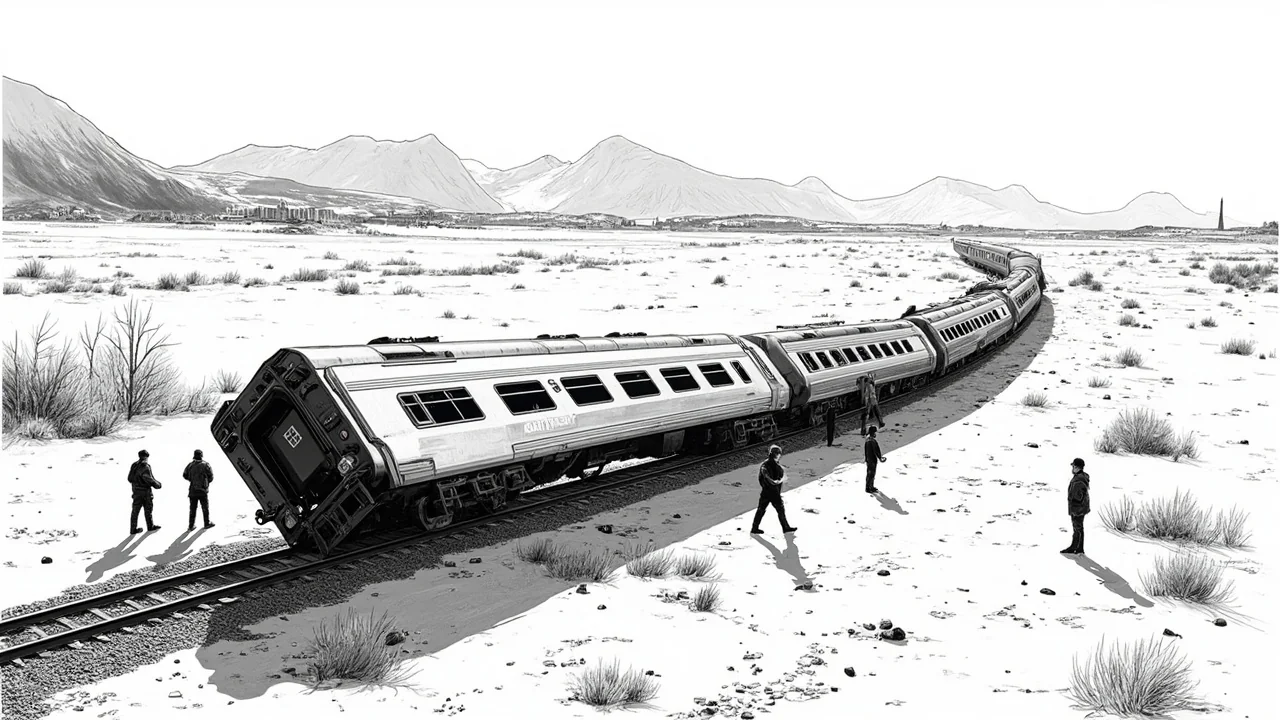
Norway's Nordland Line passenger train derailed near Bodø station Monday evening, halting traffic on a critical Arctic rail link. The incident occurred at Rønvika in Bodø municipality just before the scheduled 5:38 PM arrival, with initial reports indicating no passenger injuries. Emergency services mobilized immediately to assist with evacuation from the Trondheim-to-Bodø service, while rail operator Bane NOR confirmed the closure of the line between Fauske and Bodø.
“The emergency services are on their way to the site to assist with the evacuation of passengers,” said operations manager Veronica Nylund in a police statement. Authorities described a limited derailment, involving only the front axle of the locomotive. Police later noted passengers remained onboard and were in good condition, with blowing snow identified as the likely cause.
A Narrow Escape in the Arctic Twilight
The derailment represents a significant operational disruption on Norway's longest railway line, the Nordlandsbanen, which stretches 729 kilometers from Trondheim to Bodø. This critical infrastructure artery serves remote communities and is a vital transport link for both passengers and freight in Northern Norway. The timing, just kilometers from the terminus at Bodø station, meant the train was traveling at a reduced speed, likely preventing a more serious incident.
A rescue train was dispatched from Bodø station to retrieve the stranded passengers. The incident highlights the unique challenges of maintaining rail operations in Norway's far north, where Arctic weather conditions frequently test infrastructure resilience. “It is most likely blowing snow that has caused the derailment,” police stated in their update, pointing to a common but hazardous winter phenomenon in the region.
Infrastructure Under Arctic Pressure
This derailment immediately raises questions about winter preparedness on Norway's northernmost railways. The Nordland Line traverses demanding terrain and is exposed to harsh coastal and inland climates. Blowing snow, or fokksnø, can quickly accumulate on tracks, create drifts, and interfere with rail guidance systems, presenting a persistent challenge for Bane NOR's maintenance crews.
While Norway's rail network boasts a strong safety record, incidents in the Arctic region attract particular scrutiny. The country is investing heavily in northern infrastructure, including the controversial Nordland Line extension to Tromsø, making reliability and safety paramount. Any disruption on the existing line affects not only passenger travel but also the logistics chains for industries in Nordland county.
“Passengers are still on the train and are fine,” the police assurance was the primary relief for authorities. The absence of injuries is the standout feature of this event, transforming it from a potential tragedy into a case study in operational response and infrastructure vulnerability. The efficient coordination between police, rail operators, and emergency services appears to have managed the situation effectively.
The Ripple Effect on Regional Mobility
The closure of the line between Fauske and Bodø creates immediate transport headaches. Alternative bus services are typically activated during such closures, but they lack the capacity and speed of the rail connection. For a region with limited transport options, even a temporary rail shutdown has disproportionate effects on connectivity.
Bodø, a city of over 50,000 people and the administrative center of Nordland, relies on the railway for tourism, business, and daily commutes from surrounding districts. The derailment site at Rønvika is within the city's outskirts, underscoring how quickly a localized incident can impact a major urban node. The disruption comes as Bodø prepares for its role as a European Capital of Culture in 2024, a status that depends on reliable transport links.
Analysis from transport experts suggests that while the direct cause appears to be weather-related, the incident will prompt reviews of snow clearance protocols, track monitoring technology, and driver training for extreme conditions. Norway's Railway Inspectorate will likely conduct a formal investigation to determine if operational procedures were followed and to recommend preventative measures.
A System Tested by Climate
This event is more than a simple mishap; it is a test of a system under climatic stress. Climate change is altering weather patterns in the Arctic, potentially leading to more volatile snowfall and wind conditions. Infrastructure designed for historical climate data may face new pressures. The derailment near Bodø serves as a real-time stress test for Bane NOR's adaptive strategies.
The resilience of the response is notable. Having a protocol to deploy a rescue train from the nearby station demonstrates foresight in emergency planning. Keeping passengers informed and secure onboard until evacuation, rather than risking a disorderly exit onto the tracks in poor weather, reflects a safety-first approach.
For the passengers, the journey from Trondheim—a trip of nearly ten hours through stunning and remote landscapes—ended not with a smooth arrival at the platform, but with an unexpected halt in the twilight. Their experience will inform passenger confidence in Arctic winter travel. The psychological impact of a derailment, even without injury, can influence travel choices, especially for tourists considering the scenic Nordland Line.
Looking Ahead: Reliability in the North
The immediate focus is on restoring full service on the Nordlandsbanen. Repair crews must assess the track integrity, reposition the locomotive, and ensure the section is completely safe for traffic. The duration of the closure depends on the extent of any track damage and the weather conditions during the repair work.
Longer term, this incident feeds into the ongoing debate about infrastructure investment north of Trondheim. Proponents of the Arctic railway expansion will cite the need for modern, climate-resilient tracks. Critics may question the viability and cost of maintaining such infrastructure in extreme environments. The derailment provides concrete data for both sides.
Norway's commitment to reducing domestic air travel and shifting traffic to rails makes the reliability of these northern lines a national policy issue. Every disruption undermines that green shift goal. Therefore, the investigation's findings will be reviewed not just by rail engineers, but by policymakers in Oslo concerned with transport, climate, and regional development.
As the rescue train retrieved the passengers and the investigation began, the quiet scene at Rønvika belied the significant implications. A single axle off the track in blowing snow halted a major transport corridor, triggered a multi-agency response, and will likely lead to technical and policy reviews. In the delicate balance of operating in the Arctic, nature remains a formidable force, and infrastructure must constantly adapt. The successful management of this incident without harm demonstrates preparedness, but the very occurrence of the derailment is a stark reminder that in Norway's north, the elements are always in command.