
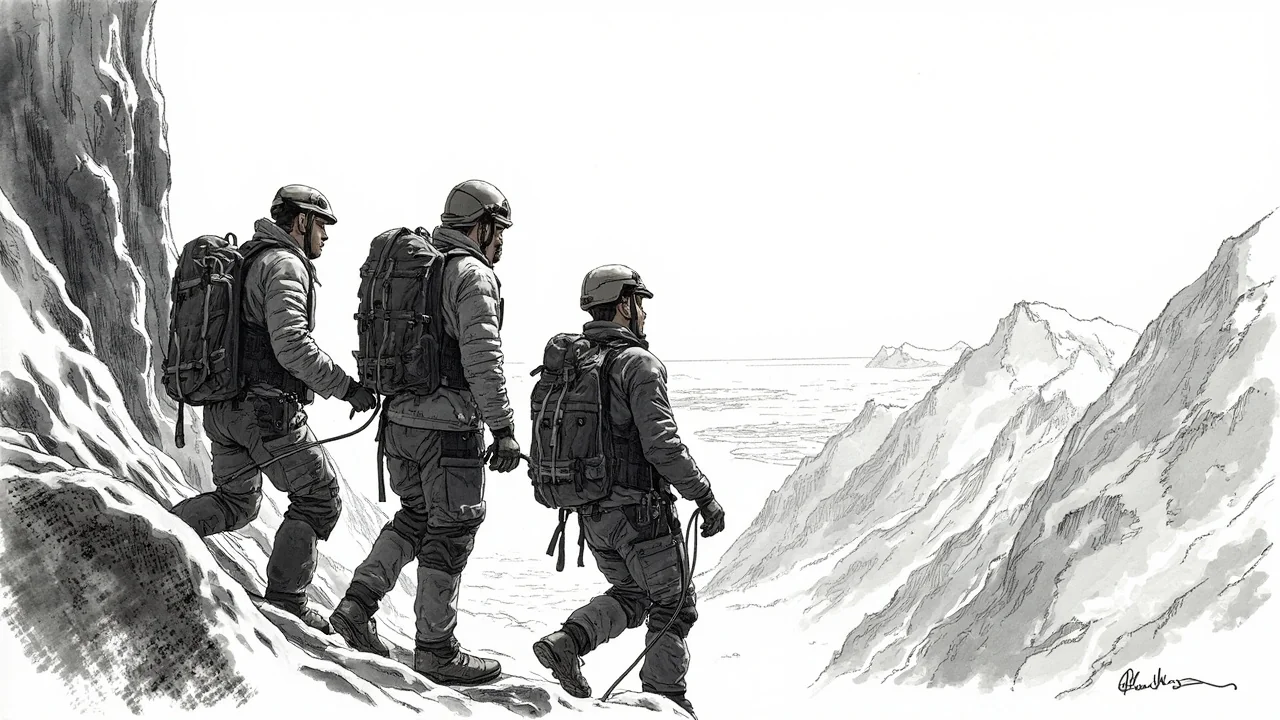
Two tourists reported being stuck on the steep slopes of Sukkertoppen in Ålesund on Tuesday, requiring an air ambulance rescue from one of Norway's most popular but demanding trails. The pair had begun their descent from the summit via the western route, known locally as the 'Tyskerstien' or German Path, when they encountered problems that prevented them from continuing, police reported. The Main Rescue Coordination Centre initially planned to dispatch a helicopter from Florø to assist the tourists. However, the Air Ambulance service from Ålesund was ultimately tasked with reaching the stranded hikers. By 4:58 PM local time, police confirmed the operation was successful, with both individuals safely transported off the mountain by the Luftambulansen crew. No injuries were reported.
The Rescue Operation Unfolds
Authorities received the distress call from the two individuals who found themselves unable to proceed on their chosen descent route. The 'Tyskerstien' is notoriously challenging, featuring steep, rocky sections that can become slippery and hazardous, especially for unprepared or inexperienced hikers. The initial response plan involved mobilizing a rescue helicopter from the coastal town of Florø, located approximately 120 kilometers north of Ålesund by air. This was later revised, with the Ålesund-based Luftambulansen, a critical service for emergency medical and rescue responses in the Møre og Romsdal region, taking over the mission. The change in assets highlights the dynamic nature of mountain rescue, where logistics and proximity are constantly assessed to ensure the fastest, safest outcome.
The successful extraction underscores the readiness and capability of Norway's specialized aerial emergency services. These operations are coordinated through a networked system involving the police, the Joint Rescue Coordination Centre (Hovedredningssentralen), and local air ambulance bases. The crews are trained for precise, high-angle rescues in difficult terrain, a common necessity in a country where outdoor recreation is deeply ingrained in the national culture but where weather and landscape can change rapidly, turning a routine hike into a dangerous situation.
Sukkertoppen's Allure and Challenge
Sukkertoppen, or 'Sugar Top,' is a iconic 314-meter peak that offers panoramic views of the city of Ålesund, its surrounding archipelago, and the majestic Sunnmøre Alps. Its accessibility from the city center—the walk to the base begins in a residential neighborhood—makes it one of Norway's most frequented tourist mountains, with tens of thousands of ascents each year. The standard path to the summit is a well-maintained stone staircase, demanding but generally manageable for people with a moderate fitness level. The view from the top is considered a must-see for visitors to the Art Nouveau city.
The 'Tyskerstien,' however, presents a different level of difficulty. The path was originally constructed by German occupation forces during World War II. It is steeper, more exposed, and less defined than the main tourist trail, often requiring the use of hands for scrambling. While it serves as a thrilling alternative descent for seasoned hikers, it is explicitly not recommended for children or those unfamiliar with rough mountain terrain. Local tourism websites and signage typically warn of its demanding nature, advising hikers to assess their own skill and equipment before attempting it.
A Persistent Pattern of Mountain Rescues
This incident is far from isolated. Norwegian rescue services perform hundreds of mountain rescues annually, with a significant portion involving tourists. The Norwegian Trekking Association (DNT) and local Red Cross groups also conduct numerous volunteer-led assists. Common factors leading to distress calls include underestimating the time required for a hike, inadequate footwear, sudden weather deterioration, and venturing onto more difficult routes without proper preparation or a local guide. The period from late spring to early autumn sees the highest frequency of such events, correlating with the peak tourist season.
In the Møre og Romsdal region specifically, the dramatic and rugged geography, while stunning, naturally leads to a higher incidence of rescue operations compared to flatter parts of the country. Authorities continuously emphasize the 'Friluftsliv' code: be prepared, let someone know your route, respect the weather, and turn back in time. Despite these widespread public safety campaigns, the combination of Sukkertoppen's high traffic and the tempting challenge of the 'Tyskerstien' regularly results in situations where emergency services must intervene.
The Broader Implications for Safety and Preparedness
Every rescue operation carries significant cost and risk, not just for the individuals in trouble but for the emergency personnel involved. The dispatch of an air ambulance is an expensive measure, funded by the public purse, and temporarily takes a critical medical asset away from other potential emergencies. While Norway's rescue services operate on a principle of assistance without immediate charge for the rescued, there is an ongoing societal debate about potential fees for rescues deemed to result from gross negligence or a blatant disregard for official warnings.
For local municipalities and tourism boards, the challenge lies in balancing the promotion of natural attractions with the imperative of visitor safety. Improved multilingual signage at trailheads, clearer demarcation of difficulty levels on maps and apps, and perhaps even physical barriers at the entry points to the most dangerous unofficial paths are measures often discussed. The goal is to preserve the freedom to roam—'Allemannsretten'—a cherished right in Norway, while minimizing preventable accidents.
A Reminder as Seasons Change
The successful rescue on Sukkertoppen ended without tragedy, serving as a potent reminder as the summer hiking season approaches. The mountains of Norway offer unforgettable experiences but demand respect. The incident reiterates basic advice: stick to marked trails matching your ability, check the weather forecast meticulously, carry essential gear including extra warm clothing, food, water, and a fully charged phone, and never hesitate to choose a simpler route. The difference between an exhilarating adventure and an emergency call can sometimes be just one wrong turn on a deceptively beautiful path. Will the lasting lesson from this rescue be a renewed commitment to preparation, or merely another close call soon forgotten in the thrill of the next ascent?