
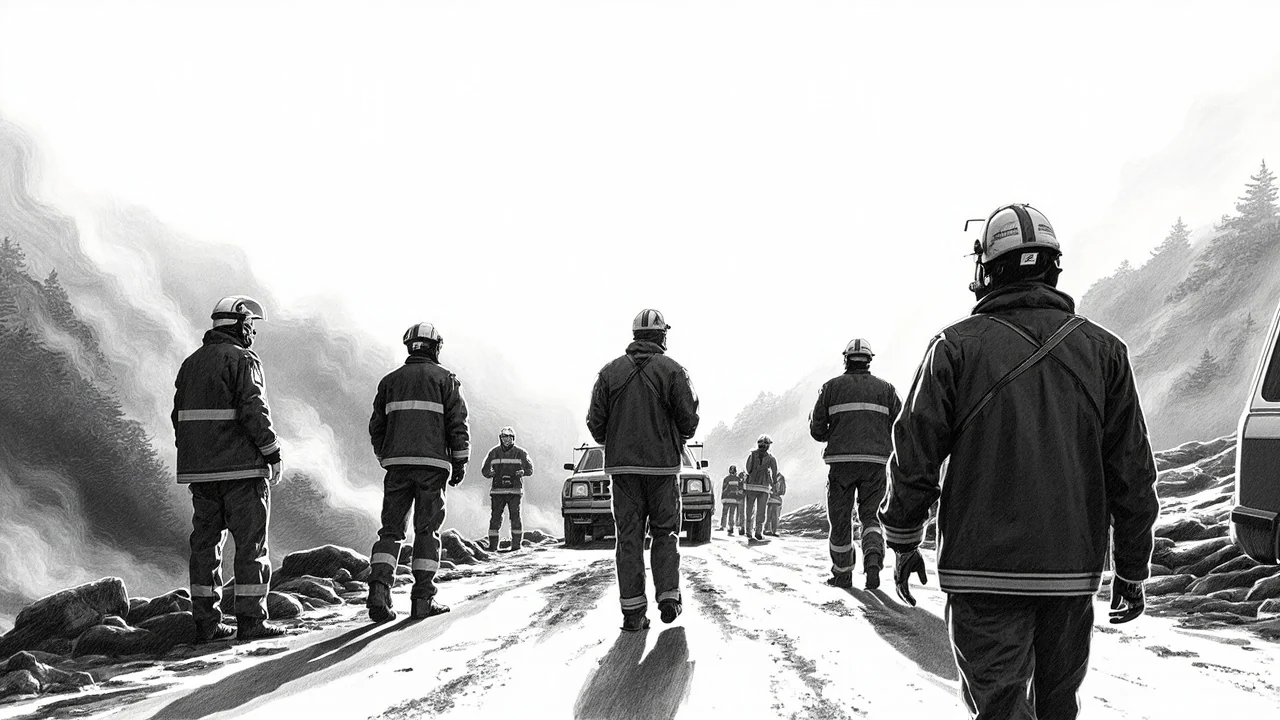
Norway's emergency services had a busy Friday responding to multiple incidents across the west coast, from a dramatic grass fire fought with a bulldozer to a controlled burn that sparked public concern. The series of events highlighted the varied demands placed on police and fire responders during a single shift.
Grass Fire Sparks Dramatic Response in Høyanger
The most intense call came from Torvund in Høyanger Friday evening. Vaktleder Børre Brekkvassmo at the 110 emergency center described the initial report. 'The message we first received was dramatic. A large area was on fire, and there was danger of it spreading to buildings,' Brekkvassmo said at 7:10 PM. He noted there had been considerable wind in the area, though it had subsided somewhat. Private individuals on site began their own firefighting efforts before crews arrived. 'Among other things, a man is reported to have tried to extinguish the fire using a bulldozer,' Brekkvassmo stated. The fire service dispatched crews from Høyanger, Lavik, and a tanker truck from Sande.
House Fire on Stord Linked to Hot Ash
Earlier, a house fire occurred in Hjortåsen on Stord. Police reported the fire started in the cladding of the house. 'Everyone is out of the house, and no one is reported to have inhaled smoke,' said operations manager Rune Tallaksen in the police. By 9:45 PM, the fire service reported they had control of the blaze. Tallaksen indicated a possible cause. 'One hypothesis is that the cause could be hot ash that had been put out,' he wrote. The fire service later assessed the house as habitable, suggesting the damage was contained.
Controlled Burn Sparks Alert in Øygarden
Concern also arose in Øygarden municipality after reports of a possible wildfire near Nautnes, about a kilometer north of Sture. However, Vaktleder Brekkvassmo clarified the situation. He informed that the 110 center had received a message that a controlled bråtebrann, or slash burn, was planned in that area for the day. The burn was scheduled to conclude by 5:00 PM on Friday. These controlled burns are a common forestry and land management practice to clear brush, but they often generate calls from concerned citizens spotting the smoke.
Police Respond to Domestic Dispute Report
Police resources were also deployed to Fyllingsdalen after a report of a domestic disturbance. 'When we arrived at the scene, we were met by the homeowner outside. He claimed there was a person in his apartment who was supposed to have a pistol,' said operations manager Steinar Hausvik in the West Police District. Police quickly secured the scene and checked several individuals. They found no weapons. The police were in the process of wrapping up their work at the location.
Service Relocation in Bergen
Amid the emergency responses, a separate administrative change was announced. From February 9th, the Norwegian Public Roads Administration will consolidate all public services at the Bergen traffic station in Åsane. This means theory tests and other driver's license services will no longer be available in the city center. The downtown driver's license office closes on February 2nd, with all services moving to Åsane a week later. A office chief stated the move aims to offer more theory tests and shorter waiting times by creating a stronger professional environment under one roof, while acknowledging it could mean a longer journey for some.
Analyzing a Busy Shift for Responders
This series of events offers a snapshot into the unpredictable nature of emergency response. A single Friday shift involved wildfire threats, a structural fire, public concern over a planned operation, a potential weapons incident, and the ongoing work of public service administration. The Høyanger grass fire, requiring multiple crews and civilian intervention with machinery, represents a significant resource draw. It underscores the spring and summer wildfire risk in Norway, especially in periods of wind. The Stord house fire, potentially caused by improperly discarded hot ash, is a preventable incident that fire safety agencies frequently warn about. Ash can retain intense heat for days and should always be disposed of in a metal container away from structures. The confusion over the Øygarden controlled burn highlights a communication challenge. While authorities are often notified, the public may not be, leading to unnecessary alarm and the diversion of resources to confirm the fire is planned. The domestic dispute call, which turned out not to involve a weapon, shows how police must treat all such reports with maximum caution, deploying resources to ensure public safety even when the initial information may be inaccurate.
The Constant Demand on Public Safety Systems
Together, these five incidents—spanning fire, police, and civic services—illustrate the broad spectrum of demands on Norway's public safety and service infrastructure. From life-threatening emergencies to routine public inquiries, the systems are designed to triage and respond. The integration of the 110 emergency center is crucial, acting as the first point of contact that assesses and dispatches help for situations ranging from a spreading wildfire to a family argument. The day also reminds citizens that while controlled burns are legal and managed, notifying neighbors or local forums can prevent scare. As the climate contributes to drier conditions, the type of rapid-response grass fire seen in Høyanger may become a more frequent test for rural fire crews. For now, the conclusion of the Friday shift saw all immediate threats contained, structures saved, and no serious injuries—a successful outcome by any measure for the coordinated efforts of Norway's emergency services.