
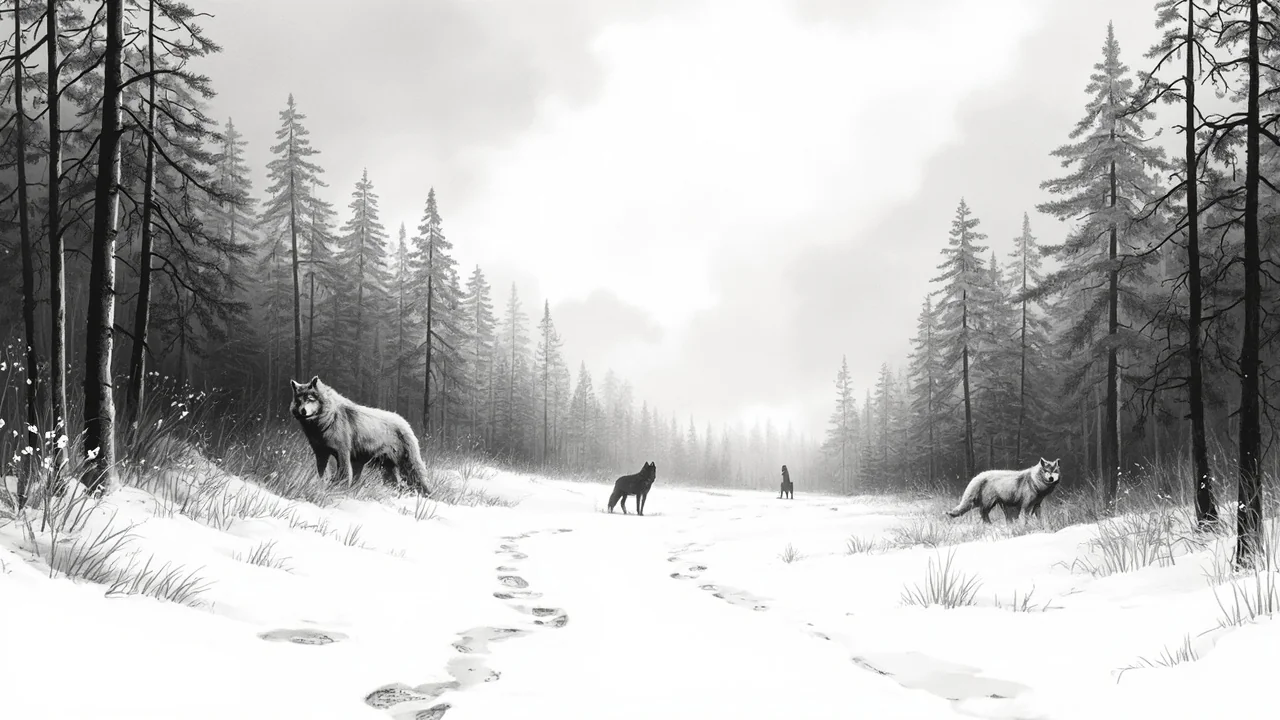
Norway wolf population estimates this winter range between 51 and 55 individuals, according to the latest field data from Rovdata. Of these, 32 to 34 wolves are confirmed to live exclusively within Norway’s borders. The remaining animals are part of cross-border packs that roam territories shared with Sweden, reflecting the complex dynamics of predator management in Scandinavia.
Improved Tracking Conditions Aid Winter Survey
Heavy snowfall across eastern Norway has significantly improved tracking conditions for researchers monitoring wolf movements. Fresh snow preserves paw prints and other signs, allowing field teams to more accurately identify individual animals and map pack territories. The annual winter registration effort—critical for national wildlife policy—is ongoing and scheduled to conclude on March 31.
The second preliminary status report from this season’s fieldwork was published yesterday by Rovdata, the national agency responsible for collecting and analyzing data on large carnivores. The University of Innlandet compiles the report on Rovdata’s behalf, using verified field observations, DNA samples, and camera trap footage.
Cross-Border Packs Complicate National Counts
Jonas Kindberg, head of Rovdata, provided a detailed breakdown of the current figures. “So far this winter, we’ve registered 32–34 wolves solely in Norway, 16–18 wolves in territories spanning both Norway and Sweden, and three animals in the Halåa pack, whose territorial status relative to the border remains uncertain,” he said in a statement.
This geographic ambiguity is not unusual. Several wolf packs in southeastern Norway operate in forested regions that straddle the Swedish border. Because wolves move freely across national lines, counting them as strictly “Norwegian” or “Swedish” is often impractical. Instead, wildlife authorities use the concept of “management units” that align with ecological realities rather than political boundaries.
The Halåa pack, located near the border in Hedmark county, exemplifies this challenge. While its territory appears mostly on the Norwegian side, definitive confirmation requires more data—particularly genetic evidence linking the pack to known individuals on either side of the border.
Why Winter Counts Matter for Policy
Accurate winter counts directly influence Norway’s wolf management decisions, including whether limited culling is permitted under national and international regulations. Norway operates under a dual mandate: maintaining a viable wolf population while addressing concerns from rural communities about livestock predation and human safety.
The country’s official target is to sustain at least three reproducing wolf packs within its borders. Current data suggests this threshold is being met, though debates continue over what constitutes a “stable” population. Environmental groups argue that the existing numbers are still too low for long-term genetic health, while farming associations call for stricter population controls.
All wolf monitoring adheres to guidelines set by the Bern Convention and the EU Habitats Directive, even though Norway is not an EU member. These frameworks require signatory nations to maintain favorable conservation status for protected species like the gray wolf.
Fieldwork Relies on Snow, Science, and Patience
The winter registration process is methodical and labor-intensive. Teams of trained biologists and volunteers traverse remote forests on skis or snowmobiles, documenting tracks, scat, and feeding sites. Each observation is logged into a centralized database and cross-referenced with previous records to avoid double-counting.
DNA analysis plays a crucial role. Hair samples collected from rub posts or saliva from prey carcasses are sent to labs for genotyping. This allows researchers to identify individual wolves and track their movements over time. Camera traps supplement this work, especially in areas where snow cover is patchy or human access is limited.
Because the survey runs through the end of March, final numbers may shift slightly. New litters are not expected until spring, so the count reflects the surviving population from the previous year. Pup survival rates, disease, and human-related mortality (including legal culls and illegal poaching) all affect the year-end total.
Historical Context and Public Debate
Norway’s wolf population has fluctuated dramatically over the past century. Once nearly eradicated by the mid-1900s due to bounty hunting and habitat loss, wolves began naturally recolonizing from Finland and Russia in the 1970s and 1980s. The first confirmed litter in modern times was recorded in 1989.
Today’s population stems largely from a small founder group, leading to concerns about inbreeding. To address this, Sweden and Norway have occasionally discussed translocating wolves between countries, though such measures remain politically sensitive.
Public opinion remains divided. In urban centers, wolves are often seen as symbols of wilderness and ecological balance. In rural municipalities—particularly in Østlandet, where most packs reside—many residents view them as a threat to sheep farming and outdoor recreation. Municipal councils in these areas frequently petition the government for expanded hunting quotas.
The Ministry of Climate and Environment ultimately decides annual management actions based on Rovdata’s scientific assessments. Any decision to authorize culling must be justified by documented conflicts and must not jeopardize the population’s viability.
Read more: Norway Oil Fund Loses $40B as Tech Bet Backfires.
Read more: Norway Submarine Base Faces Power Grid Rejection Crisis.