
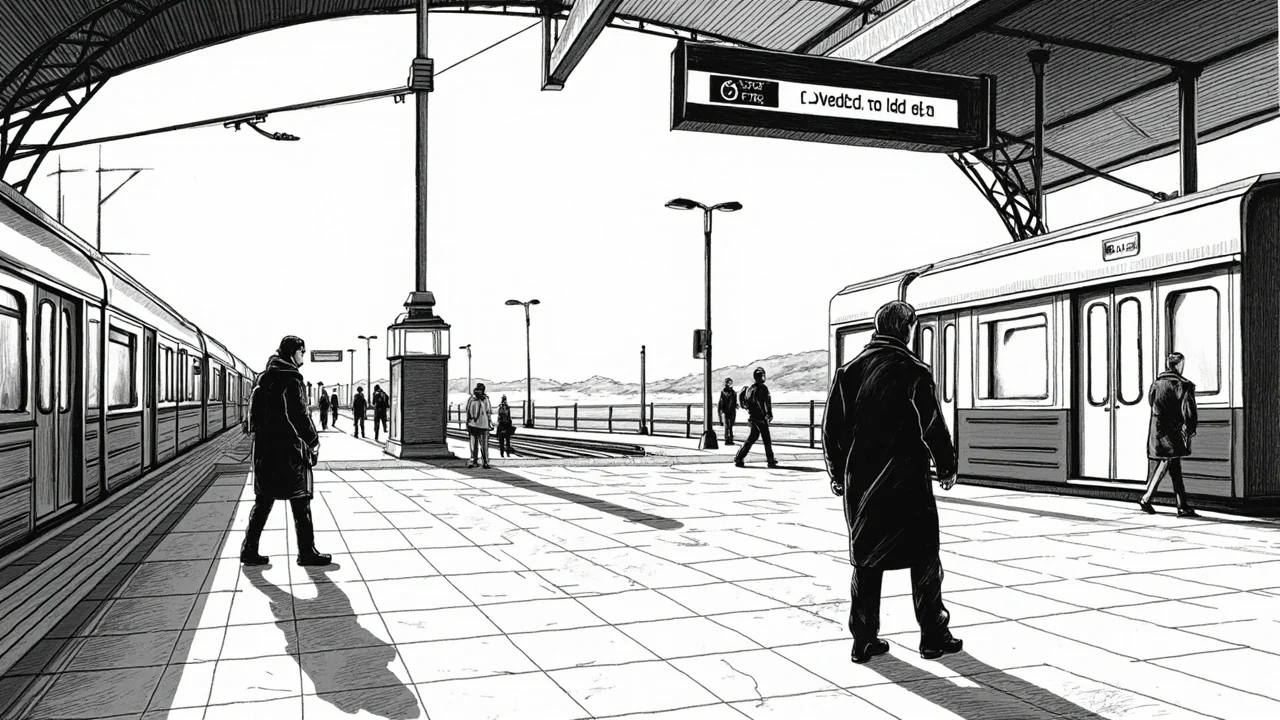
Norway's busiest transport hub faced major disruption as smoke forced the evacuation of Nationaltheatret station in central Oslo. Emergency services responded to reports of smoke development within the station area on Thursday, halting all train traffic on a critical segment of the network. The incident caused immediate ripple effects across the capital's commuter system during a peak travel period.
Operational leader Vidar Pedersen confirmed the presence of smoke inside the station premises. Rail operator Vy announced an immediate closure of all train traffic between Oslo Central Station (Oslo S) and Nationaltheatret. This closure severed a primary artery in the city's rail network. Meanwhile, Oslo's metro operator, Sporveien, initially reported that T-bane services were continuing to run normally despite the incident at the adjacent mainline station.
The Nationaltheatret station is a cornerstone of Oslo's infrastructure. It sits beneath the iconic National Theatre building and connects the city's central train lines with major T-bane routes. An evacuation here creates a disproportionate impact on the entire system. Thousands of passengers rely on this interchange for daily travel between the city's east and west, as well as for regional services.
Emergency Response and Immediate Impact
Police and fire services cordoned off the area surrounding the station entrance on Johanne Dybwads plass. Witnesses reported seeing emergency vehicles with flashing lights converging on the scene shortly after the alarm was raised. Commuters were directed away from the station's entrances, creating crowds on the sidewalks of the bustling city center.
The timing of the incident amplified its disruptive power. Occurring during a weekday, it caught a significant portion of the afternoon commuter wave. Social media quickly filled with reports from stranded passengers. Many shared images of crowded platforms at other stations as the system absorbed the shock of the closed line.
Vy's decision to suspend traffic between Oslo S and Nationaltheatret is a standard safety protocol. It isolates the potentially affected area and prevents trains from entering a zone where air quality may be compromised or where fire crews need access. This protocol, while essential, has a severe cascade effect on schedules across the wider network.
Transport Network Resilience Tested
Norway prides itself on efficient and reliable public transport, particularly in the capital region. Incidents like this serve as a stark stress test for that system. The immediate switch to alternative routes and modes of transport is a key metric of resilience. For many passengers, the alternative meant boarding crowded T-bane trains or seeking out bus replacements announced by the operators.
Sporveien's ability to maintain normal T-bane service was crucial. The T-bane tunnels run separately from the mainline train tunnels at Nationaltheatret, allowing for some operational independence. This separation likely prevented a total collapse of central Oslo's underground transport. It highlights the importance of having multiple, independent transit corridors through urban cores.
The incident also exposed the dependency on key nodes. Nationaltheatret is one of only a few central stations where the eastern and western train lines converge before reaching Oslo S. A closure here effectively severs the direct link between the westbound lines (towards Drammen and beyond) and the eastbound lines (towards Lillestrøm and the airport) for through services.
Analysis: Infrastructure Vulnerabilities in Focus
While the source of the smoke was not immediately disclosed, the event directs attention to the vulnerabilities of aging underground infrastructure. Oslo's central train tunnels and stations have been in operation for decades. They house complex systems for ventilation, electricity, and signaling, all of which are potential sources of smoke or fire.
"These central interchange stations are the heart of the network, but that also makes them its most vulnerable points," said Professor Lars Hem, a transport infrastructure specialist at the University of Oslo. "A technical fault in a single, confined space can incapacitate a disproportionate amount of the system's capacity. The investment in monitoring and fire suppression systems in these decades-old tunnels is an ongoing and critical challenge."
Professor Hem noted that the immediate operational response appeared to follow established protocols. The real test, he argues, is in communication and managing passenger overflow. "The data shows that over 70,000 passengers use the Nationaltheatret interchange on an average weekday," he stated. "Redirecting that flow requires clear, real-time information. Even a minor incident can lead to major passenger frustration if information flow breaks down."
The economic impact of such disruptions is also significant. Delays in a major metropolitan area affect workforce productivity, business meetings, and commercial activity. They underscore the direct link between transport reliability and economic health. For Norway, which is investing heavily in rail to reduce domestic flight emissions, reliability is paramount to achieving climate goals.
Commuter Experience and System Communication
Passengers caught in the disruption reported a mix of confusion and resignation. "One moment the board showed my train was on time, the next everything was cancelled," said Marius Berg, a commuter trying to reach his home in Asker. "The staff on the ground were helpful, but there were just too many people suddenly needing new directions."
This highlights the dual-channel communication challenge. Operators like Vy use their website and app to push alerts, but passengers already in transit may not be checking digital platforms. Public address announcements and physical staff presence at affected stations become the primary lifeline. The effectiveness of this communication chain is a major factor in public perception during a crisis.
The incident also tested the integration between different transport providers. With Vy's trains halted and Sporveien's T-bane running, coordination on passenger information was essential. Joint alerts regarding alternative travel routes are necessary to prevent overcrowding at specific bus stops or on the remaining functional rail lines.
Looking Ahead: Safety and Investment Implications
Every operational incident of this nature triggers a post-mortem by the Norwegian Railway Inspectorate. The investigation will focus on the root cause of the smoke, the effectiveness of the emergency response, and the adherence to all safety procedures. Their findings often lead to updated technical directives or maintenance requirements for the network.
For infrastructure manager Bane NOR and the transport operators, the financial calculus is clear. Proactive investment in modern fire detection systems, upgraded electrical components, and improved ventilation in old tunnels is a costly but necessary insurance policy. The political will to fund such upgrades often strengthens in the wake of disruptive, high-profile incidents that affect the public directly.
The event may also accelerate discussions around network redundancy. Are there sufficient alternative rail routes to bypass a single failed point in central Oslo? Proposals for additional cross-city rail links, often debated in long-term planning circles, gain practical urgency when the existing system's fragility is exposed.
As services resumed and the smoke cleared, the deeper questions remained. Norway's ambition to shift more travel to rail depends on an unshakeable reputation for safety and punctuality. Thursday's disruption at Nationaltheatret was a brief but powerful reminder that maintaining that reputation requires constant vigilance, investment, and planning for the day when the unexpected happens at the system's very core. The true measure of success is not preventing every single incident, but ensuring that when one occurs, the system's response is so effective that it becomes a minor footnote, not a major crisis.