
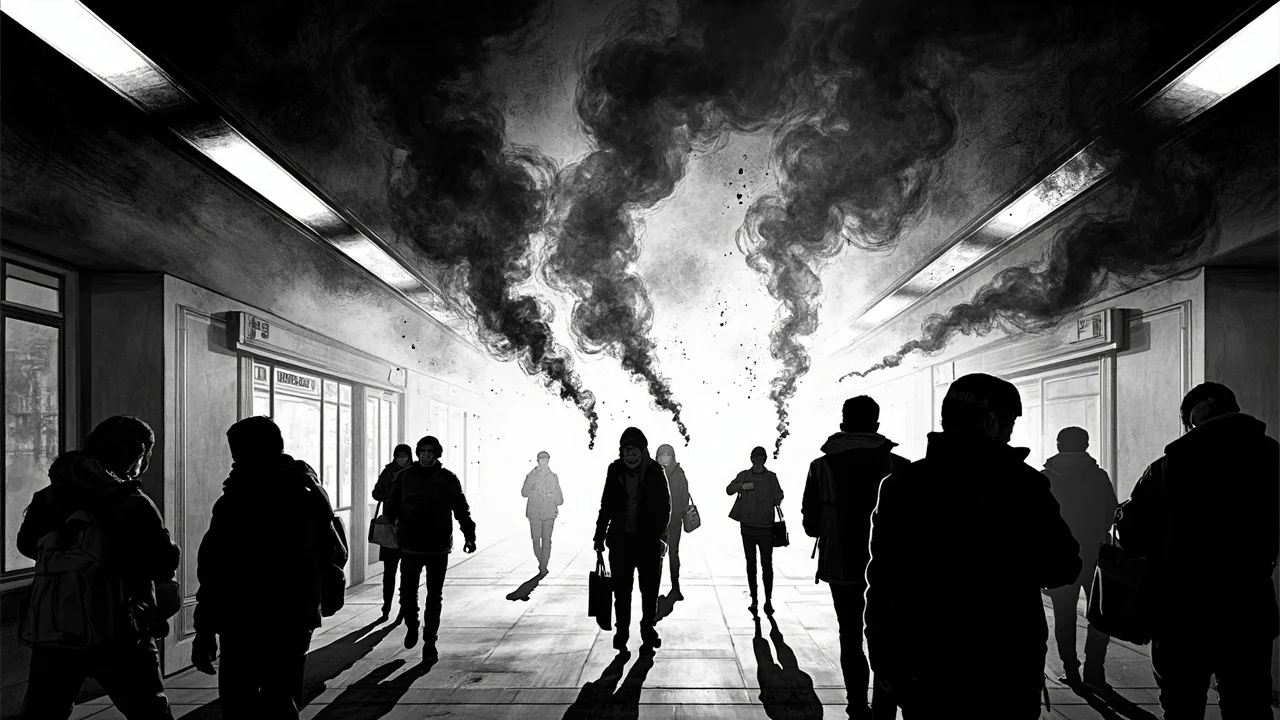
Norway's critical Oslo Tunnel rail link was paralyzed by a smoke incident at Nationaltheatret station on Tuesday, forcing a major evacuation and halting all traffic through the capital's busiest underground artery. Emergency services rushed to the scene after reports of smoke development from a train set near the central station. The situation remained unclear for hours, disrupting thousands of commuters and exposing the vulnerability of Oslo's transport network.
Passengers were evacuated from both the stationary train and the station platform area as a precaution. Police confirmed no injuries were reported, but the decision to stop all traffic between Oslo Central Station and Skøyen was immediate. The Oslo Tunnel, a dual-track passage running beneath the city center, carries all mainline and commuter rail services connecting the eastern and western parts of the metropolitan area. Its closure creates an instant and severe bottleneck.
A Delicate Operation in a Critical Artery
Harry Korslund, a press officer for the national rail infrastructure manager Bane Nor, stated the response followed standard safety protocols. "It is reported smoke development in the Oslo Tunnel. Fire and rescue services have been alerted and are on their way to find out what this is," he said in an initial statement. He emphasized that traffic stops are automatic for such incidents until the situation is clarified. The cause of the smoke was unknown, leaving authorities to work in a high-stakes environment.
"For safety reasons when it comes to this type of event, we stop traffic until the situation is resolved," Korslund explained. The duration of the disruption hinged entirely on the investigation's findings. Even a minor technical fault can cause significant ripple effects. The incident occurred outside the morning rush hour, but the impact was swift and widespread. "Even though we are outside rush hour, it quickly affects many departures through the Oslo Tunnel," Korslund noted, underscoring the line's constant importance.
The Strategic Weak Point in Norway's Rail Network
The Oslo Tunnel is not just another piece of track; it is a strategic national infrastructure asset. Opened in 1980, the 3.6-kilometer tunnel was a engineering milestone that connected the previously separate eastern and western rail networks. Today, it is the single most congested rail section in Norway, used by local commuter trains, regional services, and long-distance express trains to Bergen, Stavanger, and Trondheim. Its closure effectively severs the country's rail network in two.
Transport analysts point to this incident as a stark reminder of systemic risk. "The Oslo Tunnel is our spinal cord," said Lars Erik Forseth, a senior researcher at the Institute of Transport Economics. "There is no real redundancy. When it goes down, the entire system experiences paralysis. This smoke event, while hopefully minor, highlights a long-discussed vulnerability. We have put all our eggs in one underground basket." Discussions about a second, relief tunnel have circulated for decades but remain mired in planning and funding debates.
Emergency Protocols and Passenger Response
The response unfolded with practiced coordination between Bane Nor, the Oslo Fire and Rescue Service, and police. Evacuating a smoke-filled underground environment presents unique challenges. Passengers were directed out of the station and onto the streets above, while emergency crews assessed the train itself. The priority is always to rule out fire or toxic fumes before any recovery operation can begin.
Social media filled with images and messages from affected travelers, many expressing frustration over the lack of immediate information and alternative transport options. With the tunnel closed, bus services experienced sudden overload, and roads became more congested. The incident tested the real-world effectiveness of contingency plans for moving large numbers of stranded passengers. For a city that prides itself on efficient public transit, the disruption was a noticeable shock.
Economic and Operational Ripple Effects
Beyond the immediate inconvenience, such stoppages carry a tangible economic cost. Delays to freight trains disrupt logistics chains. Business meetings are missed, and workers are late. The reputational damage to a reliable rail service, while intangible, can influence public trust and future investment choices. Bane Nor and the train operators face compensation claims for delays under passenger rights regulations.
Each minute of downtime also puts pressure on scheduling for the rest of the day and night, as crews and rolling stock fall out of position. "The recovery from a complete tunnel closure takes hours, not minutes," explained a veteran train dispatcher who spoke on condition of anonymity. "You have trains stranded on both sides. You have to carefully reset signaling systems, reposition trains, and then restart services in a sequence that doesn't cause new conflicts. It's a giant puzzle."
A Recurring Challenge for Urban Rail Systems
Smoke and fire incidents in deep underground rail systems are a universal concern for metro operators worldwide. Electrical faults, overheated brakes, or malfunctioning equipment on trains are common culprits. The confined space amplifies the danger, making rapid detection and response paramount. Norway's rail system is generally considered safe and modern, but it is not immune to technical failures.
This event will likely trigger a post-incident review by the Norwegian Railway Authority. Investigators will examine maintenance records for the involved train, check tunnel ventilation systems, and assess the communication flow during the emergency. The findings often lead to updated technical directives or procedural tweaks. The goal is to prevent recurrence, or at least improve response times.
Looking Ahead: Resilience in the Face of Disruption
As Oslo continues to grow, the pressure on the Oslo Tunnel will only increase. The incident at Nationaltheatret station serves as a timely, if unwelcome, stress test. It raises difficult questions about infrastructure investment priorities. Is the billions needed for a second tunnel a prudent safeguard, or an overreaction to rare events? Can technology, such as improved fire suppression systems on trains or better monitoring sensors, mitigate the risk sufficiently?
For now, the resolution of Tuesday's incident brought a slow return to normalcy. Services resumed after emergency crews gave the all-clear, the cause perhaps logged as a minor technical glitch. But the memory of the halted trains and the silent tunnel will linger. It is a reminder that beneath the smooth surface of a modern city, complex systems are always at work, and their fragility is only one wisp of smoke away. How Norway chooses to strengthen this critical link will define the reliability of its capital's transport for decades to come.