
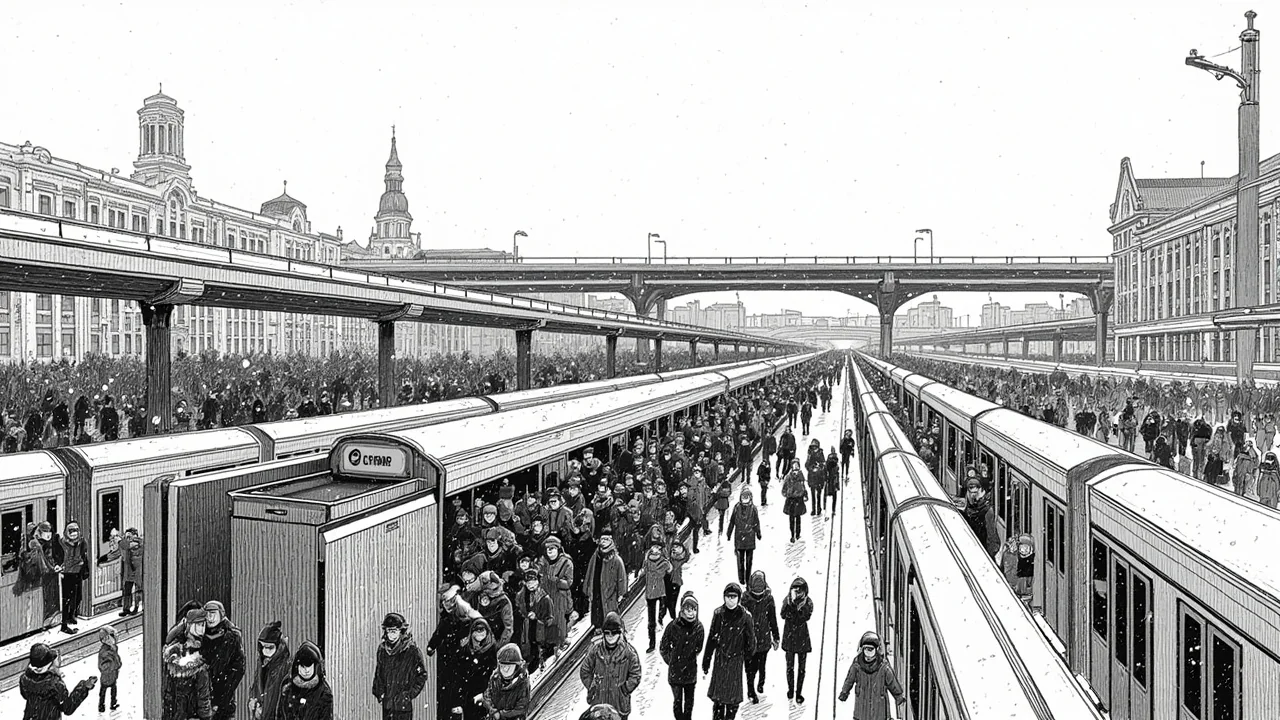
Norway's capital Oslo faced a morning of transit gridlock on Tuesday as a critical switch failure at Tøyen station disrupted the entire T-bane network. The fault, reported at 6:45 AM, forced trains to operate at reduced speeds through a key junction, creating cascading delays across all six lines during the peak rush. While the technical issue was resolved by mid-morning, transit authorities warned of lingering delays throughout the afternoon, affecting an estimated 100,000 daily passengers.
The disruption highlighted the vulnerability of Oslo's centralized subway system. Tøyen station functions as a major interchange where multiple lines converge, making it a critical point in the network. A single point of failure there can create ripple effects felt from Frognerseteren in the west to Mortensrud in the south-east. Commuters reported chaotic scenes at major stations like Jernbanetorget and Nationaltheatret, with platforms crowded and real-time information screens displaying widespread delays.
The Anatomy of a Rush Hour Failure
A switch, or 'veksel', is a mechanical set of rails that guides trains from one track to another. The failure at Tøyen involved this mechanism becoming stuck or unresponsive. For safety protocols, trains were required to pass the affected area at dramatically reduced speeds. This slowdown created a bottleneck. Imagine a major highway suddenly reduced to a single, slow-moving lane during morning traffic. The effect on the subway's schedule was immediate and severe.
Passenger frustration grew as the morning progressed. Many who rely on the T-bane's famed punctuality for getting to work, school, or appointments found themselves stranded. Alternative transport options, including buses and trams, experienced increased pressure, while taxi availability plummeted and ride-share prices surged in response to demand. The economic cost of such a widespread delay, in lost productivity and disrupted business, runs into the millions of kroner for a single morning.
Systemic Vulnerabilities and Network Pressure
This incident is not an isolated one. Oslo's T-bane, while generally efficient, operates under significant strain. The network carries over 350,000 passengers on an average weekday. Its infrastructure, particularly in the older central sections, is subject to the wear and tear of constant use. The system's interlinked design is a strength for connectivity but a weakness for resilience. A problem at a hub like Tøyen, Majorstuen, or Stortinget station inevitably becomes a system-wide problem.
Transport analysts point to underinvestment in preventative maintenance as a contributing factor. While new lines like the Fornebubanen are under construction, maintaining the core, existing network is equally crucial. "These systems are the arteries of the city," said a transportation engineer familiar with the network, who spoke on condition of anonymity. "A small technical fault can cause a city-wide infarction. The focus is often on expansion, but the health of the current infrastructure needs constant, detailed attention." The city's growing population only increases this pressure, pushing more passengers onto a network built for a smaller Oslo.
The Ripple Effect on City Life
The impact extended far beyond the subway platforms. City streets saw an unexpected influx of cyclists and pedestrians as commuters sought other ways to move. Local cafes near major stations reported a brief boom in business from people waiting for services to normalize. Conversely, businesses that depend on punctual employee or customer arrivals, such as restaurants preparing for lunch service or clinics with morning appointments, faced operational challenges.
For parents, the disruption caused a logistical nightmare, delaying school drop-offs. The episode served as a real-time stress test for the city's overall mobility ecosystem. It revealed a continued over-reliance on a single, albeit robust, public transit mode. While Oslo promotes a vision of a car-free city center, its alternative transport networks—bike lanes, trams, buses—were quickly saturated when the T-bane faltered.
Looking Ahead: Resilience and Redundancy
The post-incident review will likely focus on two areas: faster fault response and building network redundancy. The repair crew's ability to fix the switch within a few hours prevented a total shutdown, but the hours of delays indicate room for improvement in contingency planning. Could bus bridging services be activated more swiftly? Is there better real-time communication for passengers already in the system?
Longer-term, the question is whether the network design itself needs re-evaluation. Creating more bypass options or decoupling certain lines to prevent total network contagion are complex and expensive proposals. However, as climate goals push more people onto public transit, the system's reliability becomes not just a convenience issue, but an economic and environmental imperative. The city's ambition to become a leading sustainable capital hinges on a transit system that is not only green but also unshakeably dependable.
The Tuesday morning disruption was a sharp reminder. For a city that has invested heavily in its public transit identity, the path forward requires investing just as heavily in its resilience. The thousands of commuters caught in Tuesday's delays will be watching to see if this incident accelerates that investment, or if it becomes just another forgotten glitch in the daily grind. Can Oslo's transit system evolve to withstand a single point of failure, or will its central hubs remain its greatest vulnerability?