
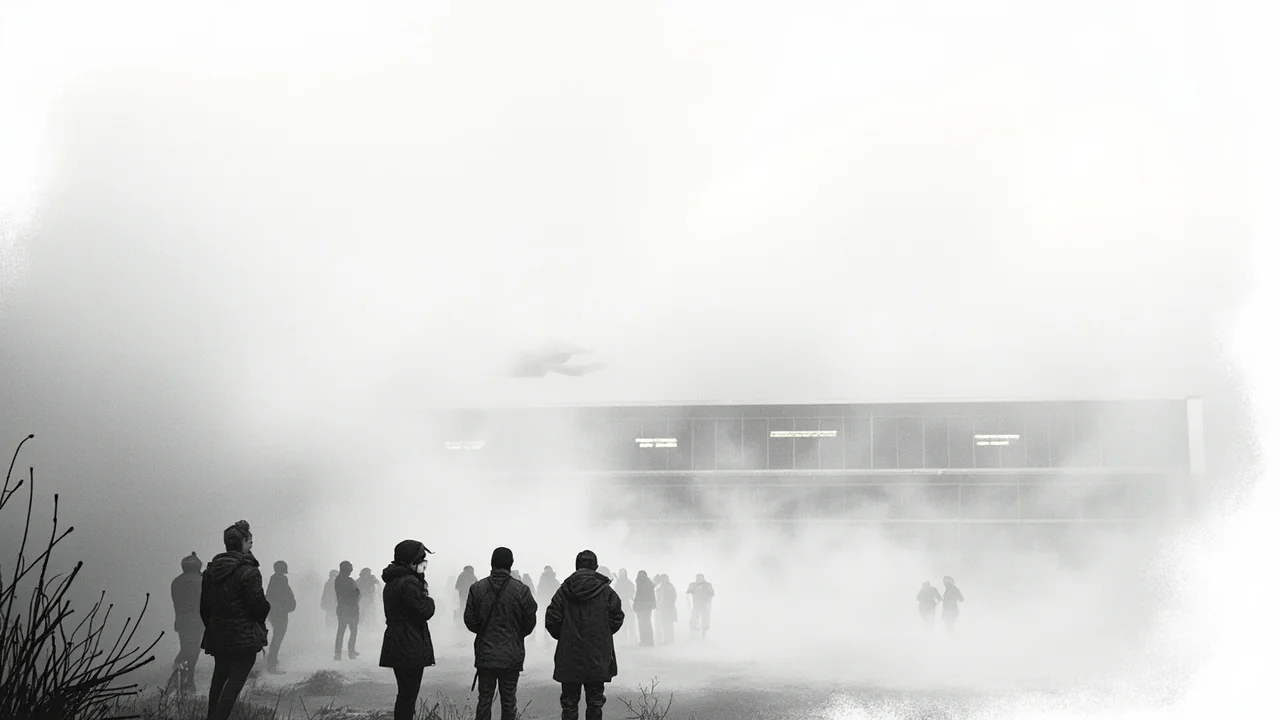
Norway's Tromsø Airport has suspended all operations as dense, impenetrable fog reduced visibility to near zero, forcing multiple aircraft to circle aimlessly or divert to distant alternatives. The airport's manager, Ivar Helsing Schrøen, confirmed the total halt in traffic, stating that thick fog was causing severe operational disruptions. He emphasized that airline safety rules strictly govern minimum visibility requirements, which cannot be met under current conditions. This sudden shutdown has created immediate chaos for Arctic travel, stranding passengers and highlighting the vulnerability of Northern Norway's critical air links to harsh weather.
Airport Chief Cites Zero Visibility Conditions
Ivar Helsing Schrøen, the head of Tromsø Airport, delivered a terse assessment via text message. 'Thick fog gives operational disturbances,' he wrote. 'The airlines have rules for sight, and it is currently very poor because of the fog.' His statement underscores the non-negotiable safety protocols that have brought all take-offs and landings to a standstill. No flights have departed from Tromsø for an extended period, and the control tower has effectively closed its runways to all traffic. The situation is being monitored continuously, but no improvement in visibility is immediately forecast.
Diversions to Bardufoss and Alta Airports
With Tromsø inaccessible, incoming flights have been forced to seek alternatives. A Wizz Air flight originating from Gdansk was unable to land and remains in a holding pattern. An SAS flight, after initially diverting to Bardufoss Airport for a technical stop, joined other aircraft circling over the region awaiting clearance. The ripple effects are being felt across the region. Jens Martin Nerdal, the manager of Alta Airport, confirmed his facility has received more traffic than usual. 'We have taken in several more flights than normal as a result of the fog in Tromsø,' Nerdal stated, indicating that Alta is serving as a crucial pressure valve for the disrupted air network.
Passenger Stranding and Airline Logistics
Hundreds of travelers are now facing significant delays and uncertainty. Flights scheduled to arrive in Tromsø are listed as delayed, while outbound passengers are stuck at the terminal with no indication of when services might resume. Airlines are scrambling to re-route passengers and manage aircraft rotations, a complex logistical challenge in the remote Arctic. The economic impact is immediate, affecting tourism, business travel, and essential cargo movements. For residents and visitors alike, this fog event is a stark reminder of the isolation that can swiftly descend upon Northern communities when the weather turns.
Arctic Weather's Grip on Aviation Infrastructure
Tromsø's location on the coast of the Norwegian Sea makes it particularly susceptible to sudden and dense fog banks, especially during seasonal transitions. This is not an isolated incident, such weather-related closures periodically plague airports throughout Northern Norway. The region's aviation system is designed with this in mind, relying on a network of airports like Bardufoss and Alta to provide alternatives. However, each diversion strains resources and extends travel times considerably. The persistent fog challenges the very efficiency of air travel in the High North, a region dependent on reliable air connections for everything from medical evacuations to industrial supply chains.
Tromsø: A Critical Arctic Hub
Tromsø Airport is far more than a local facility, it is the primary air gateway for the Norwegian Arctic and a vital node for scientific, tourist, and governmental traffic to Svalbard and the wider Barents region. Its closure disrupts not only local schedules but also international linkages. The airport handles a substantial volume of traffic connecting mainland Norway to its remote Arctic territories. This disruption comes at a time when the Norwegian government, through the Storting, has emphasized strengthening Arctic infrastructure as part of its broader northern policy. Events like this directly test the resilience of those strategic investments.
Safety Regulations and Operational Limits
Airlines operating in Norway adhere to strict Norwegian and European aviation safety regulations that mandate specific minimum visibility thresholds for landing. These rules are absolute and are not waived for convenience. In conditions of thick fog, even with advanced instrument landing systems, the risks are deemed too high. This incident demonstrates the rigorous application of these safety standards, prioritizing passenger safety over operational continuity. The rules ensure that the challenging Arctic environment is respected, but they also mean that travel plans are often at the mercy of the weather.