
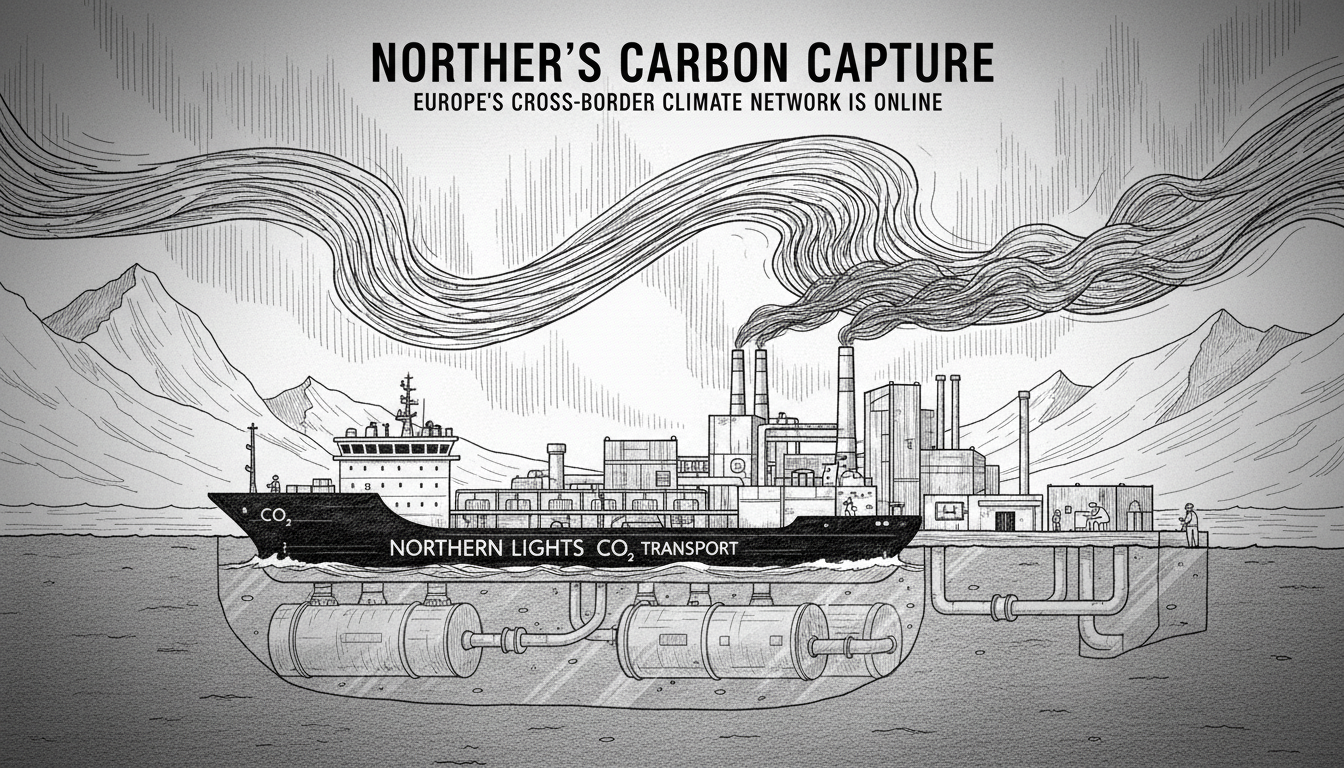
The Norwegian Energy Ministry confirmed completion of Northern Lights carbon capture facilities. This marks the transition from construction to operational phase in their Longship project segment. The facilities include two specially built CO₂ transport ships. They also feature onshore receiving terminals and underwater pipeline systems. Subsea injection equipment will store carbon dioxide beneath the ocean floor.
Northern Lights represents Europe's first cross-border carbon transport network. The project can store 1.5 million tons of CO₂ annually during its initial phase. Norway aims to demonstrate carbon capture technology at industrial scale. This development comes as European countries seek practical climate solutions.
Carbon capture faces both technical challenges and cost questions. The Norwegian government has invested heavily despite some criticism about expense. The technology could help heavy industries reduce emissions while continuing operations. Norway's geological formations make it ideal for undersea carbon storage.
What does this mean for European climate goals? The project shows carbon capture moving from concept to reality. Other countries may now consider similar storage solutions for their industrial emissions.