
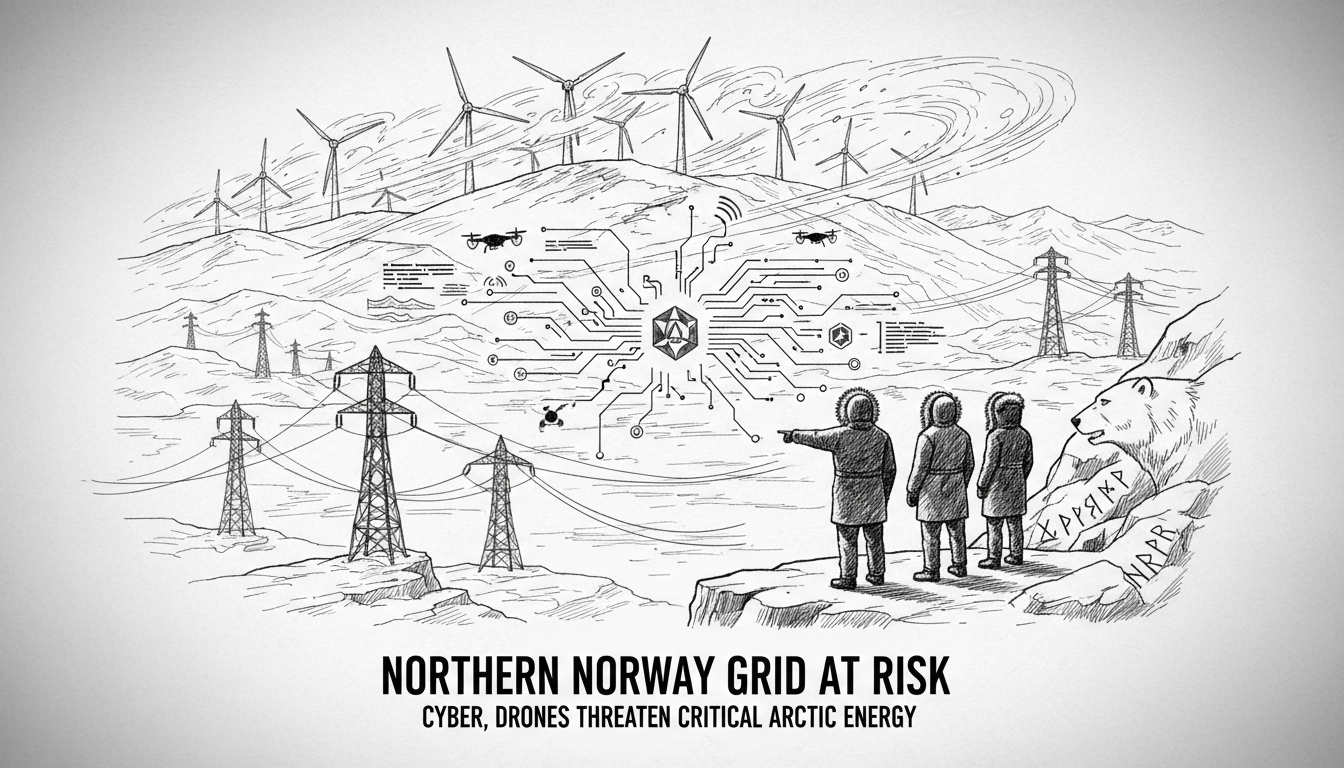
Four northern Norwegian power companies have issued a joint warning about unsustainable electricity framework conditions. They raised these concerns during an Energy Department consultation process. The companies seek to change what they describe as bottleneck regulations.
Arva, Linea, Noranett and Barentsnett operate across northern Norway's vast territories. They serve communities from Tromsø to Kirkenes near the Russian border. These regions face unique Arctic challenges that southern Norway does not experience.
Eirin Kjølstad, Arva's managing director, emphasized the security implications. She stated in a press release that grid protection involves national security, not corporate economics. The power network represents critical infrastructure requiring protection from multiple threats.
Northern grid operators report substantially increased risk levels in recent years. They specifically cite jamming incidents, unauthorized drone traffic and cyber events. These threats coincide with Norway's heightened strategic importance following European energy realignments.
Why does this matter for international observers? Norway's northern power grid supports vital Arctic operations. It powers offshore installations in the Barents Sea, including the Johan Castberg and Snøhvit fields. The grid also enables Norway's strategic military presence near Russia's Kola Peninsula.
Norwegian energy policy traditionally balanced environmental concerns with economic interests. This new security focus represents a policy evolution. The Storting now faces difficult decisions about infrastructure investment priorities.
Northern Norway's electricity infrastructure differs fundamentally from southern systems. It covers vast distances with sparse population density. Maintenance costs per customer run substantially higher than national averages.
Recent geopolitical developments have transformed Arctic security calculations. Norway's role as Europe's primary gas supplier increases its infrastructure vulnerability. The government must weigh these new realities against traditional regulatory approaches.
What happens next? The Energy Department will review consultation responses throughout the third quarter. Storting energy committee members have already signaled receptiveness to security arguments. Committee chair Marianne Synnes emphasized infrastructure resilience during recent hearings.
The four companies collectively serve approximately 220,000 customers across northern Norway. Their territories include strategically important locations like the Andøya Space Center and several military installations. Any prolonged power disruption could have national security implications beyond immediate customer impacts.
Norway's electricity regulatory framework evolved during peacetime conditions. Current threat assessments suggest this approach requires updating. The government faces pressure to act before potential incidents occur rather than responding afterward.
International energy markets should monitor this situation closely. Norway maintains Europe's most stable electricity supply system. Any degradation in reliability could affect energy exports and European price stability.
The Arctic represents Norway's newest energy frontier but also its most vulnerable. Balancing development with security requires careful policy calibration. This consultation may signal the beginning of substantial regulatory evolution.