
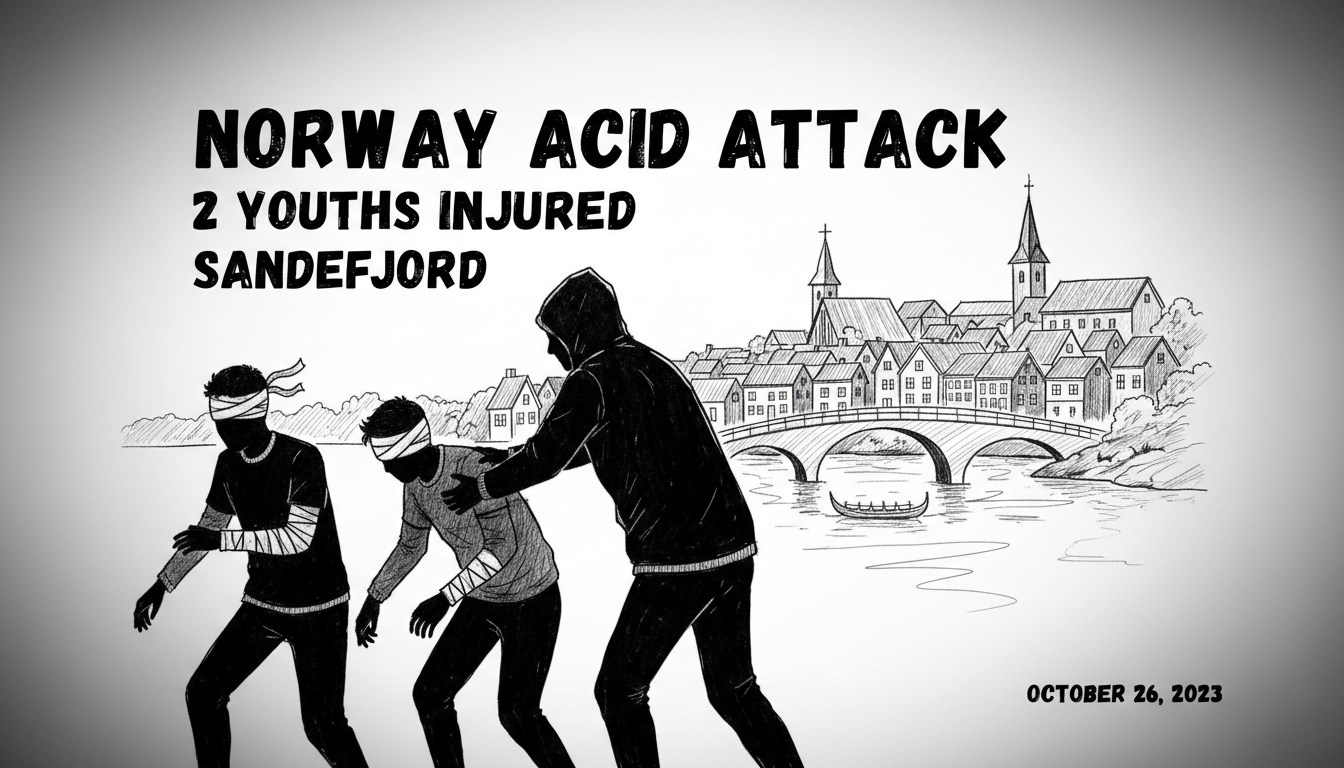
Norway's typically tranquil coastal city of Sandefjord was shaken Saturday night by a violent chemical assault. Two young males were injured by a corrosive liquid in an incident that has sent shockwaves through a community more accustomed to maritime heritage than violent crime. Police received the emergency call at 9 PM local time, with first responders rushing the victims to hospital for urgent treatment.
A Community in Shock
The attack occurred in Sandefjord, a picturesque municipality of 46,000 people in Vestfold county. Known globally for its whaling history and as a summer tourist destination, the city now grapples with a crime that feels profoundly alien. Violent assaults, particularly involving corrosive substances, are exceptionally rare in Norway. The country maintains one of the world's lowest homicide rates, at approximately 0.5 per 100,000 inhabitants. This statistical reality makes Saturday's event not just a local tragedy but a national anomaly.
Police have notified the parents of the injured youths but have released few details about their conditions or identities. The operational leader for the South-East Police District confirmed emergency services were on scene quickly. The immediate focus was securing the area and providing lifesaving medical care. The corrosive nature of the liquid suggests potentially severe and lasting injuries, raising the stakes for investigators and healthcare providers alike.
The Grim Reality of Chemical Violence
While acid and corrosive substance attacks are documented in other European nations, they remain almost unheard of in the Nordic region. Such attacks often cause devastating physical and psychological trauma, with victims facing complex surgeries, permanent scarring, and blindness. The choice of weapon is significant, indicating a specific intent to inflict maximum, lasting harm rather than a spontaneous act of physical violence.
Criminologists note that these attacks, where they occur, are frequently tied to interpersonal conflicts, gang intimidation, or targeted retaliation. The Norwegian Police Security Service (PST) will likely examine any potential connections to organized crime or group conflicts, though police have not suggested any motive. The investigation's first phase involves identifying the exact chemical used, which will inform both medical treatment and forensic analysis.
"Any use of a corrosive substance as a weapon is a deeply serious crime that causes extreme suffering," said a senior security analyst, speaking on background due to the active investigation. "In the Norwegian context, it is highly unusual. The priority is a meticulous forensic investigation to understand the substance, its origin, and the precise circumstances."
Policing a Peaceful Society
The response highlights Norway's integrated emergency service model. Police, ambulance, and potentially fire services with HAZMAT training would coordinate at the scene. The South-East Police District, responsible for Sandefjord, now faces the complex task of investigating a crime with few local precedents. Their approach will likely combine traditional detective work with forensic chemistry and digital footprint analysis.
Community policing is a cornerstone of Norwegian law enforcement. This incident will test those bonds, as officers seek witnesses and information from a public unaccustomed to such brutality. Police have already issued a public appeal for information, photos, or video from the area around the time of the attack. The silence of a small city on a Saturday night may be their greatest challenge or their best lead.
A National Conversation on Safety
Beyond the immediate criminal inquiry, the attack prompts uncomfortable questions. Is this an isolated, tragic event, or does it signal a shift in the nature of violence in one of Europe's safest countries? Norway's low crime rate is a point of national pride and a key component of its societal model. Incidents that starkly contradict this self-image resonate deeply.
Public debate may turn to the accessibility of corrosive chemicals, which are common in industrial cleaning products, certain trades, and even household supplies. Norway has strict controls on firearms and other weapons, but regulations on the sale of strong acids and alkalis are less prominent in public discourse. This case could spur legislative review, though authorities will first need to determine if the substance was commercially obtained or specially prepared.
The Long Road Ahead for Victims
The human cost extends far beyond the initial response. The two youths face a difficult and painful recovery. Norwegian healthcare excels at trauma treatment, but chemical burns require specialized, long-term care. Psychological support for the victims and their families will be crucial, as the trauma of such a targeted attack can be severe.
Sandefjord itself must also heal. The sense of safety in a close-knit community has been fractured. Local schools and community centers may need to provide support networks, especially for young people trying to process the event. The city's identity, so tied to its harbor, museums, and summer festivals, is now momentarily overshadowed by a single act of violence on a Saturday evening.
An Investigation Underway
As of now, the police work continues with no suspects named and no clear motive established. The scene has been secured for forensic examination. Investigators are piecing together the victims' movements prior to the attack and searching for any CCTV footage from nearby homes or businesses. The corrosive liquid itself is a key piece of evidence; its chemical signature could point to a specific source or use.
The coming days will be critical. Police will balance the need for thorough investigation with public demand for information and reassurance. In a nation where trust in authorities is high, transparency will be vital to maintaining public confidence. Any suggestion that this was a targeted, premeditated act using a particularly cruel method will heighten concern.
Norway has been tested by tragedy before, from the 2011 terror attacks to rare acts of extreme violence. Each time, the response has been characterized by a collective reaffirmation of societal values: care for victims, a methodical pursuit of justice, and a refusal to let fear redefine public life. The people of Sandefjord, and Norway as a whole, now face that test again. The question is not just who did this, but what it says about the enduring peace of a society suddenly confronted with a different kind of wound.