
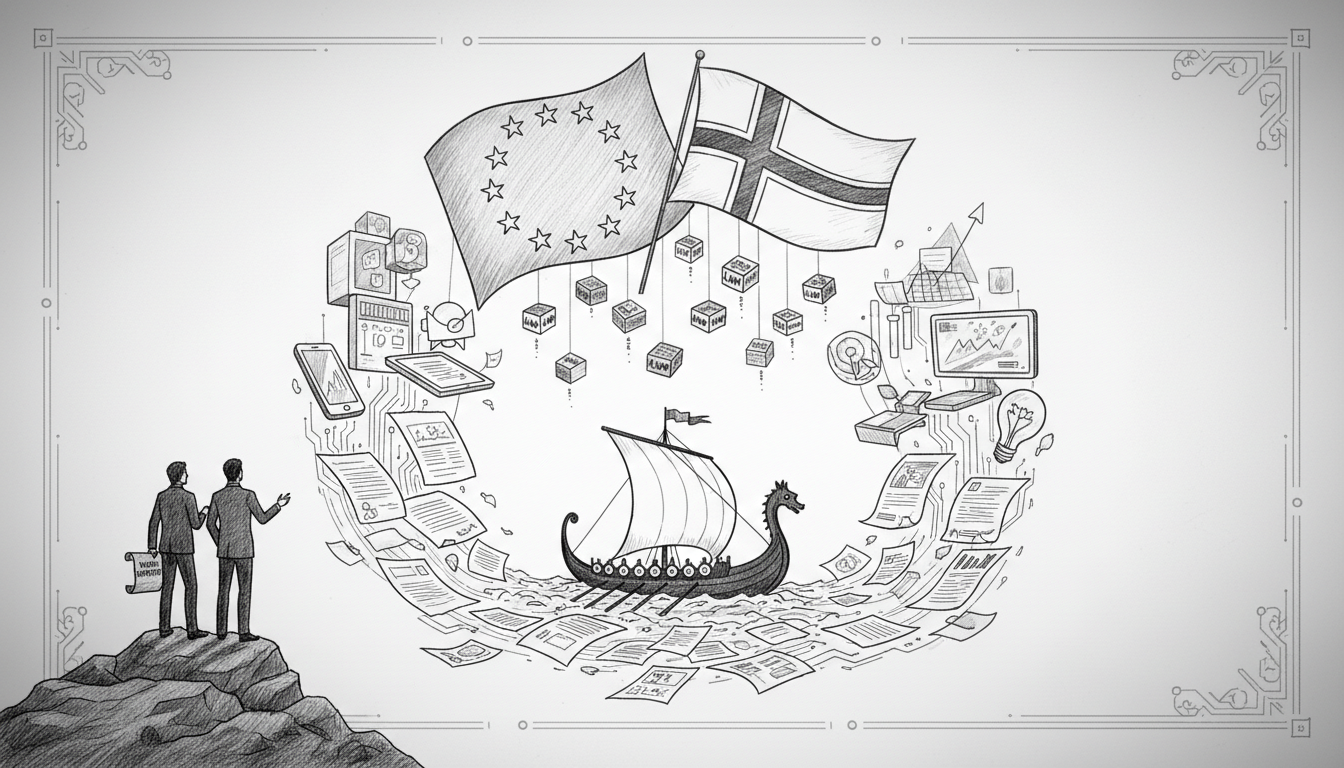
The European Economic Area (EEA) Committee in Brussels has approved the integration of 152 new EU directives and regulations into the EEA Agreement. This move will directly apply these laws in Norway, a non-EU member bound by the treaty. The package includes a directive on the eco-design of mobile phones and tablets, aiming to reduce the energy consumption and environmental impact of these products. Additional rules cover data governance, new food and animal feed standards, and a series of financial directives. Officials note that many of the new acts constitute minor amendments to existing frameworks.
If the plan proceeds, the 152 legal acts will be formally incorporated into the EEA Agreement at the EEA Committee's meeting this Friday. This routine yet substantial legislative alignment underscores Norway's deep integration with the EU single market. The process often proceeds with little public debate in Norway, despite its significant impact on national regulations. The Storting, Norway's parliament, has limited power to amend these rules once they are accepted through the EEA framework.
The new eco-design rules for electronics will affect products sold across Norway, from Oslo to Tromsø. Manufacturers will need to ensure phones and tablets meet stricter energy efficiency standards. This aligns with broader European green transition goals but also imposes compliance costs on businesses. The data and financial directives will further harmonize Norwegian law with evolving EU digital and banking markets. For international companies operating in Norway, this reduces regulatory divergence but also means adapting to a shifting legal landscape.
Norway's relationship with the EU is uniquely defined by the EEA Agreement. It grants access to the single market in exchange for adopting relevant EU legislation. This latest batch of rules is a standard quarterly update, but its scale is notable. The agreement remains a cornerstone of Norwegian economic policy, yet it is a perennial source of political tension. Parties on the left and right critique the loss of sovereignty, even as the business community largely supports the stable market access it provides.
What does this mean for Norway's famed energy sector? The direct impact on oil and gas operations in the North Sea may be minimal this time. The focus is on consumer goods and finance. Yet, the mechanism itself is crucial. It demonstrates how EU climate and digital policy steadily shapes Norwegian law. Future directives on renewable energy or maritime emissions could more directly affect Norway's offshore industries. The continuous legal integration through Brussels committee meetings is a quiet but powerful force on Norwegian sovereignty.
Norwegian politicians have mixed reactions to these routine adoptions. Some members of the Storting argue the process lacks sufficient democratic scrutiny. Others stress the economic necessity of single market alignment. The reality is that rejecting such packages would trigger a complex dispute resolution process and potentially jeopardize market access. For now, the path of least resistance is to approve the updates. This pragmatic approach defines Norway's European policy, balancing economic benefits against political optics.