
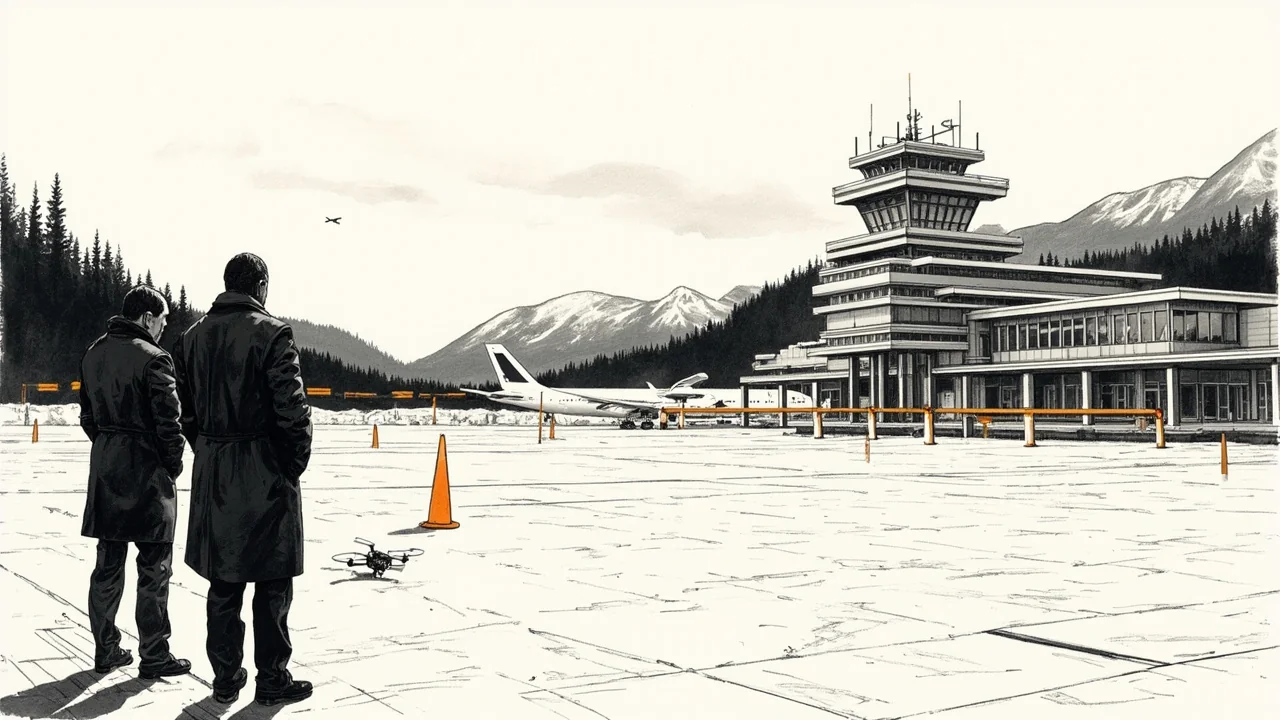
Oslo Airport's east runway was forcibly closed for over an hour Saturday afternoon after aviation authorities detected a drone within the strict no-fly zone, disrupting air traffic and triggering a failed police hunt for the operator. The incident at Norway's busiest air hub underscores persistent vulnerabilities in critical national infrastructure, with officials confirming the runway reopened by 14:30 after a security sweep. Police called off their search at 14:38, having found neither the drone nor its pilot, leaving unresolved questions about airspace security.
The Alert and Immediate Closure
Aviation authority Avinor first alerted police to a possible drone sighting near Oslo Airport Gardermoen on Saturday afternoon. A police press officer, Karoline Pedersen, stated they had 'observed and detected a drone within the prohibited zone at Oslo Airport.' This immediate detection triggered protocol, leading to the precautionary shutdown of the eastern runway. Pedersen noted the airport was experiencing a period of high traffic, advising passengers to anticipate minor delays as a result. The closure represents a direct operational interference, forcing controllers to reroute flights and manage capacity on the remaining active runway.
This is not an isolated event. Drone incursions near Norwegian airports have repeatedly caused shutdowns, highlighting a gap between regulation and enforcement. The restricted zone around airports extends several kilometers, where all drone flight is banned without explicit permission. Despite this legal framework, pilots either ignore the rules or operate negligently, creating tangible risks for aviation safety. The quick decision to close the runway reflects the zero-tolerance approach adopted after international incidents elsewhere demonstrated the catastrophic potential of drone-aircraft collisions.
Chronology of the Response
The response unfolded with procedural precision. Upon Avinor's notification, police units were dispatched to the airport perimeter to initiate a search. Authorities simultaneously enacted air traffic control measures to isolate the affected airspace. For the duration of the closure, inbound flights were likely held or diverted, while departures faced sequencing delays. The operational tempo at Gardermoen, which handles over 28 million passengers annually, was visibly impacted. Pedersen's acknowledgement of 'small delays' downplays the cascading effect such an incident can have on national and European flight schedules.
Police efforts to locate the pilot proved fruitless. After a search period, they concluded their ground operation without a suspect or equipment. This outcome is common in such cases, as drones can be operated from a distance and quickly landed and stored. The inability to apprehend the operator leaves no avenue for fines or prosecution under Norway's Aviation Act, which can penalize illegal drone flights with substantial fines or imprisonment. The incident concludes with no accountability, a point that frustrates both aviation officials and law enforcement.
Systemic Vulnerabilities and National Policy
The drone scare at Oslo Airport taps into broader concerns about protecting Norway's critical infrastructure. As the Norwegian Affairs Correspondent, I see clear parallels to the security of offshore oil platforms in the North Sea and remote Arctic installations. These sites are equally susceptible to drone surveillance or interference. The Storting has debated strengthening drone legislation, with some members advocating for advanced detection and jamming technology at key sites. This incident will likely fuel those discussions, emphasizing that airports are just one node in a network of vital assets needing protection.
Norway's drone regulations are stringent on paper but challenging to enforce. The police lack dedicated resources for constant aerial monitoring, relying on reports from authorities like Avinor or the public. After this event, questions will be asked about investing in more automated detection systems around major airports. Some experts suggest following the military's lead in using signal-jamming equipment, though such measures require careful calibration to avoid affecting legitimate communications. The policy implication is clear: reactive closures are not a sustainable solution for a country with extensive, often remote, critical infrastructure.
Analysis: A Recurring Threat to Aviation
From an analytical perspective, Saturday's shutdown is a symptom of a larger technological challenge. Drones are accessible, cheap, and capable, making them tools for mischief, espionage, or worse. For Norway, a nation with significant energy exports and strategic Arctic interests, uncontrolled drones pose a security dilemma beyond airport nuisance. Each incident tests the response protocols of Avinor and the police, providing data to refine operations. However, without deterrence through prosecution, the frequency of these alerts may increase.
The economic impact, while limited in this single event, accumulates over time. Flight delays cost airlines money in fuel and crew time, while disruptions erode passenger confidence. For a hub like Oslo, maintaining a reputation for reliability is crucial for tourism and business connectivity. The authorities' priority is safety, but the financial and operational toll provides a strong incentive to develop more proactive defenses. This balance between safety, cost, and practical enforcement is at the heart of ongoing governmental reviews.
Looking Ahead: Prevention and Enforcement
What comes next after another drone-related closure? The Norwegian Civil Aviation Authority and the Ministry of Transport will likely review this incident's handling. There is increasing political will to address the enforcement gap. Proposals may include stricter registration requirements for drone owners, geofencing mandates for manufacturers, or increased penalties. The Storting's standing committee on transport has previously called for a comprehensive strategy, and real-world events like this add urgency to their work.
Norway's approach may also influence wider Nordic cooperation on airspace security. As drone technology evolves, so must the regulatory and technological countermeasures. The Oslo incident serves as a stark reminder that in an era of ubiquitous technology, national security includes defending the skies from unauthorized objects. The runway has reopened, but the question of how to prevent the next closure remains firmly on the agenda for policymakers in Oslo. The search for the drone pilot may have ended, but the search for a lasting solution is far from over.