
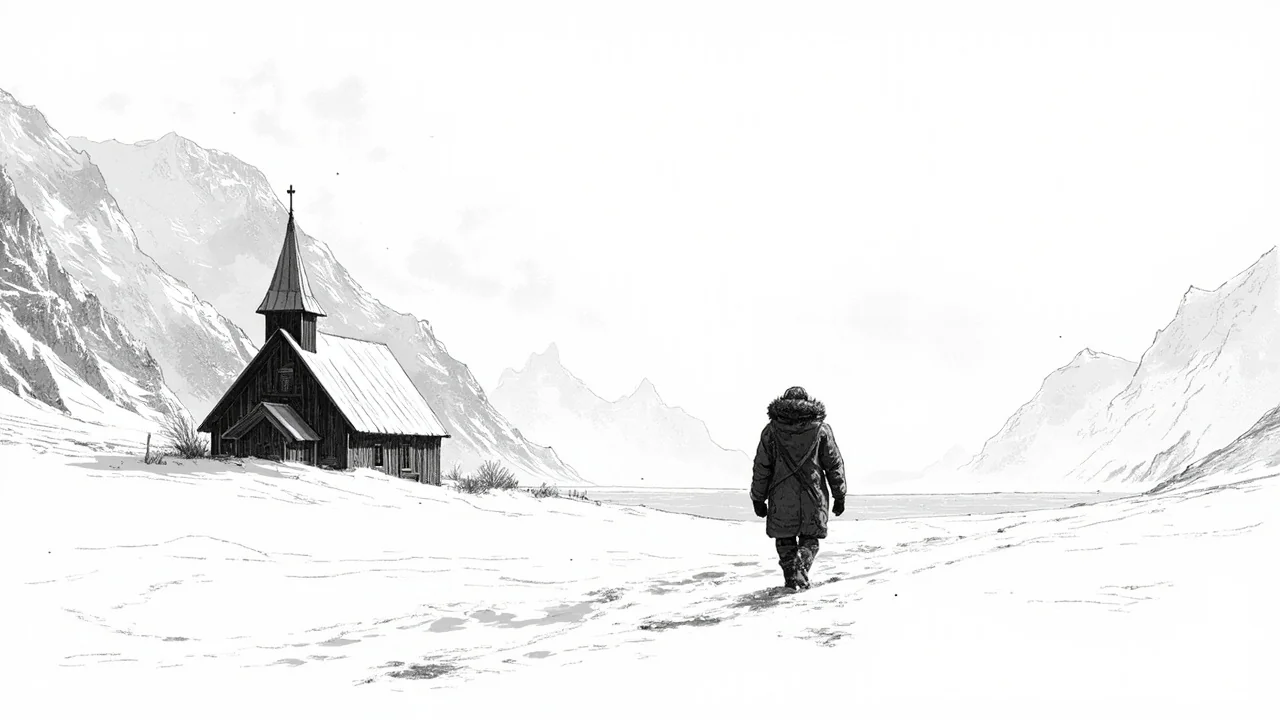
Norway's Arctic town of Karasjok recorded a biting temperature of minus 41.4 degrees Celsius early Friday morning. The measurement, taken at 6:00 AM by the Norwegian Meteorological Institute, marks the coldest reading in the Finnmark region since 2017. This extreme cold snap highlights the formidable winter conditions that define life in the far north and tests the nation's infrastructure and energy resilience.
A Deep Freeze in the Finnmark Plateau
The mercury plummeted to -41.4°C in Karasjok, a Sámi cultural hub located on the Finnmark plateau. Meteorological authorities confirmed this is the most severe cold the town has experienced in seven years. While Karasjok is known for its harsh winters, such extremes are notable even by local standards. The cold air settled over the interior, creating a stark thermal divide with Norway's coastal areas, which are moderated by the Gulf Stream.
Southern Norway also experienced significant cold, though less severe. The village of Folldal, in Innlandet county, registered minus 32 degrees Celsius. This pattern of intense continental cold in eastern and northern interior valleys, contrasted with milder coastal zones, is a classic feature of Norwegian winter meteorology. The high-pressure system responsible creates clear skies and allows heat to radiate rapidly from the snow-covered ground.
Historical Context and Arctic Norms
Temperatures below -40°C are rare but not unprecedented in Norway. The country's all-time record low of -51.4°C was set in Karasjok in January 1886. More recently, the winter of 2017 saw similar cold, with Karasjok dipping below -41°C. These events serve as periodic reminders of the raw climatic forces at play in the Arctic interior. They test the limits of human adaptation and infrastructure designed for extreme environments.
"This is the Arctic showing its true character," said a climatologist from the University of Tromsø, who spoke on background about typical winter patterns. "While global trends point to warming, especially pronounced in the Arctic, natural variability still produces these intense cold spells. They are contained, localized events driven by specific weather setups, particularly in interior regions shielded from maritime influences."
Energy Grid Under Pressure
Such deep cold places immediate and severe strain on Norway's energy system. Heating demand soars as households and businesses work to maintain indoor temperatures. Electric heating, widespread in Norway, leads to a significant spike in power consumption. This occurs while some renewable sources, like hydropower, can face constraints if water intakes risk freezing.
The situation tests the much-debated capacity of the Norwegian power grid and influences electricity market prices. Spot prices in the north (NO1 price area) often become volatile during such cold spells. This real-time stress test comes amid a national conversation about energy security, grid infrastructure investments, and the export capacity of Norwegian electricity to Europe.
Life in the Extreme Cold
For residents of Karasjok and similar communities, -41°C necessitates specific adaptations. Schools may delay opening, vehicles require block heaters and winter-grade oil, and outdoor activities are strictly limited. The Sámi reindeer herding community must monitor their herds closely, as such cold can challenge the animals' ability to forage through snow for lichen.
Local authorities issue warnings about frostbite, which can occur on exposed skin in minutes. There is also increased focus on welfare checks for vulnerable populations, including the elderly. This deep cold underscores the importance of well-insulated housing and reliable community support networks in Norway's remote northern districts.
The Climate Change Paradox
An intense cold spell in one part of Norway inevitably fuels discussion about climate change. It presents a seeming paradox to the public: how can such bitter cold exist in a warming world? Experts consistently explain that weather and climate are different scales. A single cold event does not contradict the long-term trend of Arctic amplification, where the region warms at more than twice the global average rate.
"We must look at the statistics over decades, not at a single thermometer on a single morning," the climatologist noted. "The overall trend is fewer extreme cold days and more mild winters. But the physical processes that cause these high-pressure cold snaps still exist. Their occurrence is compatible with a warming climate, even as their frequency may decrease over time."
Implications for Policy and Preparedness
Events like this morning's -41.4°C reading inform Norwegian policy in several sectors. For the Nordic energy market, it highlights the need for robust, winterized infrastructure and inter-connector flexibility. For social policy, it reinforces the necessity of the northern living allowance and support for remote communities. For Arctic strategy, it is a reminder of the extreme environment that defines Norway's high north ambitions.
The cold also impacts transportation and military operations in the region. The Norwegian Armed Forces, which train extensively in Finnmark for cold-weather operations, use such conditions to test equipment and readiness. Civil aviation must account for the effect of dense, cold air on aircraft performance.
As the sun rose over the frozen plateau on Friday, the temperature in Karasjok likely began a slow climb. But the record of -41.4°C will remain a data point in Norway's climatic history. It is a testament to the enduring power of nature in the Arctic and a prompt for continual assessment of how Norway lives with, and prepares for, the extremes at the top of the world. The nation's response to this deep freeze will be measured not just in kilowatt-hours consumed, but in the quiet, resilient adaptation of its northernmost citizens.