
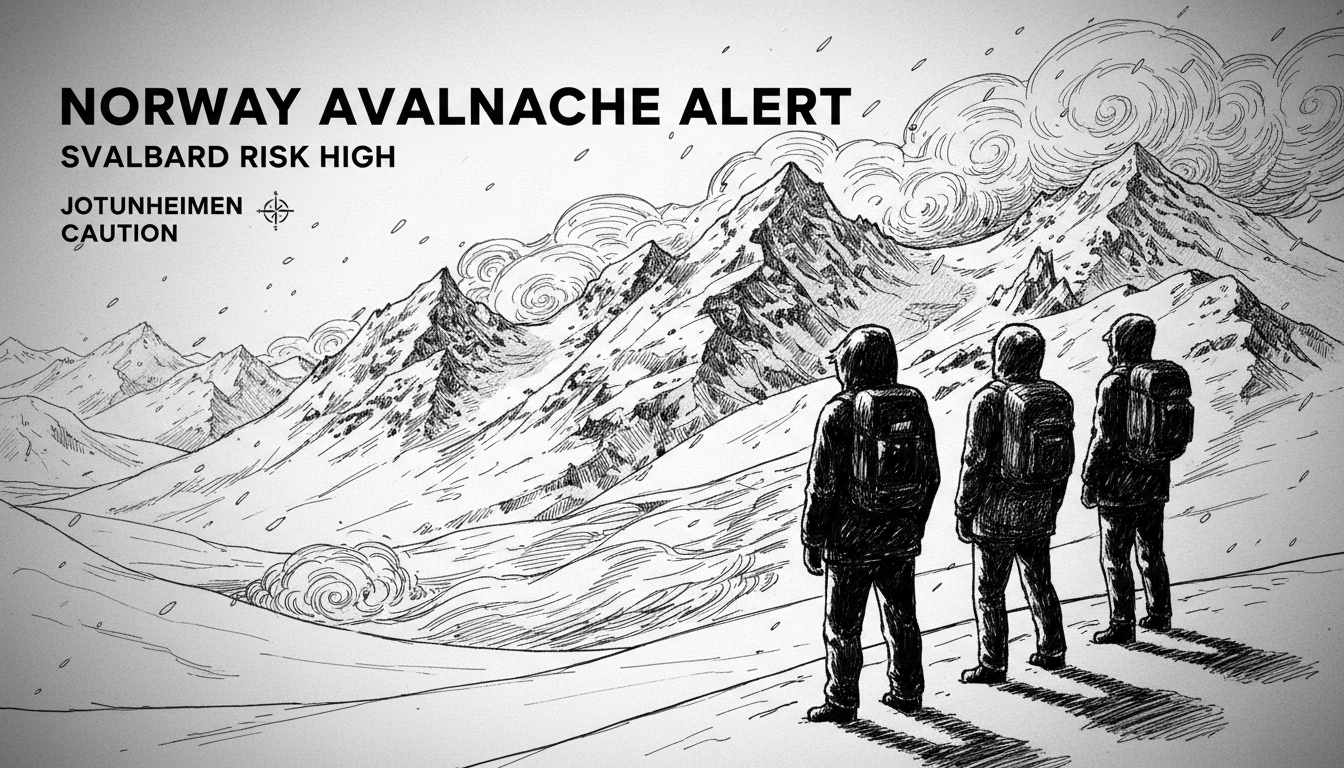
Norway's avalanche risk presents a stark regional divide as the holiday season begins. While mild weather has reduced danger across most of the mainland, the remote Arctic archipelago of Svalbard faces significant avalanche conditions. The Norwegian Water Resources and Energy Directorate (NVE) warns that unstable snow persists in Northern Norway, with new snowfall expected to increase the hazard. In Southern Norway, general snow cover is low, but authorities urge vigilance in high mountain areas like Jotunheimen.
A Nation Split by Snow Conditions
This seasonal risk assessment reveals the complex geography of Norwegian winters. The mainland experiences relatively stable, mild conditions, but two distinct zones require careful attention. Svalbard, located roughly halfway between mainland Norway and the North Pole, operates under a separate and often more severe weather regime. Its avalanche cycles are influenced by polar darkness, extreme cold, and unique wind patterns. Meanwhile, on the mainland, the threat is concentrated in specific alpine regions where older snowpack exists beneath recent mild spells.
"The combination of an established snowpack followed by mild weather is a classic recipe for instability," explained Lars Henrik Bache, a senior avalanche forecaster with NVE. "The surface may soften, but weaker layers beneath can remain. This is particularly relevant for the high mountain areas we are monitoring." NVE issues daily forecasts using a five-level danger scale, with levels three and above indicating considerable to high risk where careful route selection and expert knowledge are essential.
The Arctic Exception: Svalbard on Alert
Svalbard stands as the current focal point for concern. The archipelago's settlements, including Longyearbyen, are nestled in steep valleys prone to snow slides. Avalanche forecasting here differs from mainland models, accounting for permafrost, longer periods of darkness, and different snow crystal formation. A significant avalanche in Longyearbyen in 2015, which destroyed multiple homes and claimed two lives, led to a major overhaul of local risk mapping and mitigation infrastructure, including the construction of defensive snow dams.
Current forecasts indicate a period of heightened natural avalanche activity on Svalbard. This risk impacts not only recreational travelers but also the vital infrastructure and mining operations that function year-round. The governor of Svalbard's office typically issues specific warnings and may restrict travel in certain high-risk zones during such periods. For researchers and tourists, checking both the NVE forecast and local governor's advisories is a mandatory pre-trip ritual.
Mainland Vigilance in Key Regions
On the Norwegian mainland, the picture is fragmented. Northern Norway, from Troms to Finnmark, holds pockets of unstable snow. The forecast of additional snowfall this weekend is a key concern for forecasters. New snow can add weight and stress to already weak layers in the snowpack, increasing the likelihood of both spontaneous and human-triggered slides. This affects popular ski touring and freeride areas around Lyngen, Narvik, and the Lofoten Islands.
Further south, the warning is more targeted. The Jotunheimen mountain range, home to Norway's highest peaks like Galdhøpiggen, is singled out for caution. While lower valleys are largely green, the high-altitude plateaus and slopes retain snow from earlier in the season. This snow has undergone multiple freeze-thaw cycles and been reshaped by wind, creating potential slab conditions. Hikers and early-season skiers ascending into these zones may encounter a deceptive hazard. The risk is often localized to specific slopes and aspects, requiring constant assessment.
Expert Analysis on a Shifting Baseline
Climate scientists note that avalanche patterns in Norway are evolving. Warmer winters lead to more frequent rain-on-snow events, which can create dangerous ice layers within the snowpack. These layers act like sliding boards for subsequent snowfall. Milder temperatures also cause more variable snow consistency, increasing the complexity of stability assessments.
"The basic rules of avalanche safety have not changed," said Kari Aune, a veteran mountain guide based in Tromsø. "But the conditions in which we apply them are becoming more complex. Checking the forecast is step zero. Then you must carry a transceiver, probe, and shovel—and know how to use them. In many areas now, especially with this mild weather, the margin for error is smaller." She emphasizes that the first rule remains to avoid the avalanche altogether through careful terrain choice.
NVE's public forecasting system is a critical tool, but experts stress it is a regional assessment, not a local guarantee. Avalanche risk can change dramatically across a single mountain face. The agency's website and app provide detailed maps showing danger levels for different altitude bands and slope exposures, a resource that is standard practice for anyone traveling in the backcountry.
Navigating the Holiday Season Safely
With the Christmas holiday prompting many Norwegians to head to mountain cabins or engage in winter sports, the timing of this risk assessment is crucial. The contrast between general low risk and specific high-danger zones creates a potential for complacency. Travelers might assume safe conditions everywhere after hearing about mild weather, only to be caught off-guard in an isolated high-altitude bowl or on a wind-loaded slope in Svalbard.
Local mountain clubs and the Norwegian Trekking Association (DNT) reiterate long-standing advice: prepare for the specific trip, not the general forecast. This means studying the route, understanding the day's avalanche forecast for the exact region and elevation, and being prepared to turn back if conditions seem uncertain. In Svalbard, traveling outside Longyearbyen without an experienced, armed guide familiar with avalanche terrain is strongly discouraged, especially during elevated risk periods.
The situation underscores a fundamental principle of Norwegian outdoor life: frihet under ansvar, or freedom under responsibility. The right to roam is extensive, but it is coupled with an expectation of personal preparedness and sound judgment. As the snow line fluctuates with changing winters, that judgment must be informed by the latest data and a respectful understanding of the mountain environment's inherent power. The quiet mountains, whether in the deep Arctic or the southern peaks, demand nothing less.