
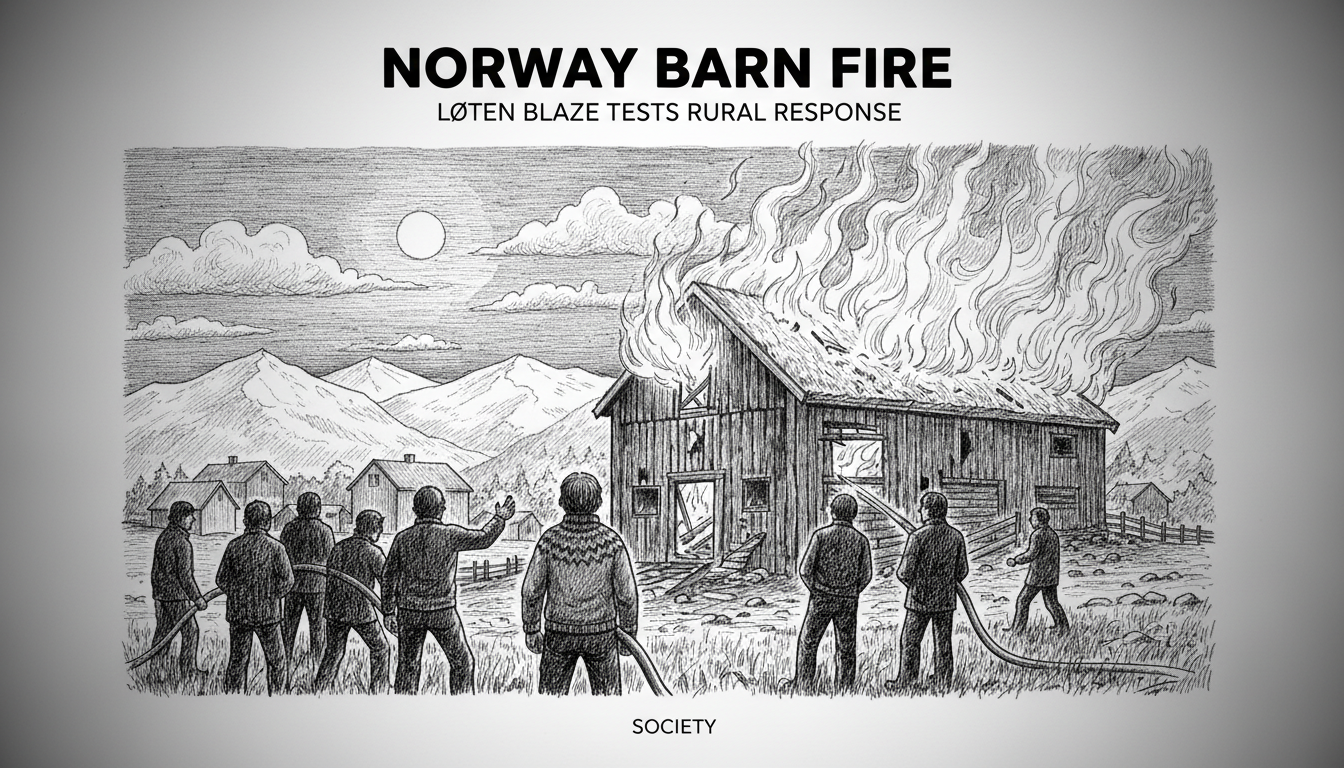
Norway's emergency services are battling a major barn fire in Løten municipality, Innlandet county, with crews working to save a nearby family home. The blaze, which erupted in a wooden agricultural building housing chickens and vehicles, is considered a total loss for the primary structure. All residents from the adjacent house are confirmed safe and accounted for, according to police statements.
Operational commander Frode Øvreås said firefighters hold "good hope" of preventing the flames from spreading to the residential building just meters away. The intense fire presents a classic challenge for Norway's rural fire brigades, combining volatile materials, traditional wooden construction, and the constant threat to nearby dwellings. The fate of the chickens inside the barn remains unknown as crews prioritize containment.
A Familiar Threat in the Norwegian Countryside
Barn fires represent a persistent and devastating risk across rural Norway. The prevalence of historic wooden structures, combined with the storage of hay, machinery, and fuels, creates a perfect environment for rapid fire development. Innlandet county, a heartland of Norwegian agriculture, has seen its share of such tragedies over the years. These incidents test a decentralized emergency response system that relies on local volunteer brigades, often supplemented by support from neighboring districts.
Fires in isolated farmsteads present unique logistical hurdles. Access to sufficient water is a primary concern, with crews sometimes dependent on tanker shuttles from distant lakes or reservoirs. Response times can be longer than in urban centers, allowing a fire to gain a significant foothold before firefighters arrive. The Løten fire underscores the ever-present tension between preserving Norway's agricultural heritage and managing the inherent fire risks of its building traditions.
The Anatomy of an Agricultural Firefight
The strategy at the Løten scene follows a standard protocol for such events: protect life first, then prevent spread to other structures, and finally extinguish the primary fire. With the residents confirmed safe, the focus shifts to creating a defensive perimeter around the family home. Firefighters are likely employing targeted water streams to cool the exposed side of the house and wetting surrounding grounds to halt advancing embers.
Vehicles and fuel stored inside the barn would have provided an immediate and intense fuel load, contributing to the fire's rapid growth. The wooden construction of the barn itself acts as a massive fuel source. Agricultural experts often point to electrical systems in older barns, heating lamps for livestock, and spontaneous combustion of damp hay as common ignition sources. A full investigation into the cause will begin only after the last hot spot is extinguished.
The Human and Economic Cost
While no human injuries are reported, the economic and emotional toll of a barn fire is profound. For a farming family, a barn is not just a building; it is a repository of tools, vehicles, feed, and often livestock—the essential assets of their livelihood. The loss can be catastrophic, disrupting operations for years. The psychological impact of watching a lifetime of work go up in flames, and the terror of a fire threatening one's home, leaves a deep scar.
Insurance will cover much of the material loss, but it cannot replace inherited buildings, customized equipment, or the disruption to a farm's rhythm. The loss of livestock, potentially including the chickens in this case, adds another layer of distress. Community support in regions like Innlandet typically rallies quickly, with neighbors offering machinery, shelter for animals, and labor, showcasing the tight-knit nature of rural Norwegian society.
Prevention and Preparedness Challenges
Fire safety advocates continuously stress prevention measures for agricultural buildings. These include updating old electrical wiring, installing heat detectors and smoke alarms in barns, maintaining clear separation between storage areas for flammable materials, and ensuring accessible fire extinguishers. However, implementing these measures can be costly for farmers operating on thin margins, and retrofitting historic structures is often complex.
"The key is a multi-layered approach," says a fire safety consultant familiar with rural properties, who asked not to be named as the investigation is ongoing. "It combines updated technology with simple practices: keeping areas tidy, storing fuels safely, and having a clear emergency plan that everyone on the farm knows. The first minutes before the fire brigade arrives are critical." Many municipalities offer free fire safety inspections for farms, but participation is voluntary.
A System Under Pressure
The response to the Løten fire highlights the strengths and constraints of Norway's municipal fire services. Volunteer brigades form the backbone of rural firefighting, providing irreplaceable local knowledge and a rapid initial response. Their training is extensive, but they balance this commitment with full-time jobs and family life. Major incidents require automatic mutual aid, pulling resources from a wider area, which is now underway in Innlandet.
This system faces demographic pressures as younger generations in rural areas move to cities, potentially shrinking the pool of volunteers. Ensuring adequate coverage and modern equipment across vast, sparsely populated municipalities is an ongoing budgetary challenge for local governments. Incidents like today's prove the system's worth but also keep the debate about its long-term sustainability alive.
Looking Ahead: Recovery and Resilience
The immediate aftermath in Løten will involve damping down hot spots and securing the site. Once the scene is cool, insurance assessors and police investigators will begin their work. The family will face difficult decisions about rebuilding, potentially weighing modern, fire-resistant materials against traditional aesthetics and cost.
This fire, while hopefully contained to the barn, will resonate through the local farming community. It serves as a stark, smoky reminder of a shared vulnerability. It will prompt neighbors to check their own wiring, clear debris, and review their emergency plans. In the quiet Norwegian countryside, where the sky is usually clear and the air fresh, the pall of smoke from a burning barn is a sight that fuels both fear and solidarity. The success in saving the home will be counted a victory, but the total loss of the barn marks yet another chapter in Norway's ongoing struggle to safeguard its rural heartland against an ancient threat.