
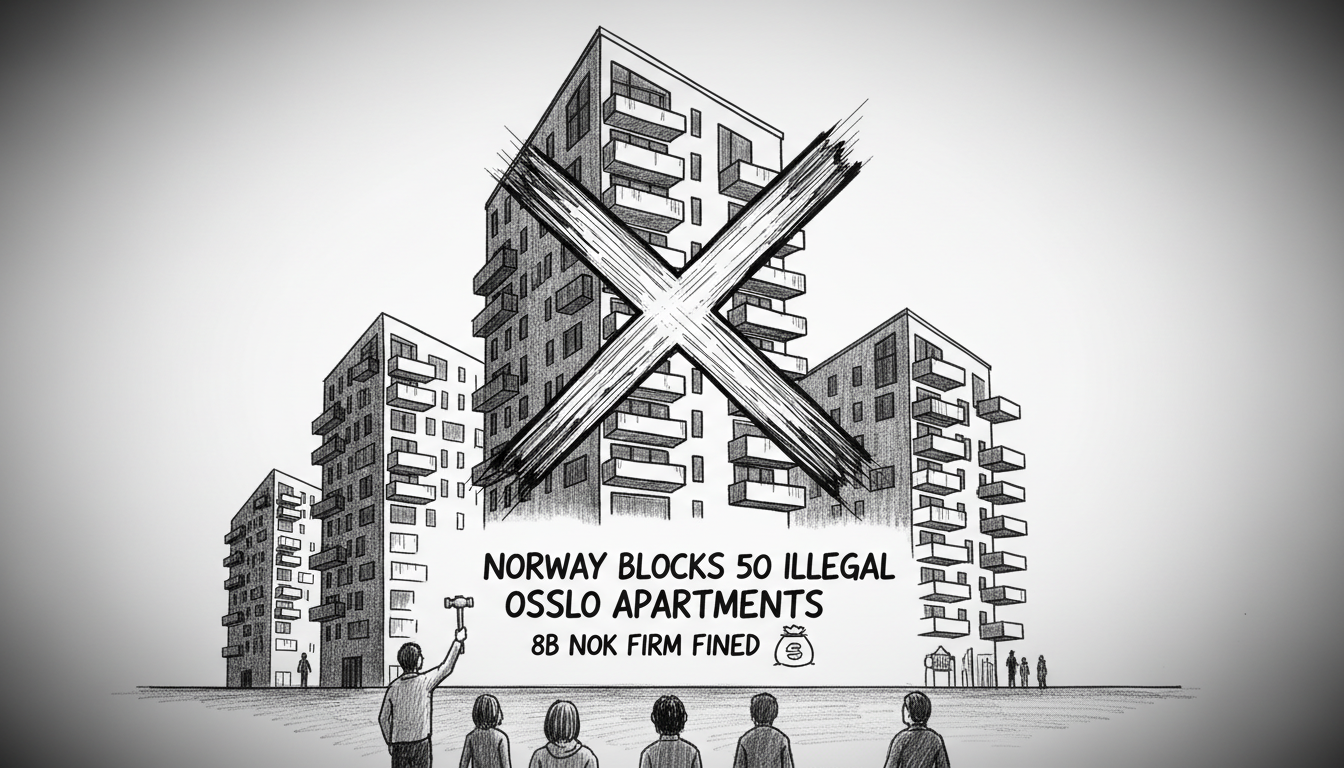
Oslo building inspectors discovered 50 illegal apartments in a single block during a random check. The developer, Maya Eiendom, had nearly doubled the number of units from the approved 26. This case highlights a growing trend of illegal apartment conversions in Norway's capital.
A routine inspection at Surstoffveien 4 in the Brynseng district revealed a startling reality. Every large apartment in the building had been secretly split in two. New doors with keycode locks were installed, creating separate, self-contained units. The developer had effectively built 50 apartments where the city had only permitted 26. "The property owner must now revert all apartments covered by the inspection to the originally approved permit and drawings," said senior advisor Rolf Rolid of Oslo's Planning and Building Department (PBE).
A Systematic Conversion Uncovered
The discovery was not a minor violation. Inspectors found that all apartments larger than 80 square meters were physically divided. Each new, smaller unit contained a living room, kitchen, sleeping area, and bathroom. This process, known as "hyblifisering," is a direct breach of Norwegian building and planning law. The conversion was so complete that each unit had its own private entrance. The building is managed by Maya Eiendom, a firm overseeing properties valued at 8 billion Norwegian kroner. Their subsidiary, Maya Apartments, had advertised the location online as "opening soon" for business travelers and project workers seeking short-term rentals.
Fire Safety Risks Trigger Alarm
Authorities stated the illegal conversion created serious fire hazards. By dividing the apartments, one of the new units in each pair lost a vital emergency escape route. This design flaw could trap residents during a fire. Norwegian building codes also require each residential unit to be a separate fire compartment, a standard not met in the subdivided layout. "In the event of a subdivision of the apartments into two residential units, one apartment will lose an escape route and could therefore be a fire trap," the PBE's inspection report concluded. The developer has since removed the door locks and addressed some safety issues, but the core violation remains.
Enforcement Actions and Hefty Fines
The city's response has been firm. PBE has initiated enforcement proceedings, signaling daily fines and a coercive fine of 400,000 kroner. A final decision from the County Governor (Statsforvalteren) before Christmas confirmed the illegality of the subdivisions. This means Maya Eiendom cannot use the building for its intended short-term rental business until it complies. They must either restore the building to its original 26-apartment layout or submit a new application for the changed design. Neither option is quick or cheap. The case underscores a stricter municipal stance. "The municipality takes such matters seriously," Rolid emphasized. "Subdivision of apartments and use for short-term rental/hotel business will be in conflict with current permits and the Planning and Building Act."
The Profit Motive Behind Illegal Conversions
This incident is not isolated. It points to a broader economic incentive within Oslo's tight housing market. Creating more, smaller units allows a property owner to charge more total rent. Short-term corporate rentals often yield higher daily rates than long-term residential leases. With high demand for flexible housing in Oslo, the financial temptation to bypass regulations is significant. Maya Eiendom's website promotes fully furnished apartments for "everything from one night to several months," catering to a lucrative market. The crackdown at Brynseng sends a message that the potential profits do not outweigh the legal and safety requirements.
Expert Perspective on a Widespread Problem
Housing policy analysts see this case as symptomatic of deeper issues. "When the housing market is under immense pressure, illegal conversions become a way for some developers to maximize yield," explains a researcher from the Norwegian Institute for Urban and Regional Research. "It distorts the market, often reduces living standards, and can make buildings unsafe." The expert notes that while enforcement is crucial, addressing the root cause requires more affordable, legal housing supply. The practice of "hyblifisering" often targets areas with good transport links, like Brynseng, which is near Oslo's ring road and metro system. This location makes it attractive for the business clientele Maya Apartments targets.
The Road Ahead for the Brynseng Building
The future of Surstoffveien 4 is now uncertain. The "Opening Soon" banner on the Maya Apartments site is likely to remain for a long time. The process of reversing the construction or seeking retroactive approval is complex. It involves new architectural plans, potential public hearings, and ensuring all fire and building codes are met. The financial setback for the developer is substantial, encompassing lost rental income, construction costs for the illegal work, and now the cost of undoing it, plus fines. This case may prompt more random inspections by Oslo's building authorities. It also serves as a public warning to other property owners considering similar unauthorized renovations.
A Test Case for Oslo's Housing Policy
The decisive action against a major property manager signals a shift. Oslo municipality is demonstrating it will use its authority to uphold building permits and safety laws, even against well-resourced firms. This case tests the effectiveness of Norway's regulatory framework in a hot real estate market. The outcome will be watched closely by other developers, housing advocates, and city planners. Will the threat of large fines and forced reversals be enough to deter illegal conversions? Or will the high profits from short-term rentals continue to encourage risk-taking? The empty, non-compliant building at Brynseng stands as a physical monument to this ongoing conflict between market forces and municipal regulation. Its eventual resolution will set a precedent for how Oslo manages growth, safety, and legality in its urban development.