
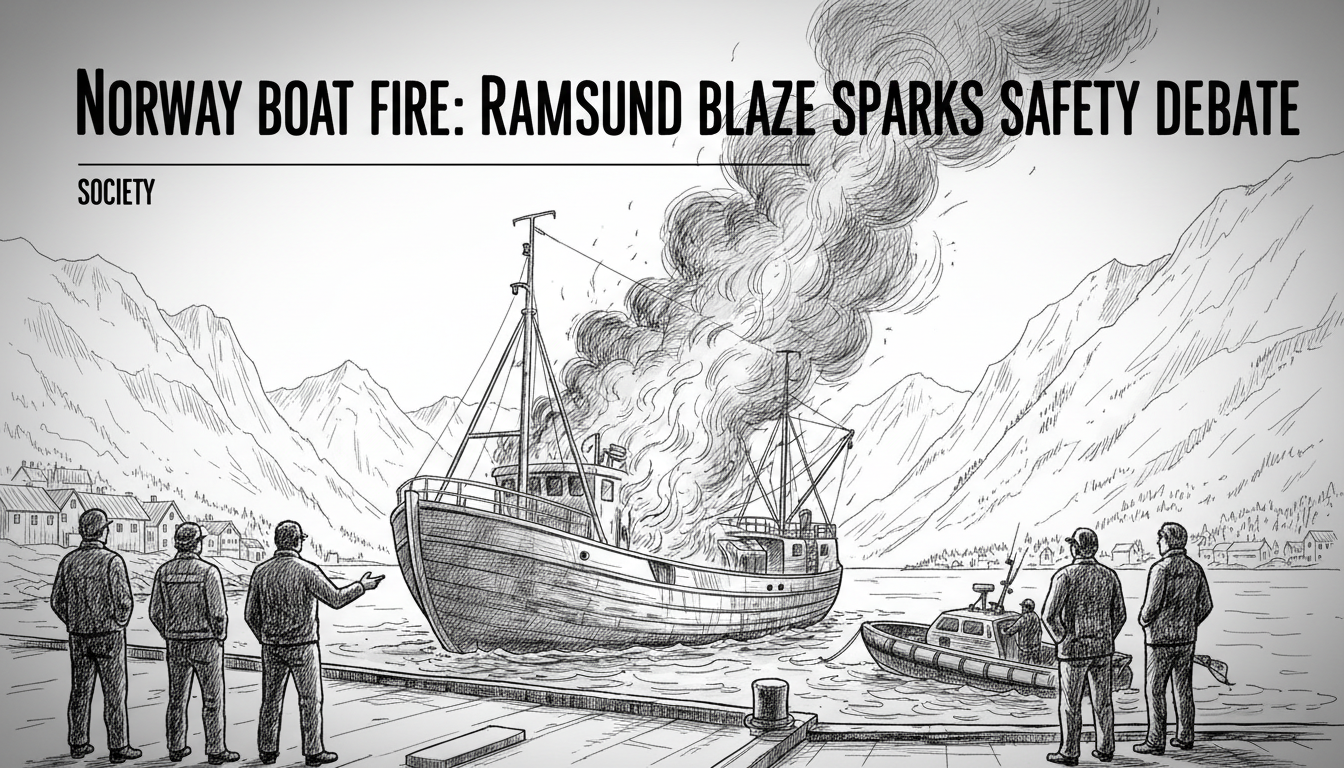
Norway's emergency services battled a dangerous boat fire in the Ramsund strait in Sør-Troms on Sunday evening. The blaze, which posed a significant risk of spreading, was contained after firefighters managed to tow the burning vessel out into open water. This incident highlights persistent safety challenges in Norway's extensive small boat fleet.
A Strategic Waterway Under Threat
The fire erupted in the small boat harbor of Ramsund, a strategically vital maritime corridor in northern Norway. Ramsund is not just a picturesque strait in Sør-Troms; it hosts a key naval base and is a crucial artery for coastal traffic. A major fire here threatens more than private property—it risks disrupting military logistics and regional maritime operations. The local fire department's decisive action to pull the vessel away from the crowded moorings likely prevented a more extensive disaster. "When a boat catches fire in a packed harbor, every second counts," said a senior fire officer familiar with the response. "The priority is immediate isolation to protect other vessels and infrastructure."
This is not an isolated event. Small boat fires are a recurring seasonal problem across Norway, from the Oslofjord to the Arctic coast. Common causes include electrical system failures, aging fuel lines, and improperly maintained heating appliances like diesel heaters or galley stoves. The Norwegian Directorate for Civil Protection and Emergency Planning (DSB) consistently logs dozens of such incidents annually, though precise national figures for 2023 were not immediately available. The concentration of boats in harbors during the spring commissioning period, when owners prepare vessels after winter storage, often sees a spike in related incidents.
The Anatomy of a Maritime Emergency
Responding to a boat fire presents unique difficulties compared to a blaze on land. Firefighters must combat limited access, the presence of volatile fuels, and the constant risk of the vessel sinking. In Ramsund, the strategy of towing the boat to sea is a standard but high-stakes tactic. It removes the immediate threat to other boats and docks but requires specialized equipment and training. The Norwegian Coastal Administration (Kystverket), which oversees maritime safety, emphasizes the importance of harbor design and clear emergency access lanes to facilitate such operations.
Experts point to preventative maintenance as the most critical, yet often neglected, factor. "A boat is a complex system of electrical, mechanical, and fuel components in a harsh environment," explained maritime safety consultant Erik Larsen. "Saltwater corrosion, vibration, and temperature fluctuations degrade systems faster than in a car or a house. An annual, professional safety check is not a luxury—it's a necessity." He notes that many owners focus on cosmetic or engine work while overlooking the wiring behind panels or the condition of fuel hoses, which can become brittle and leak.
Norway's Coastal Culture Meets Modern Risk
The incident touches a nerve in a nation where coastal identity is deeply ingrained. Norway has over one million small boats, a staggering number for a population of 5.4 million. For many, boating is not just recreation but a way of life and a link to tradition. This cultural attachment can sometimes clash with modern safety protocols. While commercial vessels operate under strict regulations, private leisure boats are subject to less frequent mandatory inspections. Safety often relies on the owner's diligence.
Insurance data reveals patterns. Fires are among the most costly claims for total boat losses, often resulting in complete write-offs. The financial loss is compounded by potential environmental damage from burning fiberglass, fuel, and oils. In a sensitive marine environment like Ramsund, containing this pollution is a major concern for the Norwegian Environment Agency. The fire service's rapid containment also serves as a first line of environmental defense.
A Call for Systematic Prevention
Following the Ramsund fire, safety advocates are renewing calls for heightened awareness. Organizations like the Norwegian Society for Sea Rescue (RS) and the Norwegian Maritime Authority run campaigns highlighting simple checks: inspecting electrical connections for corrosion, ensuring fuel systems are tight and leak-free, and keeping fire extinguishers accessible and serviced. They recommend installing automatic fire suppression systems in engine compartments, a measure that is becoming more common on new boats.
There is also debate about the role of technology and regulation. Some experts suggest mandating smoke detectors in cabin spaces, similar to residential requirements. Others promote the use of wireless gas and fume detectors for engine bays. However, any move toward stricter regulation for private boats is politically sensitive, balancing personal freedom against collective safety in public harbors.
The successful response in Ramsund demonstrates the proficiency of Norway's emergency services, which often integrate professional and volunteer firefighters, especially in remote regions. Their training for maritime incidents is world-class. Yet, each fire serves as a stark reminder that prevention remains the most effective tool. As the summer boating season approaches, this event is a cautionary tale for every boat owner along Norway's long coastline. How many more preventable fires will it take before safety culture shifts from reactive to truly proactive? The answer may determine the fate of Norway's cherished maritime heritage.