
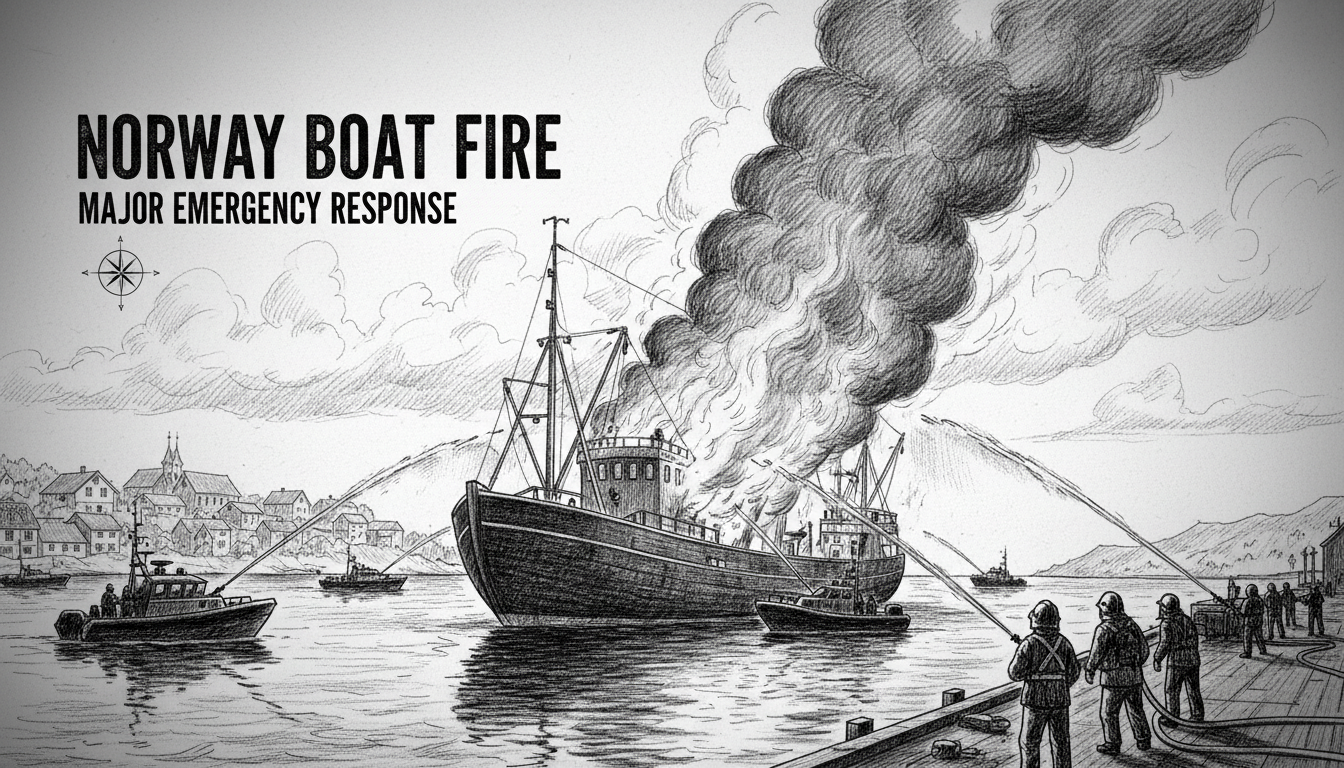
Norway's emergency services mobilized to a dangerous boat fire in the small boat harbor of Ramsund in Sør-Troms. Police reported a fully developed fire with a risk of spreading, prompting a major response. The fire service was on scene and had begun extinguishing operations.
A Tense Scene in a Northern Harbor
Flames engulfed a vessel in the Ramsund small boat harbor, creating a significant threat to nearby boats and infrastructure. The immediate danger of the fire spreading, coupled with the inherent risks of burning fuel and materials, triggered a full-scale emergency response. Police secured the area while firefighters worked to contain the blaze. Ramsund, a village in Tjeldsund Municipality, is located near the strategically important Ramsundet strait. Its small boat harbor is typical of countless such facilities dotting the Norwegian coastline, serving as vital hubs for local fishermen and recreational boaters.
These harbors are community lifelines but also present unique risks. A single incident can escalate rapidly due to the close proximity of vessels. "A fire in a marina is one of the most challenging scenarios for responders," said Lars Mikkelsen, a retired coastal safety inspector with decades of experience in Northern Norway. "Access is often limited, and each boat is essentially a floating container of fuel, liquefied petroleum gas cylinders, and synthetic materials that produce toxic smoke."
The risk of a domino effect is real. A burning fiberglass hull releases intense heat and can quickly ignite neighboring boats made of similar composites. Furthermore, a sinking vessel can complicate firefighting efforts and create an environmental hazard on the seabed.
The Inherent Dangers of Marine Fires
Boat fires differ fundamentally from structure fires on land. They involve a concentrated fuel load in a confined, unstable space. Common ignition sources include electrical faults in bilge pumps or battery systems, leaks in fuel lines, or improperly maintained cooking appliances. In a northern climate like Troms, winterization and the use of onboard heaters can add to the risk profile.
Environmental concerns are immediate. "Beyond the obvious safety threat, a boat fire poses a direct pollution risk," Mikkelsen explained. "Burning fiberglass and resins release harmful particulates and chemicals into the air. More critically, if the fuel tanks are breached, diesel or gasoline can spill into the harbor, creating a sheen that damages marine life and is costly to clean."
This incident in Ramsund highlights the constant preparedness required by Norway's municipal fire services, especially in remote coastal communities. They must be equipped and trained for maritime incidents, which often require specialized foam agents and waterborne firefighting techniques. The response also typically involves coordination with the Norwegian Coastal Administration for potential spill containment.
A Community's Vulnerability Exposed
For residents of Ramsund and similar communities, the small boat harbor is not just a parking lot for vessels; it is an extension of the workspace and a center of social activity. A major fire there strikes at the heart of local maritime culture. The potential loss of a fishing boat represents the loss of a livelihood, while the destruction of recreational craft means the loss of a primary source of leisure and connection to the sea.
Such incidents also prompt difficult questions about infrastructure and prevention. Are harbor electrical systems, which supply power to boats at their berths, adequately maintained? Is there sufficient spacing between vessels to prevent the spread of fire? How frequently do private boat owners conduct safety checks on their own systems?
Norway has stringent regulations for commercial shipping, but safety on smaller private and fishing vessels often relies more heavily on owner diligence. The Norwegian Maritime Authority runs inspection campaigns and awareness programs, yet the responsibility ultimately rests with the individual.
The Aftermath and the Road Ahead
While the immediate crisis in Ramsund was brought under control by responders, the aftermath will involve several phases. Investigators will work to determine the cause of the blaze, a process that can be complicated if the vessel is severely damaged or submerged. The wreckage will need to be removed in an operation that itself carries environmental risks.
The local municipality will assess any damage to harbor facilities, such as docks and electrical pylons. Other boat owners in the harbor will anxiously check their own vessels for heat or smoke damage.
From a policy perspective, this fire is a localized event but speaks to a national context. As Norway continues to promote coastal tourism and its "blue economy," the density of vessels in popular harbors increases. This growth must be matched by investments in safety infrastructure, such as enhanced firefighting equipment at marina offices, clear emergency protocols, and accessible training for harbor users.
Could this incident in a quiet Sør-Troms harbor serve as a catalyst for reviewing safety standards in Norway's countless small boat havens? For the families and businesses in Ramsund, the priority is recovery. For maritime safety professionals, it is another data point in an ongoing effort to protect lives, livelihoods, and the pristine Nordic coastal environment from the ever-present threat of fire on the water.