
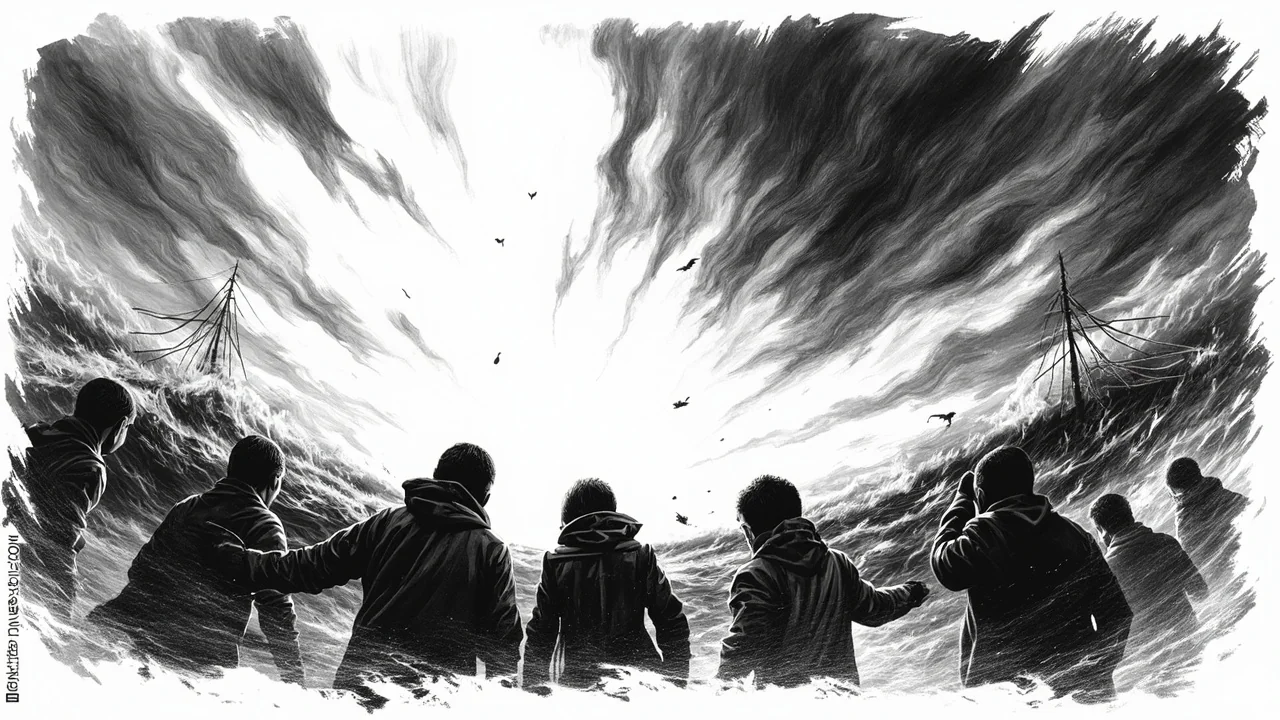
Norway's Meteorological Institute has issued a severe wind warning for the Trøndelag region, with gusts of 27 to 33 meters per second expected from the southeast from Sunday night into Monday evening. The forecast predicts near or full storm conditions in exposed mountain areas, with significant local variations in wind strength. Authorities are urging residents to secure loose objects and avoid unnecessary travel in vulnerable locations, as blowing snow may lead to road closures in mountainous areas.
A System Gathering Force
The severe weather system is expected to impact western regions first, increasing in Møre and Romsdal before moving northeast into Trøndelag. The wind will decrease last in Trøndelag, indicating a prolonged period of hazardous conditions for central Norway. This pattern is typical for autumn and winter storms entering from the Norwegian Sea, where they can intensify rapidly before making landfall. The specific wind direction—southeast—can create unusual pressure points on infrastructure and terrain accustomed to prevailing westerlies.
Local emergency services across Trøndelag are now on heightened alert. The primary public advisory focuses on preventive action: securing garden furniture, trampolines, and other loose items that become dangerous projectiles. For residents in isolated mountain communities or along the coast, the warning includes preparing for potential power outages and disrupted transportation links. The combination of high winds and existing snow cover creates a high risk of snowdrifts blocking roads, particularly on key mountain passes like the E6 over Dovrefjell.
The Human and Economic Toll of Norwegian Storms
While this specific event is a short-term warning, it highlights a broader reality of life in Norway. Severe windstorms are a recurring cost, both human and economic. Each significant storm results in insurance claims for property damage, lost business revenue from transportation halts, and substantial public expenditure on emergency response and infrastructure repair. The forestry sector is particularly vulnerable, with strong winds capable of flattening large swathes of commercial timber in minutes.
From a policy perspective, these repeated events fuel ongoing debates about infrastructure resilience and climate adaptation. Norway's extensive network of roads, bridges, and power lines is constantly tested by such weather. "Every storm teaches us something new about the weaknesses in our systems," noted a senior advisor from the Norwegian Water Resources and Energy Directorate (NVE) in a recent seminar on climate resilience. "The question is whether we are learning fast enough, and investing sufficiently, to keep pace with what appears to be increasing volatility."
For individuals, the protocol is deeply ingrained in Norwegian culture: monitor Varsom.no, the official warning site, secure your property, stock essentials, and avoid travel. The respect for nature's force, known as "friluftsliv" etiquette, is a fundamental part of national identity. This cultural preparedness arguably mitigates what could otherwise be a greater human cost from such frequent severe weather events.
Analysis: A Routine Emergency in a Prepared Nation
To an international observer, a warning for 120 km/h winds might signal a major crisis. In Norway, it is a managed, if serious, weather event. The country's robust forecasting ability from the Meteorological Institute, combined with clear public communication channels, allows for an orderly preparatory response. The warning system is tiered—yellow, orange, red—with this event likely categorized as orange for the hardest-hit zones, indicating a "dangerous weather situation" that requires vigilance.
However, preparedness is never perfect. The call to "avoid unnecessary travel" will be tested on Monday morning as commuters and commercial traffic assess the risks. Ferry services along the Trøndelag coast, a critical transport link, will likely face cancellations or delays. The region's important aquaculture industry must also take precautions to secure fish farms against damaging waves and currents stirred up by the prolonged winds.
From a geophysical standpoint, Trøndelag's topography plays a crucial role. The region features a complex coastline of fjords and islands, alongside inland mountain ranges. This varied landscape means wind strength can differ dramatically over short distances. A valley might experience strong gusts, while a nearby exposed mountainside bears the full brunt of the storm. This localized nature of the threat makes blanket public advice challenging and places a premium on individual situational awareness.
The Bigger Picture: Winds in a Warming Climate
While it is impossible to attribute a single weather event to climate change, the increasing frequency and intensity of North Atlantic storms is a key prediction in most climate models for the region. Warmer sea surfaces provide more energy for developing low-pressure systems. For Norway, this suggests that the kind of storm forecast for Trøndelag may become a more common feature of future winters. This has long-term implications for urban planning, building codes, and critical infrastructure design.
The Norwegian government's recent updates to national planning guidelines explicitly require municipalities to account for more extreme weather. For coastal communities in Trøndelag, this means reassessing flood and wind damage risks for new housing and commercial developments. The energy sector, particularly the vast network of power distribution lines that crisscrosses the countryside, is also engaged in a multi-billion kroner effort to strengthen grids against tree falls and structural damage caused by storms.
Looking Ahead: The Morning After
The immediate focus is on the passage of the storm through Monday. The real test of its impact will come at first light on Monday, as daylight reveals any damage and allows cleanup operations to begin. Utility companies have crews on standby to address downed power lines. Road authorities are prepared to clear fallen trees and snowdrifts. The true measure of the warning's success will be a dull one: minimal property damage, no injuries, and a rapid return to normalcy.
For now, the people of Trøndelag are doing what Norwegians have done for generations: listening to the forecast, taking sensible precautions, and respecting the formidable weather of their homeland. The storm will be a talking point in shops and workplaces, a temporary disruption, and perhaps a reminder of the raw natural power that shapes this long, mountainous country. The winds will howl, the snow will blow horizontally, and by Tuesday, the forecast promises it will all be over, leaving only the task of clearing up behind.