
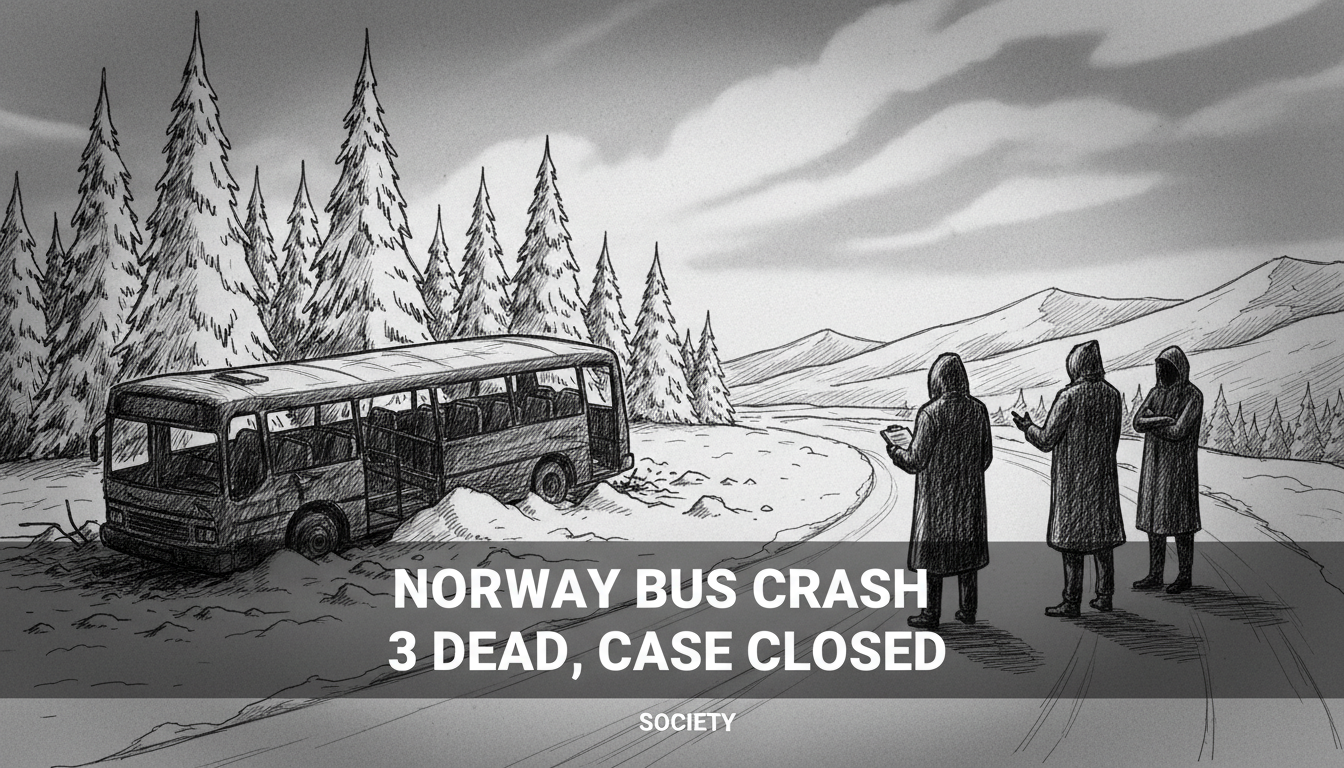
Norway bus accident in Hadsel on December 26, 2024, claimed three lives, but police have now closed the case. They concluded extraordinary wind conditions caused the tragedy, clearing the driver of any blame. This decision ends a months-long investigation that gripped the nation and raised urgent questions about road safety in Norway's challenging northern regions.
A Tragic Christmas Afternoon
The second day of Christmas, known as '2. juledag' in Norway, is typically a quiet family holiday. On December 26, 2024, that peace was shattered in Hadsel municipality, located in Nordland county. A bus traveling on a coastal route was struck by a sudden, violent gust of wind. The vehicle was pushed off the road, resulting in the deaths of three passengers. Emergency services responded quickly, but the severe weather hampered rescue efforts. The community of Hadsel, with a population just over 9,000, was left in shock.
Local authorities described the scene as chaotic. Wind speeds in the area were recorded at levels exceeding normal operational limits for road transport. Hadsel is situated in the Vesterålen archipelago, an area known for its dramatic landscapes and unpredictable maritime weather. This accident highlighted the inherent risks of travel in Norway's far north, where infrastructure must constantly battle the elements.
The Investigation's Path
In the immediate aftermath, the bus driver was formally suspected of negligence. Police temporarily seized the driver's license as a standard procedural step. This action is common in severe accident investigations under Norwegian law. It allows authorities to prevent potential risks while determining facts. For weeks, the driver faced uncertainty and public scrutiny.
The Norwegian National Police Directorate oversaw a detailed technical investigation. Experts examined the bus wreckage, reviewed weather data from the Norwegian Meteorological Institute, and analyzed road conditions. They interviewed survivors and first responders. The probe focused on whether driver error, such as speed, contributed to the accident. Simultaneously, the families of the victims awaited answers, mourning their loss during the dark winter months.
A Verdict from the Wind
On concluding the investigation, police released a definitive statement. 'The conducted examinations have shown that it was the extraordinary wind conditions at the site that caused the accident,' the police report stated. 'The bus driver cannot be blamed for the accident, and there are no grounds to say that speed was a contributing cause.' This finding led to the immediate closure of the case and the return of the driver's license.
The term 'extraordinary wind conditions' is key here. In Norwegian legal and meteorological terms, this refers to weather events that exceed historical norms and reasonable forecasting models. Data from the day indicated wind gusts reaching force 11 on the Beaufort scale, classified as a violent storm. Such winds can exert enough pressure to overturn high-sided vehicles like buses, regardless of driver skill.
Legal Standards and Natural Forces
Legal analysts in Oslo note that this outcome underscores a principle in Norwegian jurisprudence. To establish criminal negligence in traffic accidents, prosecutors must prove that a driver's actions fell below a required standard of care. When a primary cause is an act of nature—like an unforeseeable wind gust—the burden of proof is not met. 'The law recognizes that some events are beyond human control,' said a legal scholar from the University of Oslo, who preferred not to be named. 'This case is a somber reminder of that boundary.'
Norway's Geography and Infrastructure Challenge
Norway maintains one of Europe's most advanced road networks, with continuous investment in tunnels and bridges. However, its geography poses unique challenges. Mountain passes and coastal roads like those in Hadsel are exposed to rapid weather changes. Bus travel is essential in regions lacking rail lines, particularly north of Trondheim. An average of 10,000 buses operate daily across Norway, serving remote communities.
Safety experts emphasize that adaptation is critical. 'This tragedy forces us to look at real-time weather monitoring and vehicle stability standards,' said an independent transport safety consultant. 'We have technology that can warn drivers of microbursts and sudden wind shifts. Implementing it universally on vulnerable routes is the next step.' The Norwegian Public Roads Administration has ongoing projects to install more weather stations along key highways, but coverage in remote areas remains incomplete.
The Human Cost
Beyond the legal and technical conclusions, this case is about profound loss. The three individuals who died were members of small, tight-knit northern communities. Their names have not been publicly released by authorities, respecting family privacy. Grief counselors were deployed to Hadsel in the weeks following the accident. Local churches held memorial services that drew hundreds, reflecting the deep impact on the region.
Survivors of the crash are receiving long-term support. Some have spoken privately about the terror of the event, describing a sound like a freight train before the bus tipped. The driver, though cleared, has experienced significant personal and professional trauma. This aspect highlights the emotional ripple effects of such disasters, often lasting far longer than the official investigation.
Policy Responses and Future Risks
In the Storting, Norway's parliament, questions have been raised about whether current safety protocols are sufficient. The Ministry of Transport and Communications is reviewing guidelines for public transport in extreme weather. There is discussion about mandating wind-specific speed reductions or creating more sheltered alternative routes. However, such measures come with high costs in Norway's terrain, where building new roads often involves blasting through rock or constructing over fjords.
Climate change adds another layer of complexity. Norwegian meteorological studies indicate that the frequency and intensity of extreme wind events may increase in the North Atlantic and Arctic regions. This prospect makes accidents like Hadsel's a potential policy priority. 'Our infrastructure was built for the climate of the past,' noted a climate researcher from the Norwegian Meteorological Institute. 'We need to assess resilience for the future, especially in transport corridors.'
A Community Looks Ahead
Hadsel is beginning to heal, but the memory of the accident lingers. Local officials have called for a permanent memorial at the site. They also advocate for improved weather alert systems directly linked to bus companies' dispatch centers. The Norwegian Bus and Coach Association has stated it will review training programs to include more scenario-based instruction on handling sudden weather hazards.
This case closes without a prosecution, but not without lessons. It underscores the power of nature in shaping life and risk in Norway. It also shows the thoroughness of the country's investigative processes, which aim for truth over blame. As one local resident in Hadsel put it, 'We live in a beautiful but fierce place. This tragedy reminds us to respect that balance every day.'
The question now is how Norway will balance its ambitious connectivity goals with the immutable forces of its environment. Will technological advances and infrastructure investments keep pace with a changing climate? The answer will define safety for all who travel Norway's majestic, demanding roads.