
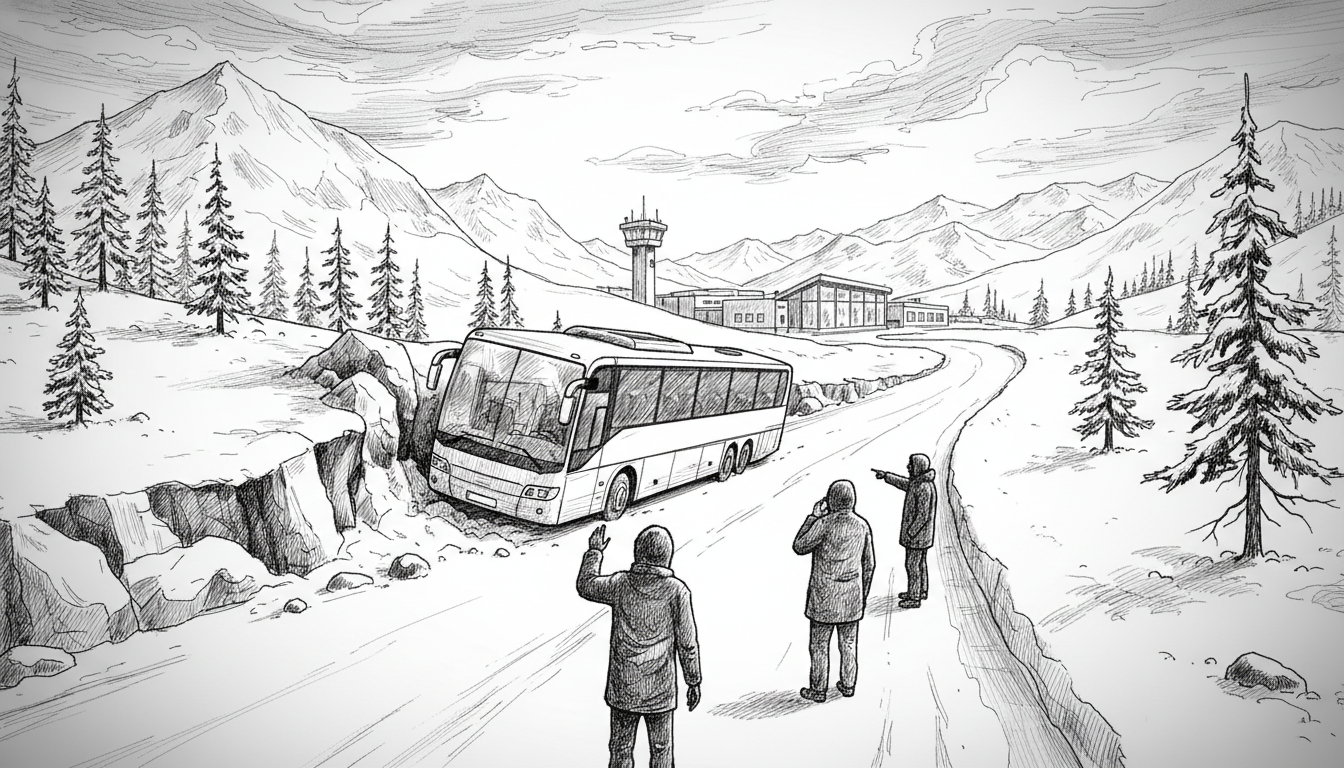
Norway's icy northern roads pose a daily risk, with slippery conditions contributing to over 20% of serious winter accidents. Emergency services rushed to Vardø Airport in Finnmark county on Tuesday after a bus slid off the road. Police described road conditions as treacherous, with one person receiving medical attention. The incident occurred at low speed near the island airport's access road, highlighting the persistent dangers of Arctic winter travel.
The Isolated Arctic Incident
The single-vehicle incident happened on the road connecting Norway's easternmost town to its regional air link. Vardø, located on a remote island in the Barents Sea, relies heavily on the airport for connectivity. The bus, which can typically carry dozens of passengers, left the roadway on the short 4-kilometer stretch between the town center and Vardø Airport (VAW). Police confirmed the vehicle was traveling at low speed when it slid off the icy pavement. A single individual was assessed by medical personnel at the scene. No other vehicles were involved, and authorities have not indicated serious injuries.
This type of incident, while often minor in outcome, underscores a significant regional challenge. Finnmark county, now part of the larger Troms og Finnmark region, experiences winter conditions that persist for more than half the year. Roads are frequently coated in black ice or packed snow, with strong coastal winds creating rapid drifts and reducing visibility. The Norwegian Public Roads Administration, Statens vegvesen, consistently logs a sharp increase in accidents attributed to 'friction deficiencies'—the technical term for slippery roads—between October and April across Northern Norway.
A Systemic Challenge for the North
Transport officials view this minor skid as symptomatic of a larger, ongoing battle against nature in the High North. 'Every winter, we fight the same conditions with improved technology and planning, but the Arctic climate is a formidable opponent,' said a regional road maintenance coordinator, who asked not to be named as they were not authorized to speak publicly. The coordinator emphasized that while major highways receive frequent treatment, access roads to critical infrastructure like airports require constant attention due to high traffic variability and exposure.
Investments in winter road maintenance have increased in recent Norwegian national transport plans, with specific allocations for northern counties. These funds go toward advanced snowplows, brine spreading trucks, and improved weather monitoring stations. However, the vast distances and sparse population in Finnmark make comprehensive coverage economically and logistically difficult. A single maintenance depot might be responsible for hundreds of kilometers of roadway, including vital links to airports, ferries, and the few hospitals serving the region.
Local politicians have repeatedly called for greater state investment. 'Our communities depend on safe, reliable transportation links year-round,' said a member of the Troms og Finnmark county council from the Labour Party. 'A bus sliding off the road near the airport is a warning. It could disrupt medical evacuations, isolate residents, and strangle economic activity. We need a more resilient infrastructure.' The council member pointed to the national government's recent focus on Arctic security and development, arguing that 'resilience starts with the basic ability to travel safely to the airport.'
The Human Factor in Extreme Conditions
Road safety experts stress that technology and infrastructure are only part of the solution. Driver adaptation to conditions is critical. Norwegian law mandates the use of winter tires with studs or approved friction patterns from November through April, depending on the region. In Finnmark, this period is effectively longer. Yet, the transition to appropriate driving habits—slower speeds, greater following distances, and heightened anticipation—remains a key focus for safety campaigns.
'The mind must adjust as much as the vehicle,' explained an analyst with the Trygg Trafikk road safety council. 'On a familiar short route, like a trip to the local airport, drivers can become complacent. They might not account for a sudden patch of black ice formed by wind or a change in temperature.' The analyst noted that professional drivers, including bus operators, undergo specific training for winter conditions, but unpredictable Arctic weather can overwhelm even the best preparations. Public advisories are frequent, urging drivers to check the statewide road condition portal, vegvesen.no, before any journey in the north.
Infrastructure at the Edge of Europe
The Vardø Airport access road itself is a case study in Arctic engineering. Built to withstand freezing temperatures, saltwater exposure, and fierce winds, it requires specialized materials and construction techniques. The road sits on the edge of the island, with little natural protection from the elements. Maintaining its surface involves not just plowing snow, but managing the freeze-thaw cycles that can crack asphalt and create potholes, which in turn become ice traps.
This incident, though minor, will likely feature in upcoming municipal discussions about infrastructure priorities. Vardø's population has declined for decades, putting pressure on local budgets. Justifying significant investment in a road serving a shrinking town and a regional airport is a constant political challenge. Proponents argue that the airport is a lifeline, essential for tourism, fisheries, and the Coast Guard base located nearby. Its reliability directly impacts the town's viability.
A Narrow Escape and a Persistent Warning
Initial reports suggest the Vardø bus incident will result in little more than a scare and some vehicle damage. For the passengers and driver, it was a stark reminder of their environment's power. For transportation authorities, it is another data point in the long ledger of winter risks. As the climate changes, northern Norway faces a paradoxical forecast: warmer average temperatures leading to more frequent freeze-thaw cycles and increased precipitation that falls as ice rather than dry snow.
This creates a future where road conditions may become even more variable and challenging to manage. The quiet skid of a bus on an island airport road is a small event in the national news cycle. Yet it speaks directly to the enduring struggle for safe mobility in one of Europe's most extreme inhabited landscapes. It asks a fundamental question: How does a society ensure reliable connectivity for its most remote citizens when nature is constantly working against it? The answer, forged in Finnmark each winter, involves a continuous, costly blend of investment, technology, and human vigilance.