
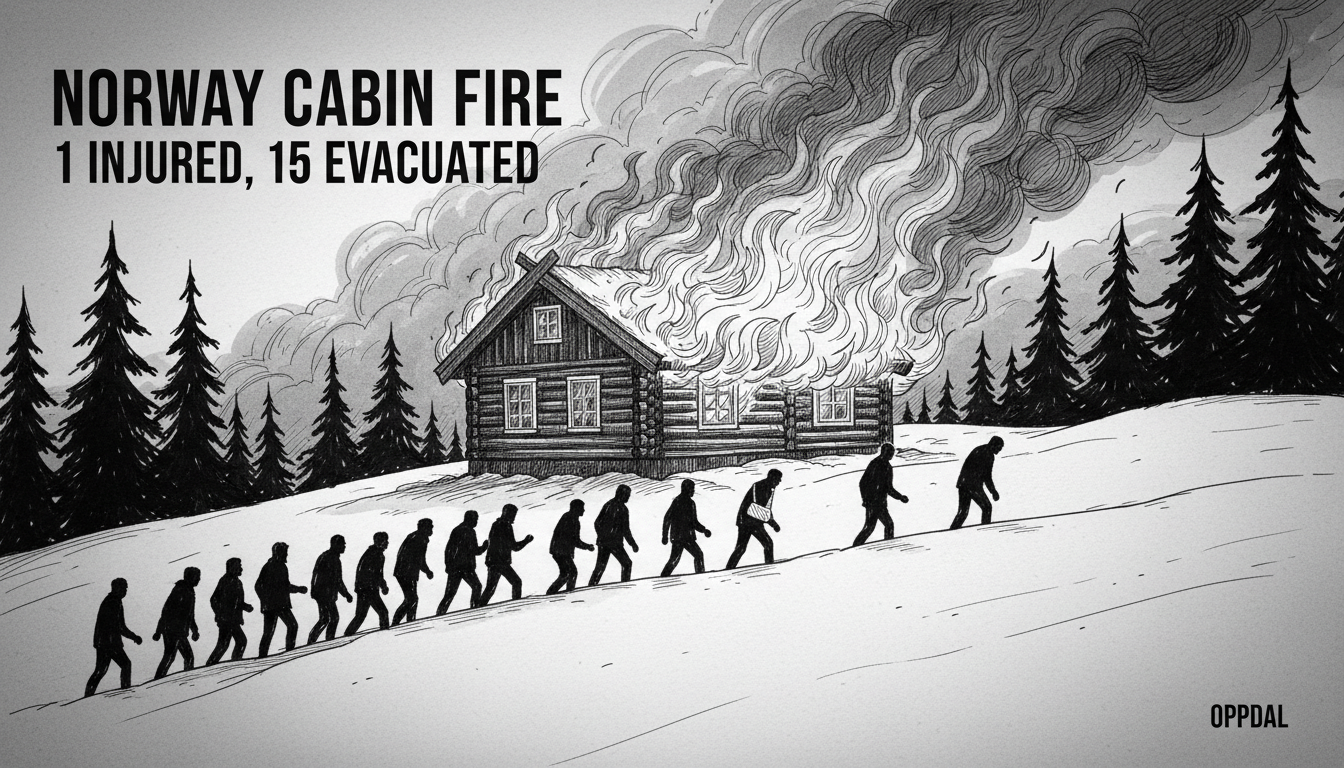
Norway cabin fire in Oppdal has left one man hospitalized with burn injuries and forced the evacuation of 15 people. The blaze erupted in a large timber cabin overnight, casting a stark light on the persistent fire risks associated with Norway's cherished cabin culture.
Flames tore through the wooden structure in the early hours of Tuesday morning. Emergency services responded quickly to the scene in the mountainous municipality, a popular destination for skiers and hikers. The injured man was transported to St. Olavs Hospital in Trondheim for treatment of his burns.
"One person has burn injuries. He is being driven to St. Olavs hospital," said operations manager Stian Martinsen Aalberg of the Trøndelag Police District in an early morning statement. The 15 evacuated individuals were taken to Oppdal town center and nearby buildings to find alternative accommodation while investigators began their work.
A Familiar Threat in Wooden Structures
Fires in timber cabins present a unique and acute challenge across Norway. The country has over 400,000 recreational cabins, many constructed primarily from wood. In remote or mountainous areas like Oppdal, dry climatic conditions and the inherent flammability of the building materials can allow a small fire to become catastrophic within minutes.
"The speed at which fire can consume a log structure is alarming," said Lars Holen, a fire safety consultant with over two decades of experience. "In a remote location, response times are longer, and the fire often has a significant head start. This incident underscores why prevention is not just advisable, it's critical."
Building codes in Norway have evolved to enforce stricter fire safety standards for new constructions. These include requirements for smoke detectors, fire-resistant materials in certain areas, and regulated distances between buildings. However, a vast number of cabins, especially older or traditionally built tømmerhytter (log cabins), predate these modern regulations.
The Cabin Culture and Its Vulnerabilities
The Norwegian cabin is more than a building; it is a central pillar of national identity, representing a deep connection to nature and a retreat from urban life. This cultural significance means many properties are maintained for tradition and comfort, sometimes at the expense of modern safety upgrades.
Common risk factors in cabin fires include aging electrical systems, wood-burning stoves and fireplaces, and the use of candles. The season also plays a role. While summer brings dry timber and tourist activity, winter sees increased use of heating sources, often in structures that may be closed up for parts of the year.
Oppdal, situated in Trøndelag county, is emblematic of this risk environment. Its economy is heavily reliant on tourism centered around outdoor activities. The municipality is dotted with cabins, from small family-owned properties to larger rental units capable of housing groups, like the one involved in this week's fire.
Expert Calls for Proactive Safety Measures
Fire safety experts consistently advocate for simple, life-saving measures that cabin owners can implement. "A working smoke detector is the single most important device," Holen emphasized. "It provides the earliest possible warning, especially crucial when people are sleeping."
Other recommended precautions include keeping a fire extinguisher accessible and ensuring occupants know how to use it. Maintaining clear escape routes and not overloading electrical circuits are also vital. For heating, experts advise maintaining a safe perimeter of at least one meter between stoves, fireplaces, and any flammable materials like furniture, textiles, or firewood.
Local fire departments often run awareness campaigns, particularly before major holiday periods like Easter, Christmas, and the summer ferie. These campaigns stress the "check twice" mantra: checking that all heat sources are off and that no flammable objects are left near them before leaving the cabin or going to sleep.
Investigation and Community Response
The exact cause of the Oppdal fire remains under investigation by local police and fire authorities. Standard procedure involves examining the scene for electrical faults, analyzing the point of origin, and interviewing witnesses. Determining the cause is essential not only for this case but for informing broader prevention strategies.
The community's response highlights the tight-knit nature of Norwegian mountain towns. Providing immediate shelter and support for the 15 evacuated individuals demonstrates a coordinated local effort between emergency services and municipal resources. The incident will likely prompt discussions within the Oppdal community about fire safety preparedness for both permanent residents and visiting tourists.
This fire arrives as Norwegian authorities continue to refine national preparedness for large-scale emergencies, including wildfires that can threaten forested cabin areas. While this was a structure fire, it touches on overlapping concerns about protecting vulnerable buildings in Norway's vast rural landscapes.
A National Conversation on Safety and Tradition
Every cabin fire reignites a delicate conversation in Norway: how to preserve treasured architectural traditions while integrating non-negotiable modern safety standards. It is a balance between cultural heritage and practical risk management.
For owners of older cabins, retrofitting can be seen as costly or aesthetically intrusive. Yet, incidents like the one in Oppdal provide a sobering counterpoint. The potential human cost forces a reevaluation of priorities. Insurance companies also play a role, increasingly incentivizing safety upgrades through policy terms.
The path forward likely involves continued education, targeted support for safety upgrades, and a cultural shift where fire safety becomes an ingrained part of the cabin routine, as fundamental as bringing food or packing warm clothes. It is about building a culture of prevention around a symbol of escape.
As the investigation in Oppdal continues, the community and the nation are reminded of a simple truth. The peace and simplicity sought in a mountain cabin can be shattered in an instant by fire. The challenge is to protect the sanctuary without losing its soul. Will this event drive a wider adoption of safety measures, or will the timeless allure of the traditional cabin continue to overshadow the modern realities of risk?