
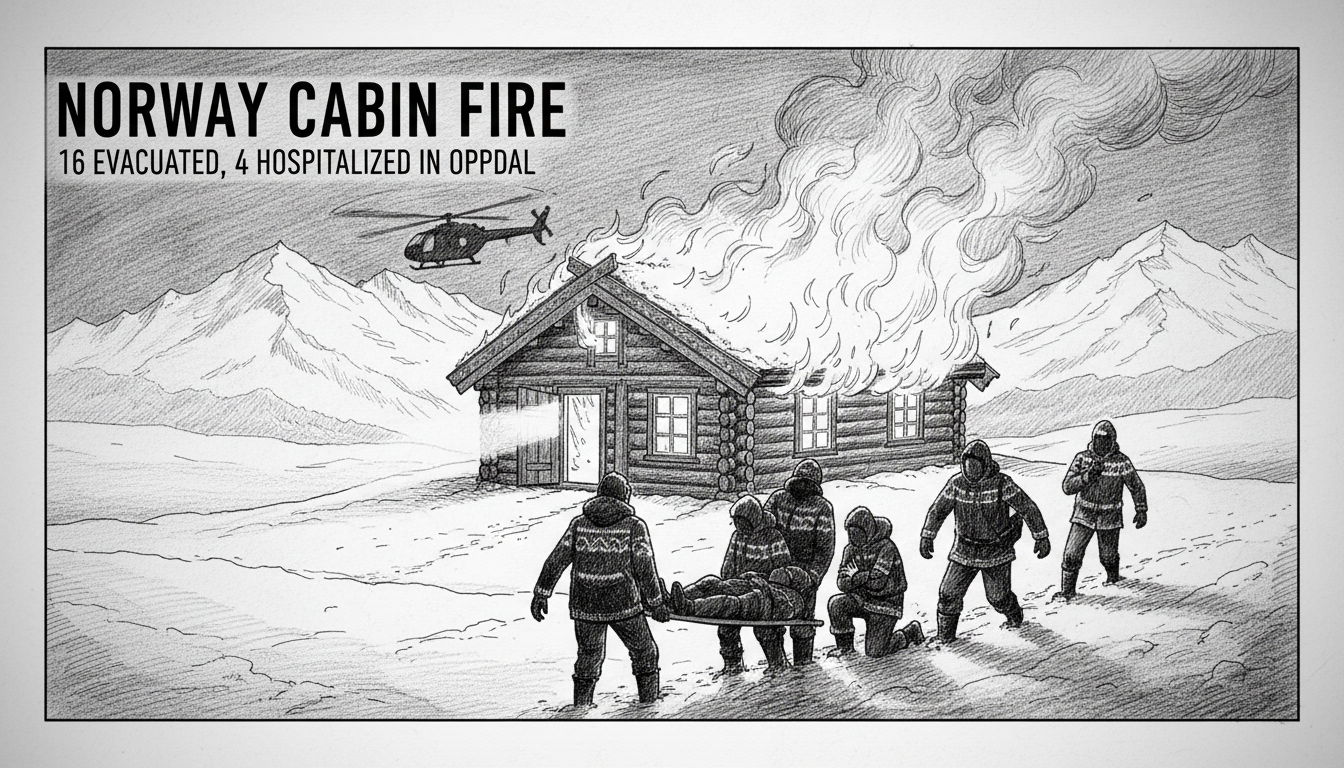
Norway cabin fire in Oppdal has forced the evacuation of 16 people and sent four to hospital, highlighting the persistent dangers of remote vacation home blazes. The main cabin of a holiday complex was fully engulfed when firefighters arrived around 3:30 AM, battling heavy snowfall and water access issues before containing the inferno by dawn. The incident strikes at the heart of a cherished national tradition, raising urgent questions about fire safety in Norway's vast and often isolated cabin communities.
A Blaze in the Heart of Cabin Country
The alarm came in the deep night. A cabin owner reported the fire in Oppdal, a popular municipality in Trøndelag county known for its mountains and dense concentration of vacation homes, or 'hytter'. Emergency services responded with a full alarm. "We dispatched with all available personnel," said on-scene fire commander Aleksander Husa. What they found was a structure beyond saving. "Here there was full flashover," Husa stated, describing a cabin completely consumed by flames.
The immediate priority shifted from suppression to containment and evacuation. Police incident commander Daniel Fjellheim confirmed that all individuals at the site were accounted for. "It was cleared for fire, health, and police that everyone at the cabin was evacuated and safe," Fjellheim said. Sixteen people were moved from the area. Four were transported to hospital; one sustained burn injuries, while three others were taken for check-ups due to minor injuries. The evacuees were taken to Oppdal town center and accommodated in a hotel.
Battling the Elements in a Controlled Burn
Confronted with a fully developed fire and logistical hurdles, firefighters made a critical tactical decision. "There were some challenges with the water supply on site, so it quickly moved into a controlled burn phase," Commander Husa explained. This strategy involved allowing the main cabin to burn down while crews focused their efforts on protecting neighboring structures from catching fire. The goal was to prevent a catastrophic spread through the cabin cluster, or 'hyttetun'.
Weather was a formidable adversary. The region experienced significant snowfall over the past day, creating treacherous driving conditions. "Challenging conditions on site regarding weather and driving conditions have complicated the extinguishing work," operations manager Stian Martinsen Aalberg reported at 6:33 AM. Husa noted that while the fire engine itself managed, other support vehicles faced difficulties reaching the remote location. "We've had a bit of challenges, but we received good help from local snowplow crews and local heroes with tractors," he said.
By 6:45 AM, operations manager Kirsten Bergstrøm confirmed the fire was under control. Firefighters covered the smoldering ruins with snow to prevent any flare-ups. The scene, once chaotic, was secured. Police have not yet determined a cause for the blaze. "We currently have no opinion on what caused the fire, but we will conduct investigations on site," Fjellheim said.
The Norwegian Cabin: A Cultural Institution with Inherent Risk
This fire touches a national nerve. Norway has one of the highest densities of second homes per capita in the world. Over 400,000 cabins dot the landscape, from coastal islands to deep mountain valleys. For Norwegians, the 'hytte' is more than a building; it is a cornerstone of lifestyle, representing friluftsliv (open-air life), family time, and a deep connection to nature. The Christmas to New Year period, known as romjula, is a peak time for cabin visits, making the Oppdal fire particularly resonant.
Yet, this cherished tradition comes with inherent safety challenges. Many cabins, like the one in Oppdal, are situated in remote areas far from municipal water mains and with limited road access, especially in winter. Building standards for cabins have historically been less stringent than for primary residences, often allowing for more traditional—and sometimes more flammable—materials like wood paneling. Older electrical systems, combined with increased usage of modern appliances in aging structures, can create fire hazards.
"Incidents like this underscore the perennial conflict between the Norwegian ideal of rustic, remote cabin life and modern safety requirements," says Lars Holm, a researcher specializing in Nordic building traditions. "The very isolation that provides peace and tranquility also delays emergency response and complicates firefighting. Water access is often the critical limiting factor."
A Persistent Problem with Complex Solutions
Cabin fires are a recurring issue in Norway. Each year, fires destroy hundreds of these structures, often with near-total loss due to delayed detection and response. The Oppdal fire's rapid progression to "full flashover" is not uncommon in wooden buildings with open floor plans and ample fuel loads from furniture and personal effects.
Experts point to several areas for improvement. "Prevention is paramount," states fire safety engineer Kari Nilsen. "This includes mandatory, modern smoke detectors in all cabins, regular inspection of heating sources like wood stoves and electrical systems, and clear access roads that are maintained year-round." Some municipalities have begun campaigns to educate cabin owners on basic safety checks before seasonal use.
Technological solutions are also emerging. Satellite-connected automatic alarm systems that alert owners and emergency services immediately upon detecting smoke are becoming more affordable. For new constructions and major renovations, updated building codes now encourage more fire-resistant materials and compartmentalization to slow a fire's spread.
However, mandating sweeping changes to Norway's vast existing cabin stock is politically and culturally sensitive. Many owners view stringent regulations as an infringement on a personal retreat. The cost of upgrading old cabins, particularly for voluntary associations or families sharing ownership, can be prohibitive.
Looking Ahead: Safety vs. Tradition
The aftermath in Oppdal will involve a police investigation into the fire's origin and a painful recovery for the owners. The loss of a main cabin in a shared complex affects an entire community of users. The emotional impact is profound, as these spaces are repositories of family memories and generations of shared experiences.
The incident serves as a stark reminder during a busy holiday period. "We know there are a lot of people in the district and that many are at their cabins," noted emergency personnel, alluding to the heightened risk when occupancy is high.
For Norwegian authorities and cabin owners nationwide, the challenge remains balancing an uncompromising cultural love for the remote 'hytte' with an uncompromising commitment to safety. Can the tradition evolve to incorporate stricter preventative measures without losing its soul? The conversation, much like the embers in Oppdal, is sure to continue smoldering long after the last flame is out. The ultimate goal is ensuring that the pursuit of nature's peace does not come with an unacceptable price.