
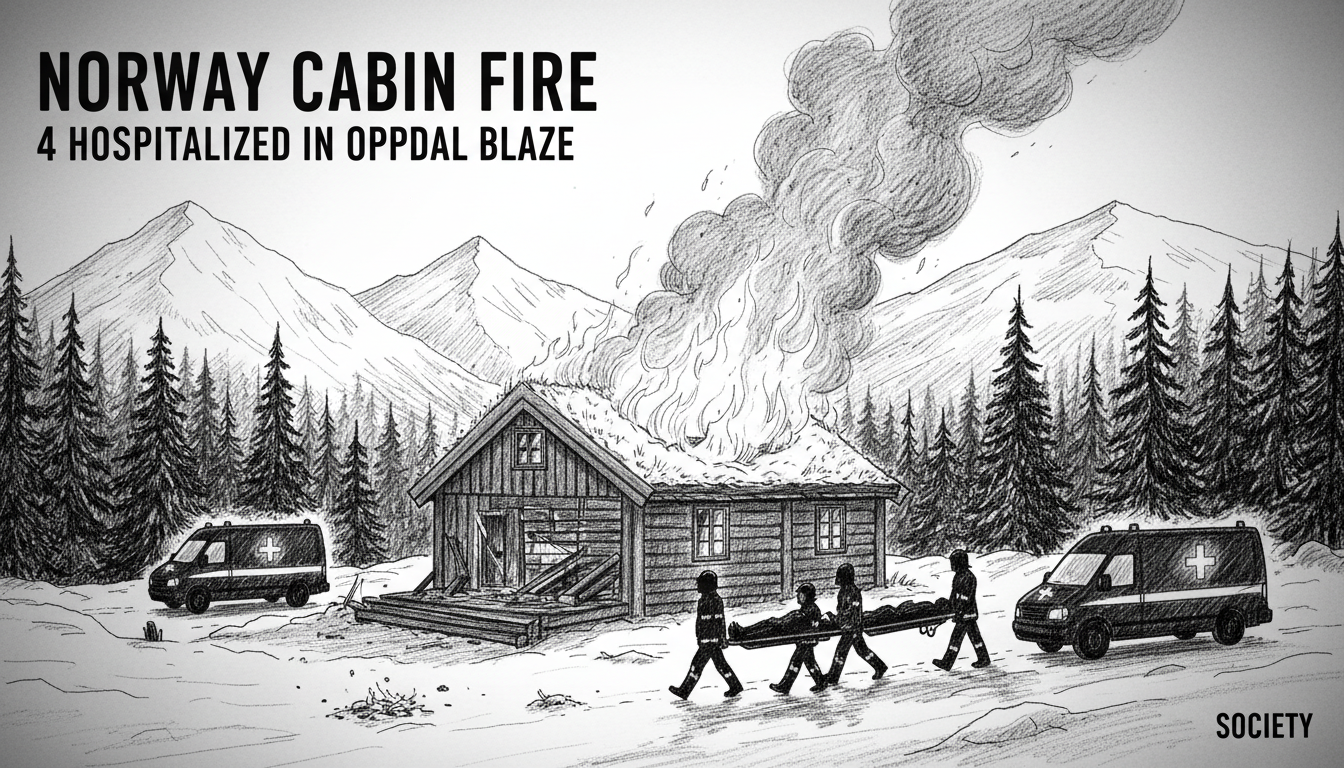
Norway's popular cabin holiday culture faced a stark reminder of its inherent risks early this morning as a major fire destroyed a large timber cabin in Oppdal. Four people were hospitalized, one with burn injuries, after flames engulfed the wooden structure. Emergency services made the critical decision to let the cabin burn to the ground, a strategy that underscores the volatile nature of such blazes in remote, mountainous areas.
A Remote Holiday Turned to Crisis
The fire broke out in a sizable tømmerhytte, or log cabin, in the municipality of Oppdal in Trøndelag county. This region, famed for its dramatic peaks and world-class ski resorts, is dotted with thousands of private and rental cabins. The specific location and cause of the fire are under investigation. Operational commander Cristopher James White confirmed the evacuations and hospitalizations. "One of the evacuated has some burn injuries. The other three have been sent in for a check with minor injuries," he said. The decision by the fire service to not attempt a full interior attack, but instead to contain the blaze and let the structure be consumed, points to the intensity of the fire upon their arrival.
The Calculated Decision to Let It Burn
For the public, the fire department's strategy to allow a property to burn can seem counterintuitive. Yet, in the context of Norwegian cabin fires, it is a calculated and often necessary tactic. "When a fully involved fire takes hold in a dry, wooden structure, especially in a remote location, the risks of sending firefighters inside can far outweigh the benefits," explains Lars Holm, a retired fire safety instructor with decades of experience in mountain rescue. "The primary goal shifts from saving property to preventing the fire from spreading to nearby forests or other cabins, and ensuring the absolute safety of the responders and any remaining civilians." Water supply is also a frequent challenge in rural areas, making defensive operations the safest course of action.
A National Passion with Inherent Risks
The Norwegian cabin, or hytte, is more than a holiday home; it is a central pillar of national identity, promoting a deep connection to nature. Over 400,000 such cabins exist across the country. However, the very materials and settings that make them idyllic—wooden construction, isolated locations, and frequent use of fireplaces and older heating systems—also create significant fire hazards. The winter season adds layers of complexity: freezing temperatures, snow-blocked access roads, and increased use of auxiliary heaters. "A cabin fire in February in Oppdal presents a worst-case scenario for response times and resource deployment," Holm notes. "Every minute counts, and often, by the time the alarm is raised and crews traverse difficult terrain, the fire has a firm grip."
Safety Gaps in a Relaxed Environment
Fire safety experts consistently point to common, preventable issues in cabin environments. The relaxed holiday mindset can lead to lapses in vigilance. Key recommendations include installing and regularly testing multiple smoke detectors, keeping a certified fire extinguisher accessible and knowing how to use it, and having a clear evacuation plan. The single most critical measure, however, is the maintenance of heat sources. "Annual professional inspection and cleaning of chimneys and flues is non-negotiable," stresses Kari Nilsen, a spokesperson for the Norwegian Directorate for Civil Protection (DSB). "Many of these cabins use wood-burning stoves as a primary heat source. Creosote buildup is a major cause of ignition." She also warns against using ovens or improvised methods for heating and the dangers of leaving candles unattended.
The Rental Market and Responsibility
The growth of platforms like Airbnb has expanded access to Norway's cabin culture for international tourists. This introduces another dimension to safety. Who is responsible for ensuring a rental property meets safety standards? "The responsibility lies unequivocally with the property owner," Nilsen states. "They must provide functioning safety equipment and clear instructions. However, renters must also take it upon themselves to locate fire extinguishers, check for smoke detectors, and understand the escape routes upon arrival." Municipalities have varying degrees of oversight for rental properties, but enforcement in remote areas can be sporadic. Industry groups have begun promoting safety checklists for owners, but participation is largely voluntary.
Looking Ahead: Prevention in Paradise
The Oppdal fire, while resulting in thankfully non-life-threatening injuries, serves as a somber alert as the winter season continues. For Norwegian authorities, the balance is delicate: how to promote essential safety measures without eroding the cherished sense of freedom and simplicity that the cabin represents. Potential policy discussions could focus on strengthening safety requirements for commercially rented cabins, offering tax incentives for owners who install modern sprinkler systems or heat detectors, and funding broader public awareness campaigns.
For now, the charred remains of the Oppdal cabin will stand as a silent testament to the destructive power of fire in a wooden structure. The incident reinforces a crucial message for every cabin owner and guest: the pursuit of alpine peace carries with it a duty of preparedness. The crackle of a cozy fireplace should never be confused with the roar of an uncontrolled blaze. As the investigation into this fire's origin begins, the entire hytte nation is reminded that vigilance is the price of safety, even in paradise.