
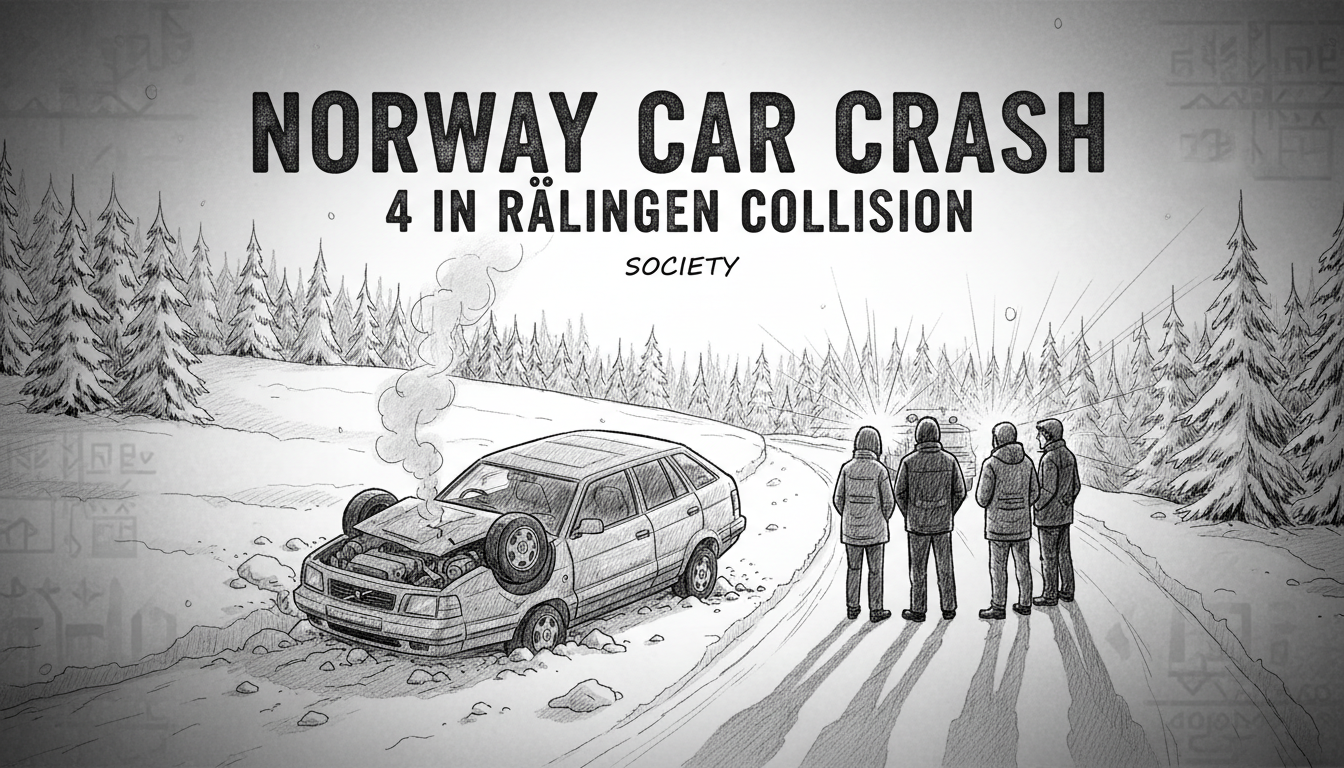
Norway road accidents include a recent incident in Rælingen where two cars collided, involving four individuals. All parties were able to exit their vehicles and were conscious, according to local emergency services. The crash resulted in significant material damage, requiring vehicle recovery, but no serious injuries were reported.
Operational leader Håkon Hatlen confirmed the details in a statement. The collision occurred on a road in Rælingen, a municipality in Akershus county northeast of Oslo. Emergency responders arrived quickly to assess the scene and manage traffic flow. Such incidents highlight ongoing concerns about traffic safety in Norway's densely populated regions.
The Rælingen Incident and Response
Authorities cordoned off the area following the crash to facilitate investigation and cleanup. Preliminary reports suggest that both vehicles sustained extensive front-end damage, indicating a direct impact. Police are investigating potential causes, including speed, driver distraction, or road conditions. Rælingen's proximity to Oslo means its roads often experience mixed traffic, from commuter cars to heavier vehicles.
Local residents reported hearing the collision, with one witness describing it as a loud crunching sound. The fact that all involved were walking after the accident is fortunate, but it underscores the unpredictable nature of road incidents. Norway's emergency services maintain high readiness for such events, with response times averaging under ten minutes in urbanized areas like Akershus.
Norway's Evolving Road Safety Landscape
Road safety remains a priority for Norwegian authorities. In 2023, preliminary figures from the Norwegian Public Roads Administration indicate approximately 108 road fatalities, a slight decrease from 117 in 2022. Akershus county, with its high population density, consistently records a higher frequency of traffic incidents compared to rural areas. This trend aligns with national data showing that most accidents occur on busy roads near urban centers.
Infrastructure investments have aimed to reduce risks, with upgrades like improved signage, roundabouts, and pedestrian crossings. However, challenges persist due to increasing traffic volumes and aging road networks. The Norwegian government allocates substantial annual budgets for road maintenance, yet accidents like the one in Rælingen reveal gaps in real-time safety enforcement.
Vision Zero Policy: Current Progress and Hurdles
Norway's commitment to the Vision Zero policy, which aims to eliminate all traffic fatalities and serious injuries, faces both progress and setbacks. Launched decades ago, the policy has driven innovations in vehicle safety standards and road design. Recent years have seen a reduction in fatalities, but targets for 2024 appear ambitious given rising electric vehicle adoption and changing driver behaviors.
Transport Minister Jon-Ivar Nygård has emphasized that Vision Zero requires continuous adaptation. In a parliamentary address last month, he noted that while technology like automatic braking systems helps, human error remains a significant factor. The Storting is reviewing new legislation to lower speed limits in residential zones, but implementation delays have sparked debate among policymakers.
Traffic safety experts point to mixed results. "We've made strides with stricter drunk-driving laws and better lighting on highways," said Dr. Lena Solberg, a researcher at the Institute of Transport Economics. "However, distraction from mobile devices and complacency among drivers are eroding some gains. The Rælingen crash, though minor, is a reminder that every incident demands scrutiny."
Expert Analysis on Traffic Incident Patterns
Experts attribute many collisions to a combination of environmental and behavioral factors. In Akershus, road layouts near fjords and hills can create blind spots, exacerbating risks during poor weather. The Rælingen area, while well-maintained, has curves that require attentive driving. Data from 2023 shows that over 60% of accidents in similar municipalities involve driver inattention, often linked to smartphone use.
Enforcement campaigns by Norwegian police have intensified, with increased patrols and speed cameras. Yet, as Dr. Solberg notes, "Engineering solutions alone aren't enough. Public awareness campaigns must evolve to address modern distractions. Norway's high rates of electric car usage also introduce new dynamics, as quieter vehicles can surprise pedestrians and cyclists."
Economic impacts are another consideration. Material damages from accidents cost Norwegian insurers millions of kroner annually, influencing premium rates. The Rælingen collision, with its substantial vehicle damage, will add to repair costs and insurance claims, highlighting the financial toll of even non-fatal incidents.
Community Impact and Future Directions
For Rælingen residents, the crash reinforces calls for local safety measures. Community leaders have petitioned the municipality for additional traffic calming measures, such as speed bumps and enhanced crosswalks. Mayor of Rælingen, Ståle Grøtte, stated that road safety is a top agenda item, with plans to review black spots in the coming months.
Looking ahead, Norway's road safety strategy must balance innovation with practical enforcement. The government's focus on digital tools, like connected vehicle systems, promises long-term benefits. However, immediate steps include bolstering driver education programs and investing in real-time traffic monitoring across counties like Akershus.
As Norway navigates these challenges, incidents like the Rælingen collision serve as critical data points. They remind us that behind every statistic are human stories and close calls. With Vision Zero's goals still within reach, will renewed political will and public cooperation pave the way for safer roads?