
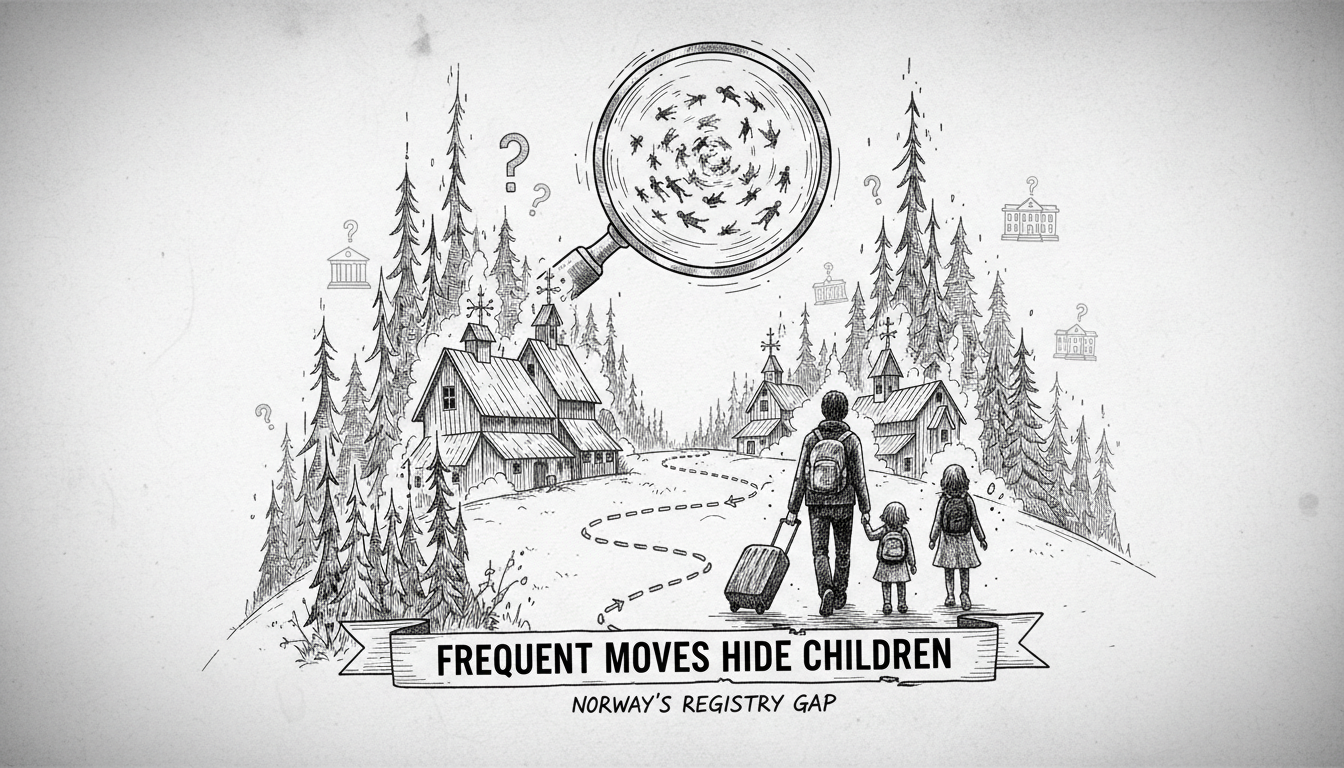
A Norwegian newspaper investigation reveals that children in vulnerable situations slip through safety nets when families relocate repeatedly between municipalities. The absence of a national child protection registry enables this systematic failure, leaving children at risk.
One case involves a girl who moved twenty times between ages two and twelve. Her father deliberately relocated to reset child protection involvement, exploiting the system's fragmentation. Each new municipality meant starting from scratch without access to previous case histories.
A comprehensive survey of child protection services shows concerning patterns. Two-thirds of responding agencies suspect families have moved specifically to avoid child protection investigations. Over one-third report significant challenges with information sharing between municipalities.
Erik Stene, who chaired a government committee on child protection institutions, delivered a critical report last October. He stated the current system creates unacceptable risks. "The lack of interconnected data systems makes it difficult to compile sufficient information about children," the report concluded. "This risks that crucial information about children's needs isn't properly considered."
The current process depends on local child protection services voluntarily notifying new municipalities when families relocate. This creates gaps where children can disappear from oversight. Time delays in information transfer can escalate dangerous situations.
Child protection leaders across Norway express strong support for a unified system. Heidi Ingebrigtsen Bordi, a child protection manager in Ås, stated, "We need a national, common registry that lets us see if families had child protection cases in other municipalities."
Laila Grønn-Jensen from Samnanger municipality described the challenges when families move away from existing child protection involvement. "Supervision has shown that much knowledge about children and families disappears in written materials," she explained. "This can lead to children remaining in inadequate care situations longer than necessary."
New legal requirements implemented this year mandate that child protection services must notify other municipalities when concerned children relocate. Tove Bruusgaard from the Norwegian Directorate for Children, Youth and Family Affairs believes this change has improved information flow.
However, the Children and Family Minister expressed skepticism about a comprehensive national system. She cited privacy concerns and potential damage to trust in services. The minister questioned whether such a system would provide sufficient additional value beyond current improvements.
This situation reflects a fundamental tension in Nordic welfare systems. The balance between privacy rights and child protection creates complex ethical dilemmas. Norway's decentralized administrative structure, where municipalities hold significant autonomy, complicates nationwide coordination.
The Norwegian approach contrasts with some neighboring countries. Sweden maintains more centralized child protection databases, though similar privacy debates exist across the region. All Nordic nations struggle with protecting vulnerable children while respecting family privacy in increasingly digital societies.
Child protection experts note that technological solutions exist to balance these concerns. Modern systems can provide necessary information to authorized professionals while maintaining strict access controls. The question remains whether political will matches technical capability.
As one official noted, the core issue involves priorities. "If we consider child protection important enough, we must examine what matters most: helping and ensuring safety for the children affected."