
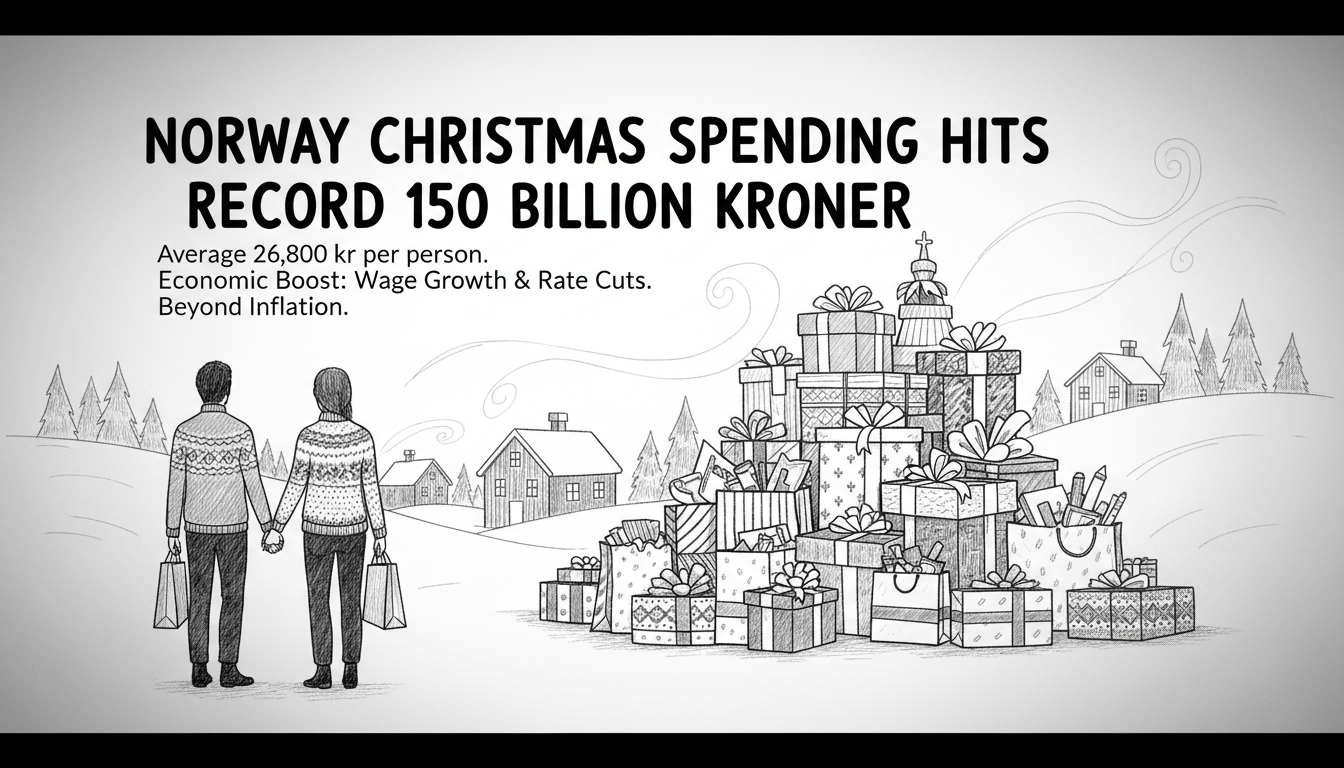
Norwegian households will spend an average of 26,800 kroner ($2,500) each during this year's Christmas shopping season. The Confederation of Norwegian Enterprise predicts holiday spending will reach 150 billion kroner in November and December. That represents a five percent increase compared to last year.
Chief economist Øystein Dørum said the high inflation period has ended. Consumers now have more purchasing power as economic conditions improve. He made these comments in an official statement released today.
This marks the second consecutive year of growth after three years of declining sales. The unusual spending surge during 2020's pandemic Christmas created a difficult comparison period. Now the trend has reversed positively.
Several economic factors drive this optimistic forecast. Real wage growth, initial interest rate cuts, and high employment levels all contribute. Low unemployment particularly boosts consumer confidence.
Norway Christmas shopping 2025 shows remarkable seasonal patterns. Purchases during November and December will exceed average monthly spending by 22 percent. Some categories like kitchen equipment, toys, and books more than double their usual sales.
Vegard Einan, managing director of NHO Service and Handel, highlighted the economic drivers. Real wage growth and the first interest rate cuts combine with strong employment figures. These conditions should produce solid Christmas retail growth.
Norwegian online stores will capture 15 billion kroner of holiday spending. This represents a ten percent increase from 2024's digital sales.
November has become increasingly important for Christmas shopping. It now accounts for nearly half of total holiday purchases. Last year, November represented 49 percent of Christmas spending.
Consumers continue starting their Christmas shopping earlier each year. The Black Week sales period has become crucial for holiday purchasing decisions. This pattern appears likely to continue through 2025.
The forecast suggests Norway's economy has truly moved past the high inflation challenges. While the numbers look strong, they also reflect how much prices have risen in recent years. The increased spending partly compensates for earlier purchasing power erosion.