
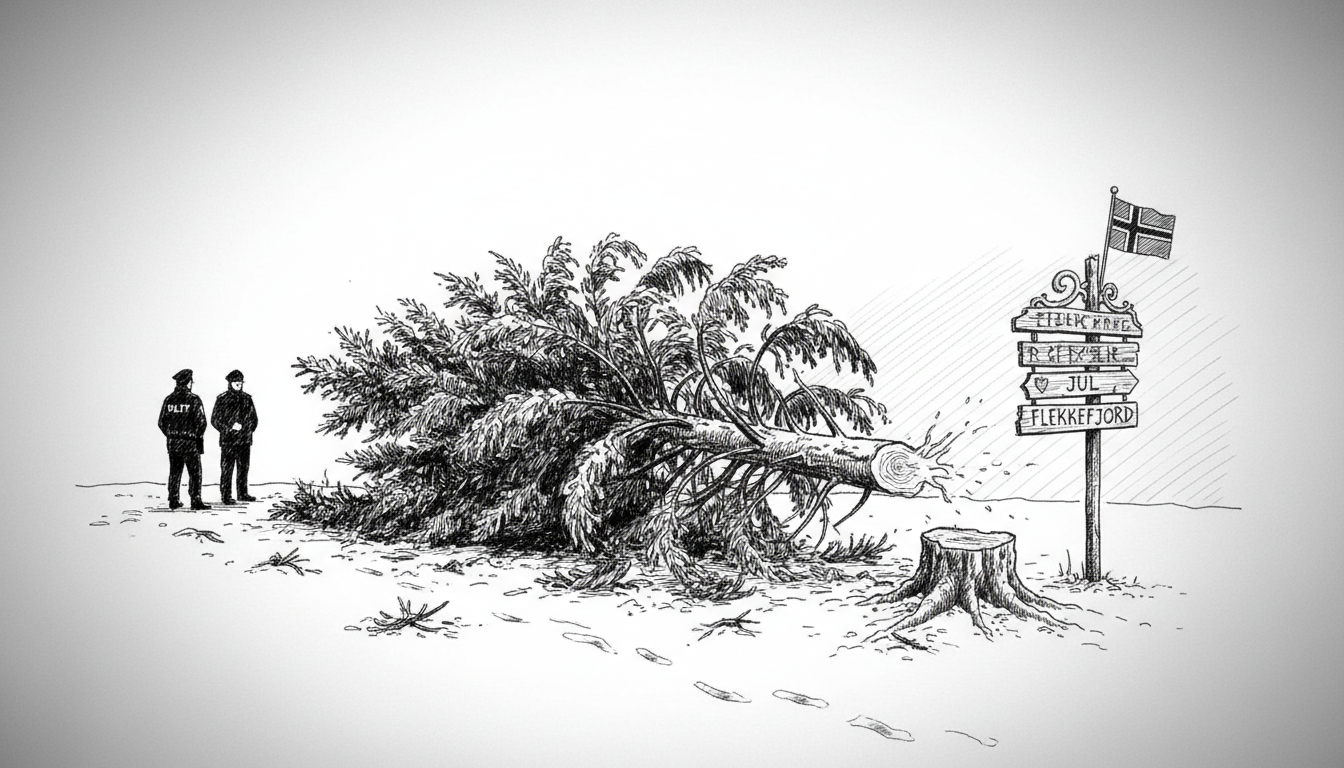
Norway's cherished Christmas tradition was attacked in the early hours of Sunday morning when vandalism struck the town square of Flekkefjord. The community's Christmas tree was deliberately cut down, lying on the ground when Agder police arrived at the scene. No suspects were found, and an investigation is now underway, leaving residents of the southern Norwegian municipality grappling with a senseless act against a central holiday symbol.
A Quiet Sunday Morning Shattered
Police in Agder received a report in the early hours of Sunday morning that someone was in the process of sawing down the Christmas tree on the main square, known locally as 'torvet'. Operations leader Ole Robert Strandhagen from the Agder Police District confirmed the response. "Police arrived at the scene shortly after, and the tree was lying on the ground. No persons were seen in the area," Strandhagen said in a statement. The police have opened a case and will investigate the incident further. For the residents of Flekkefjord, a coastal municipality in Agder county with a population of just over 9,000, the felled tree is more than damaged property. It represents a targeted blow to a shared public ritual that marks the beginning of the festive season.
The Weight of a Public Symbol
The tradition of erecting and decorating a large Christmas tree in a town or village square is deeply ingrained in Norwegian culture. These trees serve as focal points for community gatherings, Christmas carol singing, and the general festive atmosphere. They are often lit in a ceremony attended by local officials and families, symbolizing light in the darkest time of the year. "When you attack a public Christmas tree, you are not just damaging municipal property," says Dr. Ingrid Moe, a cultural sociologist at the University of Agder. "You are striking at a symbol of communal identity and joy. In a small community like Flekkefjord, where everyone knows the square, this feels personal. It creates a sense of violation that extends far beyond the physical act."
This incident is not isolated. Vandalism of public Christmas decorations is a recurring, if infrequent, issue in Norwegian municipalities. Motivations can range from drunken mischief and youthful pranks to more deliberate acts of protest or nihilism. Without suspects, police are currently examining all possibilities. The act requires forethought—bringing a saw to the location—suggesting it was premeditated rather than a spontaneous act of destruction.
The Community's Response and the Path Forward
The immediate question for Flekkefjord's municipal authorities is whether to replace the tree. The cost and logistics of securing, transporting, and erecting a new large spruce so close to Christmas are significant. However, the symbolic cost of leaving the square empty may be greater. Many communities choose to swiftly replace vandalized trees, viewing it as a statement of resilience. "The typical response is to put up a new one as quickly as possible," explains Lars Holmen, a former mayor of a northern Norwegian municipality that faced similar vandalism. "It sends a clear message: you will not steal our Christmas spirit. The community often rallies around it, with volunteers sometimes stepping forward to help."
Local politicians and community leaders now face the task of managing public sentiment. There is a risk that excessive attention given to the vandals could encourage copycat acts. Conversely, treating it as a minor crime might seem dismissive of the community's feelings. The police investigation will be closely watched. In some past cases, security camera footage from nearby businesses or municipal buildings has helped identify perpetrators. The penalty for such vandalism typically falls under laws concerning damage to property, with consequences ranging from fines for younger offenders to more serious charges if the act is deemed aggravated.
A Broader Pattern in the Festive Season
Analysts who study antisocial behavior note a slight uptick in property damage and petty crime during the holiday period. The reasons are complex, blending darker nights, social pressures, and increased alcohol consumption. A decorated public square represents a highly visible target. "These symbols of collective happiness and conformity can provoke a reaction in individuals who feel alienated or angry," Dr. Moe suggests. "Cutting down the tree is a dramatic, theatrical way to lash out and force the community to notice a different narrative—one of disruption."
For the average Norwegian, such acts are perplexing and deeply unpopular. Social media reactions in local Flekkefjord groups have been filled with anger and sadness, with many expressing hope that the culprits are found. The incident sparks annual debates about installing surveillance cameras in public squares, a move that conflicts with Norway's general preference for low-visibility policing and respect for public privacy.
Looking Ahead: Restoration and Reflection
As the investigation continues, the focus will turn to restoration. Whether a new tree graces Flekkefjord's torvet this December or not, the event has already left a mark. It serves as an unwelcome reminder that shared symbols are fragile. The true test for the community will be in its response in the coming days. Will the vandalism overshadow the season, or will it strengthen the communal resolve to celebrate together?
The story of a felled Christmas tree in a small Norwegian fjord town is a microcosm of a larger tension between communal celebration and individual disruption. It raises questions about how societies protect public joy and the spaces meant for it. As Norway moves deeper into the festive season, the empty space—or a newly erected tree—in Flekkefjord's square will stand as a quiet testament to both loss and the potential for renewal. The police work in the background, but the community's choice to reclaim its tradition will be the most powerful answer.