
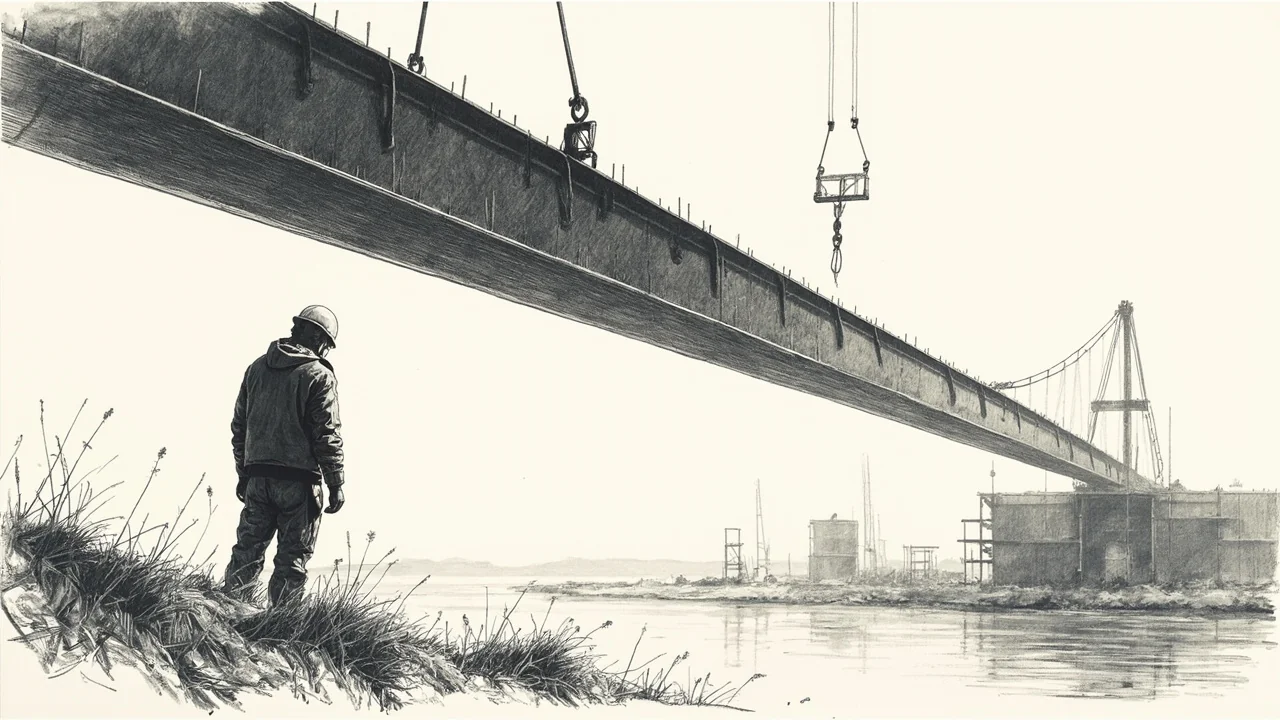
Norway's emergency services responded to a serious workplace accident at the Værstetorvet shopping center in Fredrikstad on Saturday morning. A worker suffered a head injury after being struck by a falling beam, according to police operations leader Rune Isaksen of the East Police District. Initial reports suggested a fall from height, but authorities later clarified the incident involved falling construction material.
"The injured person is being examined by medical personnel," Isaksen stated in the police log. The call came in during the late morning, prompting a multi-agency response to the central Fredrikstad location. The shopping center, a hub for retail in the Østfold region, was the scene of the sudden and violent industrial accident.
A Morning Shift Turns Critical
The precise circumstances leading to the beam's fall remain under investigation by both police and the Norwegian Labour Inspection Authority. Such incidents trigger immediate scrutiny under Norway's strict workplace safety regulations, known as the Working Environment Act. Construction sites, even within existing structures like shopping malls undergoing renovation, present well-documented hazards.
"This is a stark reminder that danger is present even in familiar, public spaces when construction is underway," said Lars Holen, a veteran construction safety consultant based in Oslo. "A falling beam represents a catastrophic energy transfer. The focus now will be on why it fell—was it a securing failure, a handling error, or a structural issue?"
The injured worker's condition has not been publicly disclosed, though the deployment of medical teams indicates the seriousness of the trauma. Head injuries from construction debris are particularly severe, often involving both blunt force and potential penetrating trauma.
Norway's Safety Record Under Scrutiny
Norway consistently ranks among the world's safest countries for workers, with a low fatal accident rate compared to international averages. However, each incident puts that hard-won reputation to the test. The construction and building sector traditionally accounts for a disproportionate share of reported serious injuries in Norway, despite rigorous national standards.
"The systems are in place—the 'Internal Control' regulations require companies to systematically identify and manage risk," explained Kari Nystad, a researcher at the National Institute of Occupational Health. "When a beam falls, it suggests a breakdown in that control chain. Was the risk assessed? Were the correct securing procedures for overhead loads followed? Were workers adequately shielded from the hazard zone?"
The Labour Inspection Authority (Arbeidstilsynet) will likely examine work permits, equipment certifications, and crew training records. Their findings can lead to directives, fines, or in cases of severe negligence, criminal charges under the Working Environment Act.
The Human and Economic Cost
Beyond the immediate physical toll on the worker, accidents like this ripple through families, work crews, and local communities. They also carry significant economic consequences. Work stoppages, investigation costs, potential increases in insurance premiums, and project delays are all typical outcomes following a serious reported injury.
For the Værstetorvet shopping center, the accident may lead to temporary closures of specific sections, disrupting both commerce and public access. The psychological impact on fellow workers and even shoppers who witnessed the event is also a concern, often requiring employer-led support measures.
Norway's welfare system provides comprehensive medical care and rehabilitation, but the path to recovery from a significant head injury can be long and uncertain. The incident underscores the ultimate goal of "Vision Zero"—a philosophy increasingly adopted in Norwegian industry that aims for zero serious injuries or fatalities.
A Broader Pattern in Nordic Construction?
While Norway's statistics are strong, similar incidents across the Nordic region prompt ongoing debate about safety compliance in fast-paced construction environments. Pressure to meet project deadlines, subcontracting chains, and the use of temporary labor can sometimes strain safety protocols, even in highly regulated markets.
"We see these accidents in cycles," noted Holen, the safety consultant. "They become less frequent after major investigations and industry-wide safety campaigns, but vigilance can wane over time. This accident in Fredrikstad will be a case study in boardrooms and on sites across the country next week."
The response protocol itself is a product of Norway's integrated emergency system. Police, ambulance, and often the local fire brigade coordinate responses, with police typically managing the initial scene and log until the Labour Inspection Authority assumes control of the technical investigation.
Looking Ahead: The Investigation's Path
The coming days will see investigators comb the scene for physical evidence. They will interview witnesses, the injured worker if possible, foremen, and project managers. The equipment involved and the specific work task being performed will be meticulously reconstructed.
The key questions are simple but critical: What was the sequence of events? Who was responsible for the safety of the operation? Were all regulations followed? The answers determine the official response and any preventive measures ordered for future work.
For Norway's construction sector, this single event in a Fredrikstad mall will trigger renewed internal safety audits. Company safety officers will re-brief teams on material handling and securing loads. It is a sad but predictable pattern—a reactive surge in caution following a preventable tragedy.
Ultimately, the measure of Norway's commitment to worker safety will be seen not just in the response to this accident, but in whether its lessons are permanently embedded in practice. Can the industry move from temporary vigilance to an unbreachable culture of safety, where no task proceeds without every risk being neutralized? The worker recovering from a beam to the head in Østfold is a living testament to the cost of failure.