
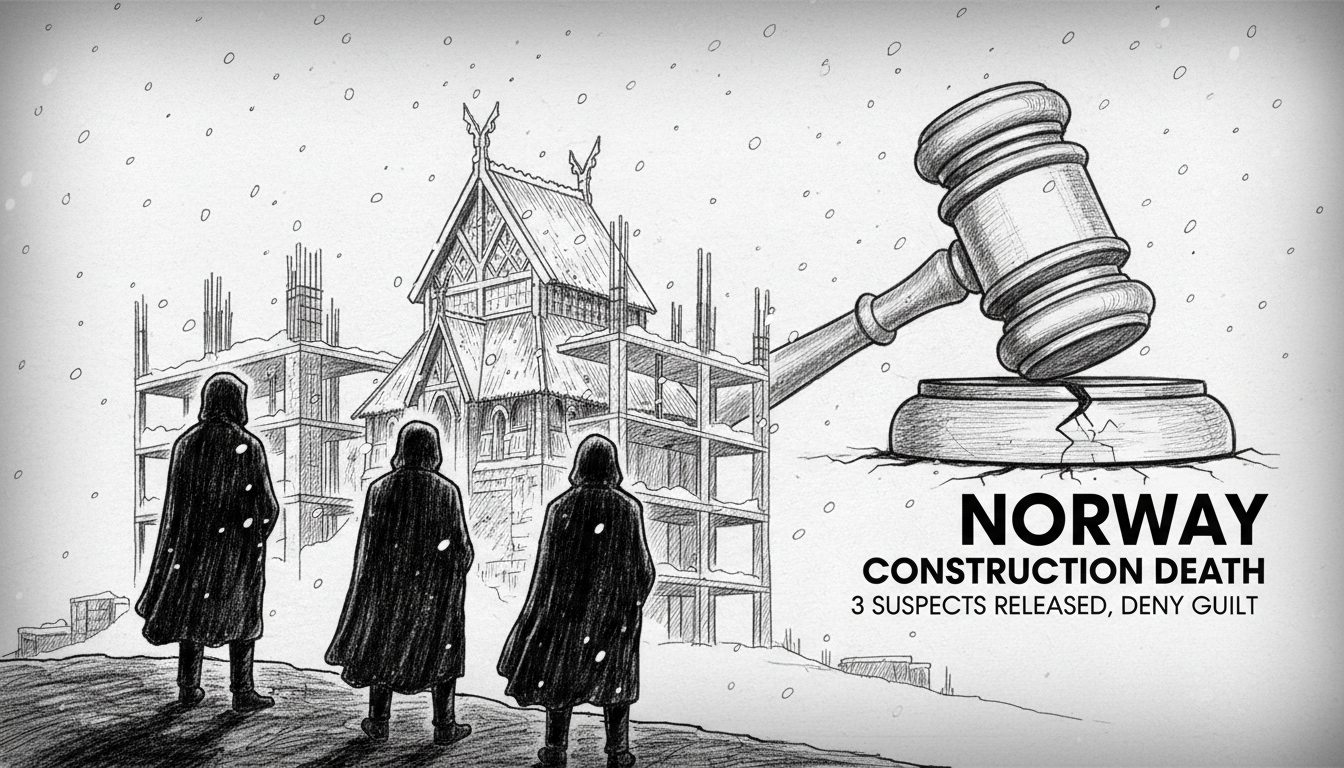
Norway's workplace safety record faces scrutiny after three suspects in a fatal Stavanger construction accident were released without detention. The men, charged with aggravated bodily harm resulting in death, deny any criminal guilt. Police confirmed the release, stating legal conditions for holding them were not met. This decision places the focus squarely on the ongoing investigation into systemic safety failures at the site.
A Quiet Release After a Tragic Death
The procedural step of releasing the suspects underscores a critical aspect of Norwegian law. Pre-trial detention requires meeting specific, high thresholds. Police must demonstrate a credible risk of the accused fleeing, tampering with evidence, or committing new crimes. In this case, investigators concluded those risks were insufficient. The release is not an acquittal; the three individuals remain formally charged as the probe continues. This legal distinction is crucial but offers little solace to the victim's family and colleagues seeking immediate accountability.
Legal experts note this is a common, though often publicly misunderstood, procedure. "The Norwegian system is built on the principle that deprivation of liberty before a verdict is a severe measure," explains Professor Lars Jacob Gjendem, a criminal law expert at the University of Oslo. "It is reserved for cases where it is strictly necessary to secure the investigation or prevent further harm. A release at this stage indicates the police do not currently see that level of immediate risk, which is separate from the question of eventual guilt or innocence."
The Unfolding Investigation in Norway's Oil Capital
The incident occurred at a construction site in Stavanger, the heart of Norway's offshore energy industry. The region is synonymous with high-risk industrial work, albeit with a globally admired safety culture. This death cuts against that narrative, prompting urgent questions. The Norwegian Labour Inspection Authority (Arbeidstilsynet) has launched a parallel investigation alongside the police criminal case. Their mandate is to determine if violations of the Working Environment Act occurred, which could lead to significant fines for the employing company regardless of the criminal outcome.
Initial reports indicate the victim, a man in his 40s, suffered fatal injuries on-site last Thursday. Details of the exact mechanism of the accident have not been publicly disclosed, as the investigation is active. The charge of "grov kroppsskade med døden til følge" is serious, carrying a maximum prison sentence of 15 years. It requires prosecutors to prove that an unlawful act of violence led directly to the death. In a workplace context, this often translates to proving gross negligence or a willful breach of safety protocols that resulted in fatal trauma.
Workplace Safety Under the Microscope
Norway consistently ranks among the world's safest countries for workers. In 2022, 24 fatalities were recorded in all industries, a low number relative to the workforce. However, each death triggers a rigorous response. The Labour Inspection Authority conducts approximately 1,500 inspections of construction sites annually. Their focus includes fall protection, machinery safety, and structural integrity. A fatal accident suggests a catastrophic breakdown in one or more of these areas.
"The construction industry remains a priority due to its inherent risks," says a senior advisor at the Labour Inspection Authority, speaking on background about general procedures. "When a death occurs, we examine everything from planning and risk assessments to the execution of work and supervision. The goal is never just to assign blame, but to understand the root causes and prevent recurrence across the entire sector." The authority's findings could lead to new national safety directives for specific construction activities.
The Human and Legal Cost
Beyond the legal proceedings, the case highlights the human cost of industrial accidents. The victim's family, colleagues, and the accused individuals are plunged into a protracted period of uncertainty. For the family, the release of the suspects may feel like a delay in justice. For the accused, the weight of a serious charge hangs over them while they await a potential trial, their personal and professional lives in limbo.
The employing company, which has not been named in initial reports, also faces profound consequences. Beyond potential criminal liability for its management, it confronts civil liability, increased insurance premiums, and reputational damage. In Norway's tight-knit industrial community, a safety failure can affect a firm's ability to win future contracts, particularly in the ethically stringent offshore sector where Stavanger-based companies operate.
A Comparative Look at Nordic Safety Standards
While Norway's safety record is strong, this incident invites comparison with its Nordic neighbors. Sweden and Denmark have similarly robust regulatory frameworks and low fatality rates. All three nations operate on the principle of "internal control," where employers bear the primary responsibility for identifying and managing risks. The effectiveness of this model relies on a culture of compliance and proactive safety work at the company level.
A critical difference often lies in enforcement and prosecution. The decision to pursue criminal charges against individuals, as seen in Stavanger, is a significant step. It signals that investigators may believe they have evidence of personal culpability beyond corporate failure. This approach is less common in neighboring jurisdictions for workplace accidents, where penalties typically target the company through fines and administrative sanctions. The Norwegian path suggests a potentially harsher view of individual responsibility in this case.
The Road Ahead: Investigation and Implications
The immediate next steps are forensic. Police and the Labour Inspection Authority will meticulously reconstruct the accident. They will review site documentation, interview witnesses, examine equipment, and analyze the site's physical layout. This process can take many months. The decision on whether to bring the case to trial rests with the public prosecutor, who will assess whether the evidence meets the high standard for conviction.
For Norway's construction industry, the tragedy is a stark reminder. Safety protocols are written in blood, as the old adage goes. This incident will likely trigger renewed safety campaigns and unannounced inspection blitzes across Rogaland county. Industry groups like the Federation of Norwegian Construction Industries (BNL) often respond to fatalities with updated guidance and training initiatives for member companies.
The release of the three suspects is a legal footnote in a larger story of loss and systemic safety. It confirms the investigation is moving from its initial, urgent phase into a detailed, technical examination. The ultimate judgment will come from the courts, but the court of public opinion in a safety-conscious nation like Norway has already begun its session. The central question remains: in a country that prizes security and order, how did a man go to work on a Stavanger construction site and not return home alive?