
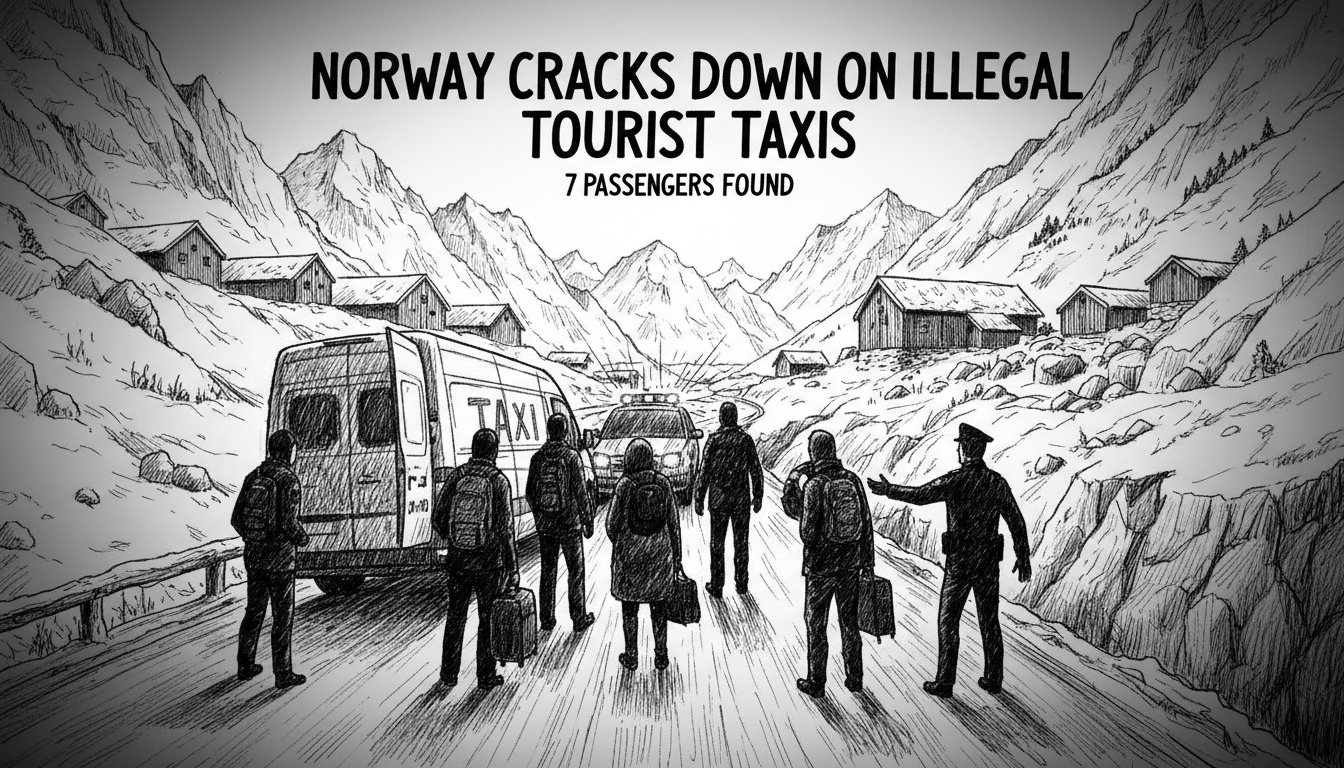
Norway's strict transport and immigration laws were violated in Tromsø this week when police stopped a Swedish-registered car carrying seven foreign tourists. The Chinese driver, operating without a valid license or permits for commercial passenger transport, now faces charges for illegal work and unlicensed taxi services. This incident highlights a growing enforcement challenge in Norway's booming tourist regions, where informal transport networks can exploit both workers and passengers.
A routine police patrol on Tromsøya island initiated the stop just after midnight on Wednesday. Officers discovered the driver was a Chinese national residing in Norway on a visa that explicitly prohibits paid employment. The seven passengers in the vehicle were identified as foreign tourists, confirming the driver was engaged in commercial transport without authorization.
"The man is now reported for breaches of the professional transport regulations because he transported people for payment without having a license, driver card, or exemption declaration," a police spokesperson said in a statement. An additional charge for illegal work was filed due to his visa status. The case underscores the dual legal frameworks—transport regulation and immigration law—that such operations violate.
A System Built on Regulation and Trust
Norway's taxi and passenger transport industry is heavily regulated to ensure safety, fair pricing, and driver qualifications. Operators must obtain a specific license from the Norwegian Public Roads Administration (Statens vegvesen). Drivers need a professional driver's certificate and must use a taximeter approved by the Norwegian Metrology Service. These rules protect consumers and ensure a level playing field for licensed businesses that pay taxes and meet strict operational standards.
"The system is designed for safety and fairness," explains Lars Mjøen, a transport policy researcher at the University of Oslo. "When someone operates outside it, they circumvent vehicle safety checks, mandatory insurance, and driver competency requirements. For tourists, this means no recourse if something goes wrong. For legitimate drivers, it's unfair competition."
The illegal driver in Tromsø bypassed all these requirements. He lacked the professional driver's license for transporting paying passengers. His vehicle, registered in Sweden, was not certified for commercial use in Norway. He also did not have the mandatory operating license or driver card that documents working hours to prevent fatigue.
The Immigration Law Dimension
The second major violation concerns Norwegian immigration law. The driver was present in Norway on a visa that does not permit him to work for pay. Norway has clear rules tying a foreign national's right to work to their specific residence permit. Tourist visas and many other short-term permits explicitly forbid employment.
This aspect of the case points to potential exploitation. "Individuals on visas that don't allow work are vulnerable," says immigration lawyer Hanne Solberg. "They may be pressured into illegal employment arrangements with low pay and no worker protections. Enforcement actions like this are crucial, but they also need to be paired with information campaigns targeting both potential workers and tourists who might use these services."
The police have not indicated whether the driver was working independently or for an organized service. However, the use of a Swedish-registered vehicle suggests possible attempts to avoid detection by Norwegian authorities.
Pressure Points in the Tourist Economy
Tromsø, a hub for Northern Lights and Arctic tourism, experiences significant seasonal demand for transport. This creates economic pressure that can foster informal markets. Tourists, often unfamiliar with local regulations and official taxi apps, may readily accept offers from drivers who approach them at airports, cruise terminals, or popular attractions.
"High season demand can outstrip the supply of licensed taxis, especially late at night or in remote viewing locations for the aurora," says tourism analyst Kari Nilsen. "This creates a niche where illegal operators can function. They often charge less than metered taxis, which is attractive to tourists, but that lower price comes with significant risk and no insurance coverage."
The challenge for authorities is one of scale and resources. Police cannot patrol every potential pickup point. The rise of informal arrangements organized through encrypted messaging apps or social media makes detection even harder. This single midnight stop likely represents a small fraction of the total illegal activity.
Enforcement and Legal Consequences
The driver now faces a multi-pronged legal response. For breaches of the Professional Transport Regulations (yrkestransportforskriften), fines can be substantial. Operating without a license can result in a penalty of several thousand euros. The vehicle itself can also be impounded.
The charge of illegal work under the Immigration Act carries separate consequences. Depending on the circumstances, this can lead to fines, expulsion from Norway, and a future entry ban to the Schengen area. The police have opened a case covering all the violations discovered.
For the seven tourists, the incident primarily caused inconvenience. They were not charged but were left needing legitimate transport in the middle of the night. Police typically assist in such situations to ensure passengers reach their destinations safely through legal means.
A Broader Nordic Challenge
Norway is not alone in facing this issue. Neighboring Sweden and Denmark have reported similar cases of illegal taxi operations, often involving drivers from outside the EU working on improper visas. The Nordic model, with its high labor standards and strong social protections, is particularly vulnerable to erosion from unregulated, informal work sectors.
"This isn't just about a single illegal taxi," argues Mjøen. "It's about preserving the integrity of our regulated labor market and ensuring that everyone who works here has the proper rights and protections. When one sector becomes informal, it can pressure others to do the same."
Enforcement strategies are adapting. Some cities have increased surveillance at transport hubs. Industry groups for licensed taxi operators actively report suspicious activity. There are also calls for stricter rental car company oversight to prevent vehicles from being leased for illegal taxi use.
The Path Forward for Safe Tourism
The ultimate solution requires a combined effort. Authorities must continue targeted enforcement. The tourism industry has a role in educating visitors—through hotels, tour operators, and official websites—on how to identify and use only licensed transport. Travelers should look for official taxi signage, metered fares, and the driver's visible identification card.
"Ask for a receipt from a printed taximeter, not a handwritten note," advises Nilsen. "Use reputable apps or call a known taxi company. If a deal seems too good to be true, it probably is, and your safety could be compromised."
The midnight stop in Tromsø serves as a stark reminder. As Norway's global tourism appeal grows, so does the shadow economy seeking to profit from it. Maintaining the nation's high standards for safety and fair work depends on vigilant enforcement and informed choices by every visitor who gets into a car. The question now is whether this case will be a isolated incident or a sign of a deeper problem requiring a more systemic response from policymakers in Oslo.