
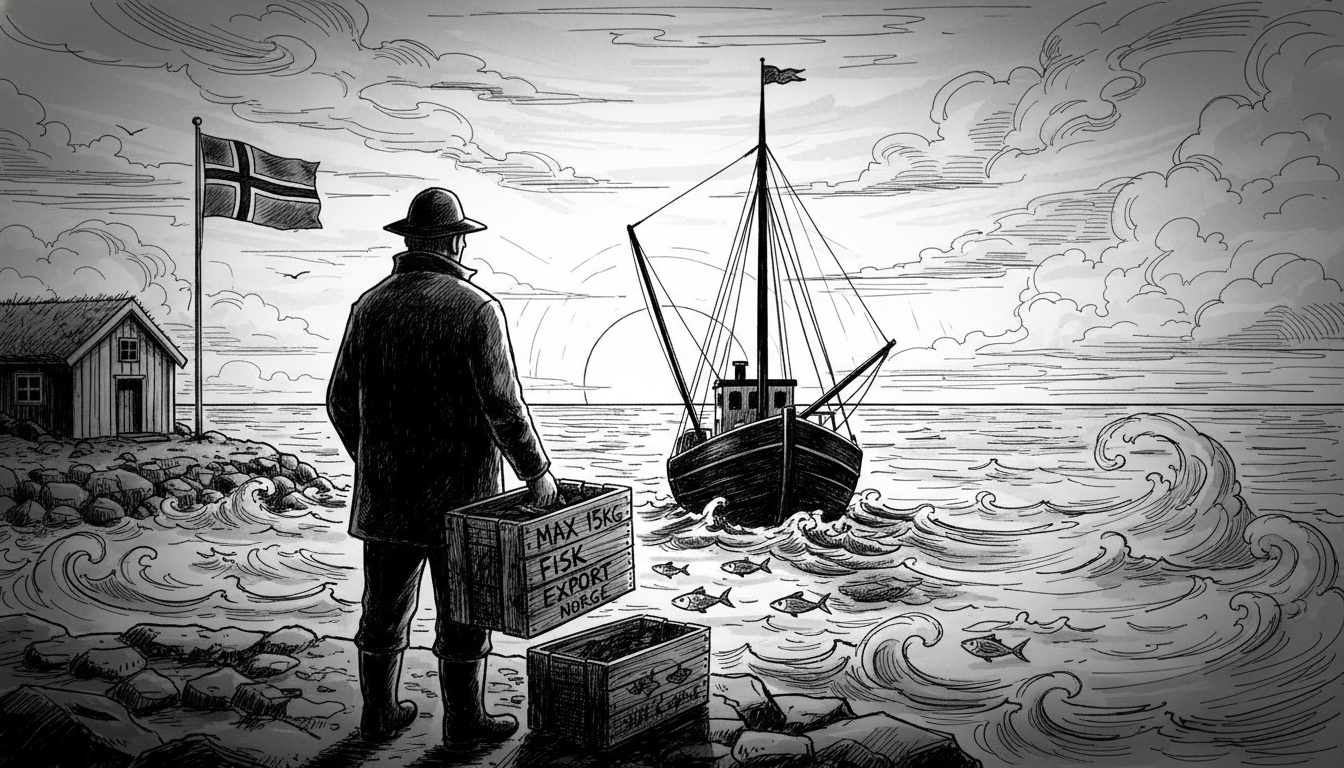
Norway has slashed the amount of fish visiting anglers can take home, implementing stricter rules to curb illegal exports. The Norwegian Directorate of Fisheries confirms new limits now in effect reduce personal export allowances from 18 to 15 kilograms of fish or fish products, twice per year. A further reduction to 10 kilograms per person is planned for 2027, marking a significant shift in managing recreational fishing tourism.
Authorities have simultaneously tightened documentation requirements. Export is only permitted for guests who have fished with a registered tourist fishing operation. Crucially, only the individual who caught the fish may remove it from the country. A minimum age limit of 12 years has also been instituted. These changes follow the seizure of over 13 tonnes of fish attempted for smuggling in 2024, underscoring the scale of the problem.
A Response to Systemic Smuggling
The policy overhaul directly targets a persistent smuggling issue that authorities say undermines sustainable fisheries management. The 2024 seizure figure of 13 tonnes, equivalent to roughly the weight of two large adult elephants, highlights substantial illegal activity. While 2025 data remains incomplete, the consistent pattern prompted this regulatory crackdown. The rules aim to close loopholes that allowed for the undocumented export of large quantities of fish, often bypassing commercial quotas and biosecurity controls.
Fishing tourism is a major draw, particularly in northern Norwegian regions like Finnmark and Troms. The iconic Lofoten Islands and deep fjords such as Geirangerfjord attract thousands annually. The new regulations balance this economic engine with conservation needs. "The goal is clear: to ensure that tourist fishing is sustainable and that rules are followed," a Fisheries Directorate spokesperson said in a statement. The focus is on verifying the chain of custody from hook to export.
Economic and Recreational Ripple Effects
Local fishing guide businesses are assessing the impact. Many operations in towns like Hammerfest and Kirkenes rely on international clients seeking Arctic char or cod. Stricter rules may lengthen booking processes but could also legitimize the industry. "Clients must now book with licensed outfits and keep their paperwork in order," says Lars Jensen, a veteran guide from Svolvær. "It adds admin, but it also weeds out the rogue operators who give us a bad name."
The 12-year age limit formalizes what was often practice, but it explicitly prevents young children from being used to circumvent personal quotas. Analysts note this aligns with Norway's stringent approach to resource management, mirroring principles used in its offshore oil sector at fields like Johan Sverdrup. Every fish exported must be traceable, much like every barrel of oil is accounted for.
Documentation: The New Normal for Anglers
Tourists must now obtain and retain a catch document from their registered fishing host. This document must accompany the fish during transport and be presented upon request at customs. The rule that only the angler who caught the fish can export it prevents group pooling to maximize loads. Enforcement will likely increase at border crossings and airports like Oslo Gardermoen and Tromsø.
Failure to comply can result in confiscation and fines. The regulations apply equally to fish processed into fillets or other products. This closes a previous grey area where processed weight was harder to verify against fresh catch limits. The Directorate emphasizes that these measures protect wild fish stocks from overexploitation outside the commercial fishing quota system.
The Path to a 10-Kilogram Future
The planned reduction to 10 kilograms per person in 2027 signals a long-term commitment to tighter controls. This future limit will represent almost a 45% cut from the original 18-kilogram allowance. Policy makers are likely anticipating increased fishing pressure due to Arctic accessibility changes and tourism growth. The staggered approach gives the industry and tourists time to adjust.
Conservation groups have welcomed the moves. They argue that recreational takes, while smaller than industrial catches, can impact local stocks in popular tourist fjords like Hardangerfjord. The new framework brings tourist fishing more in line with the precautionary principle governing Norway's commercial fisheries in the Barents Sea. It reflects a broader governmental priority of environmental stewardship under the current cabinet.
Balancing Act for Arctic Communities
For remote communities, fishing tourism provides vital income, especially during summer. Mayors in coastal municipalities acknowledge the need for regulation but hope enforcement is pragmatic. The requirement to use registered operations could centralize benefits to established businesses, potentially sidelining informal guides. However, it also ensures safety and quality standards are met, benefiting Norway's tourism brand.
The changes occur amidst wider debates on resource use, from oil exploration in the Barents Sea to mineral mining on the seabed. Norway's approach to its natural resources is consistently methodical and data-driven. This fishing policy shift is no exception, rooted in seizure statistics and a desire for orderly management. It showcases the Storting's willingness to intervene in maritime activities beyond the oil and gas sector.
What Tourists Need to Know Now
International visitors planning fishing trips must verify their outfitter's registration status beforehand. Packing a printed copy of the catch document is essential. The 15-kilogram limit is for personal consumption, not commercial sale. Anglers should be prepared for customs checks, particularly when flying out with coolers. The rules reinforce that Norway's pristine waters are a shared resource, not an open buffet.
As Magnus Olsen, I see this as a definitive move to protect Norway's marine inheritance. The dramatic seizure statistics made action inevitable. While the new limits may disappoint some trophy hunters, they ensure future generations can enjoy the same Arctic fishing adventures. The question now is how effectively the Directorate and Customs can enforce these rules across Norway's vast coastline. The 2027 reduction looms, promising even stricter stewardship of the sea.