
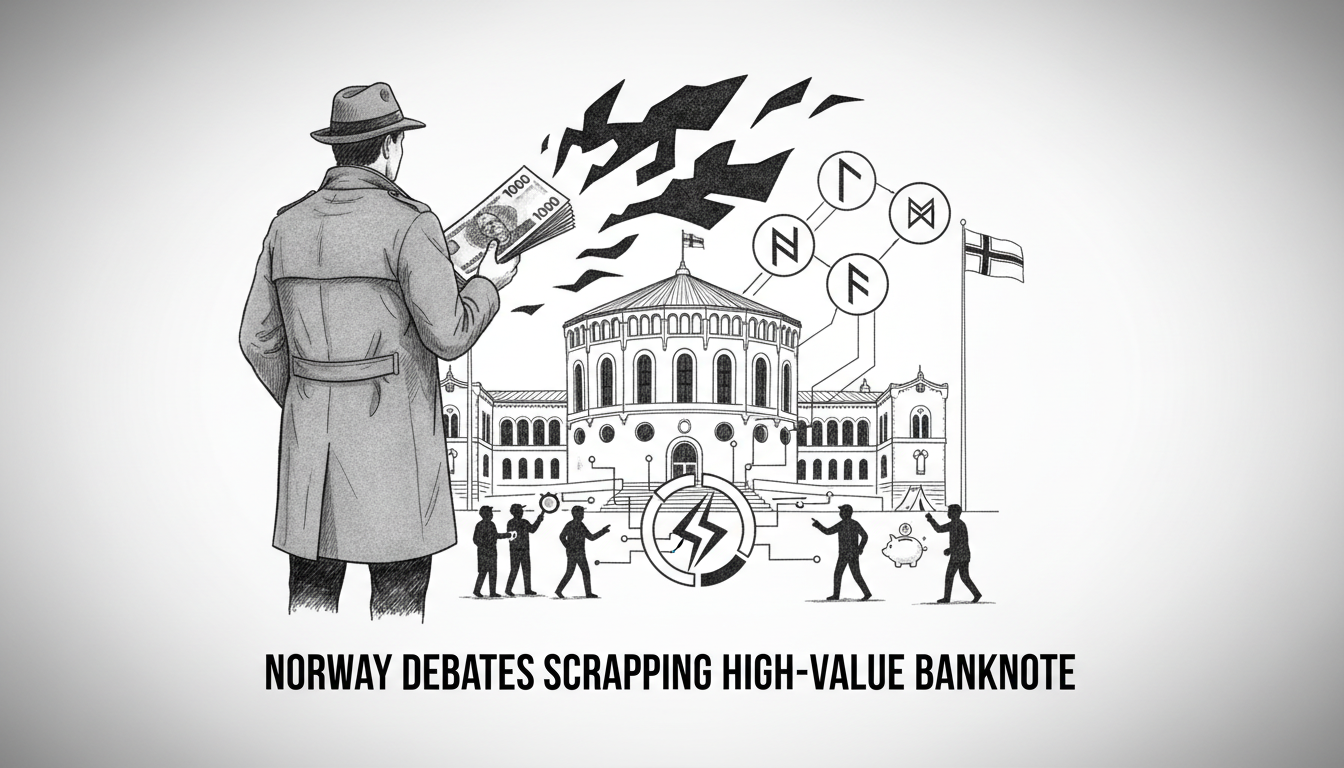
A debate is intensifying in Norway over the future of the 1000-krone banknote. Critics argue the high-value note fuels criminal activity and money laundering. They say it has little practical use for ordinary citizens in one of the world's most digital societies. The discussion follows Denmark's recent decision to completely phase out its own 1000-krone note.
On a university campus in Stavanger, many students struggle to even recognize the 1000-krone note. One student admitted he had never seen one before. Another was surprised when shown the note, which features a wave motif. This anecdote highlights a central argument. The note is increasingly absent from legitimate daily commerce.
Vegard Einan, managing director of NHO Service and Handel, is a leading voice for removal. He states the note is primarily used by criminals, not regular consumers. Einan finds it concerning that Norway maintains such a large cash circulation. Most payments are digital through systems like BankAxept. He argues the 1000-krone note is impractical even in a crisis or for small purchases.
Norwegian authorities support this view. The head of the National Authority for Investigation and Prosecution of Economic and Environmental Crime, Pål Lønseth, confirms a large portion of Norway's cash stock is used in the criminal economy. High-value notes are attractive for money laundering because they are anonymous and untraceable. Lønseth cites examples of billions of kroner being smuggled out of the country, often in vacuum-sealed bundles.
Statistics reveal the scale. In the period from 2018 to 2022, over 40 billion kroner was registered entering Norway. Only about 4.3 billion kroner was registered leaving. The discrepancy suggests massive unrecorded cash exports. If 10 billion kroner leaves illegally in a year, it equals 27,400 thousand-krone notes every day. That is roughly 27.4 kilograms of cash daily.
Professionals often move this cash to regions like the Middle East. Some countries there do not require disclosure of funds' origins. The cash is then integrated into the legal financial system. This process makes fighting financial crime more difficult and expensive for Norwegian authorities.
Proponents of keeping the note cite emergency preparedness and financial inclusion. Norges Bank, the central bank, states cash still plays a vital role. A communications advisor said a thorough assessment during the 2017-2019 note redesign concluded the 1000-krone denomination should remain. The bank argues cash is crucial for system resilience and including all citizens.
However, tech and finance experts challenge the emergency argument. Eivind Gjemdal, CEO of Bits, points to a review of civil defense scenarios. He notes that if stores lose power, their doors and card terminals will not work anyway. The banking industry's offline systems, like BankAxept, are designed to function for up to seven days without internet. This makes them more reliable than cash in a prolonged crisis.
Denmark's experience is closely watched. The Danish central bank retired its 1000-krone note earlier this year. Of 21 million notes in circulation, 20 million were returned. The bank has printed more 500-krone notes, but the total value of cash in circulation is now 18 billion kroner lower. Danish authorities say emergency needs are met by advising citizens to keep 250 kroner per person in cash and relying on offline payment terminal functions.
Norway currently has around 7.5 million thousand-krone notes in circulation. The total value of all cash is 34.3 billion kroner across 111.7 million individual notes. The decision rests solely with Norges Bank, which has declined to comment on the law enforcement criticism. The bank maintains its position is based on Norwegian conditions.
The core of the debate is about balancing legitimate societal needs with crime prevention. As digital payment adoption nears universal levels in Norway, the practical utility of high-value cash diminishes. The financial and security costs of maintaining it are becoming harder to justify for many experts. The outcome will signal Norway's priorities in shaping its future payment landscape.