
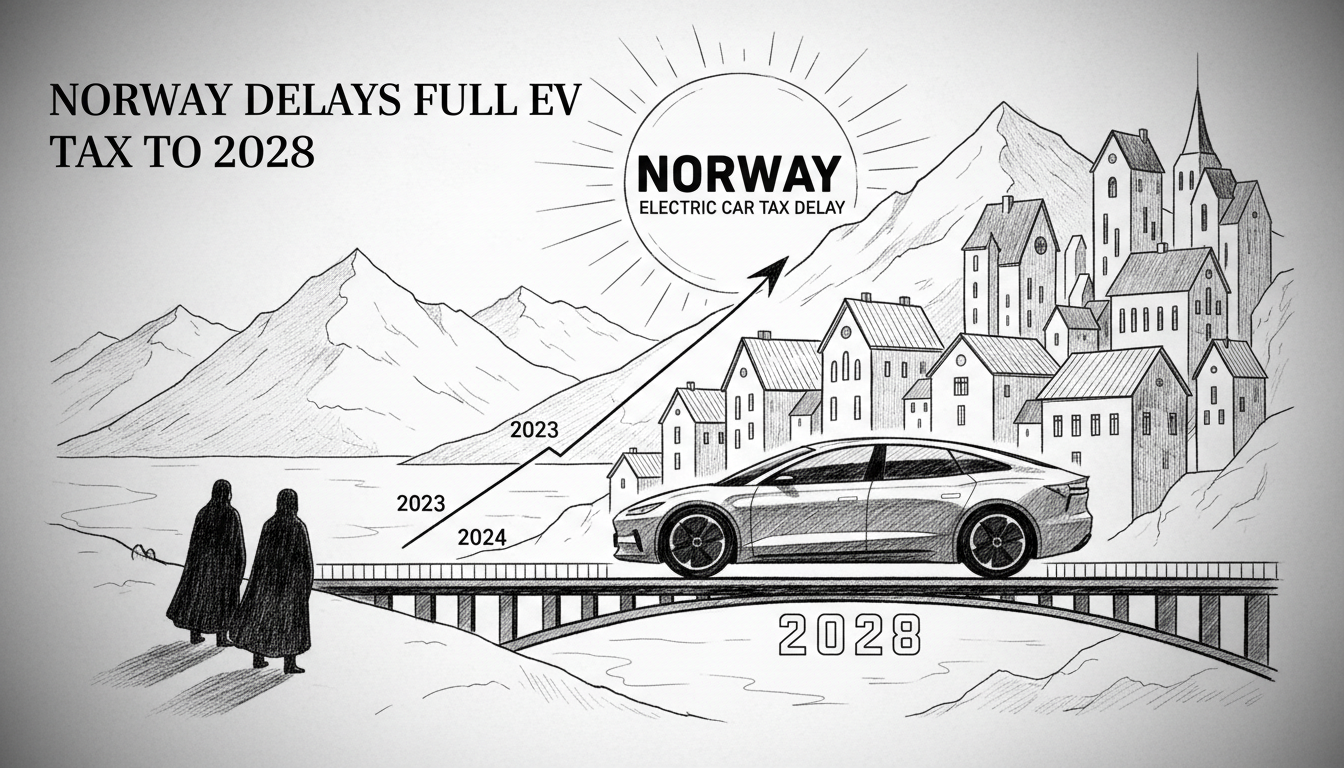
Norway's government has reached a budget agreement that postpones the introduction of full VAT on electric vehicles. The new plan phases in the tax more gradually than initially proposed. This decision directly impacts the Nordic technology and automotive sectors, which are central to Norway's digital transformation and green economy goals.
The agreement, reached by the governing coalition and supporting parties, sets a new VAT threshold for electric cars starting in the new year. Vehicles priced above 300,000 Norwegian kroner will be subject to VAT. This threshold will then be lowered to 150,000 kroner in 2027. Full VAT on all new electric cars will finally take effect from 2028.
This represents a significant shift from the original government proposal. That plan aimed to lower the tax-free limit from 500,000 kroner to 300,000 kroner in 2026. It then called for full VAT implementation in 2027. The negotiated compromise adds an extra year to the transition period.
The policy change has major implications for Norway's position as a Scandinavian tech hub. The country's electric vehicle market is the most advanced in the world. High adoption rates are driven by long-standing incentives. This new tax timeline provides a clearer runway for consumers and the automotive industry. It also offers stability for related Norwegian tech startups in battery technology, charging infrastructure, and smart mobility solutions based in Oslo and other innovation districts.
Many industry analysts saw the original 2027 deadline as aggressive. The extra year allows more time for price adjustments and market adaptation. It also aligns with broader Nordic technology trends focused on sustainable transport. The gradual phase-in aims to prevent a sudden drop in EV sales. Such a drop could hurt climate goals and the local tech economy.
The decision reflects classic Nordic political compromise. The government needed support from several smaller parties to pass its budget. These parties pushed for a slower tax introduction. They argued it was necessary to maintain strong EV adoption rates. The final deal shows how coalition politics can shape tech and environmental policy in the region.
For international observers, this highlights Norway's complex transition from heavy subsidies. The country is carefully balancing its green ambitions with fiscal responsibility. The move signals that the era of complete tax exemption for electric cars is ending. Yet the extended timeline shows a commitment to a managed transition. This approach aims to protect both consumer interest and the growing ecosystem of Oslo innovation news and tech development.
What does this mean for the average Norwegian buyer? Electric cars under 300,000 kroner remain VAT-free for now. This covers many popular models. The coming years will see manufacturers and importers adjusting their strategies. They may focus on bringing more mid-priced vehicles to market before the lower threshold hits. The policy provides a multi-year roadmap, reducing uncertainty for one of the world's most important EV markets.