
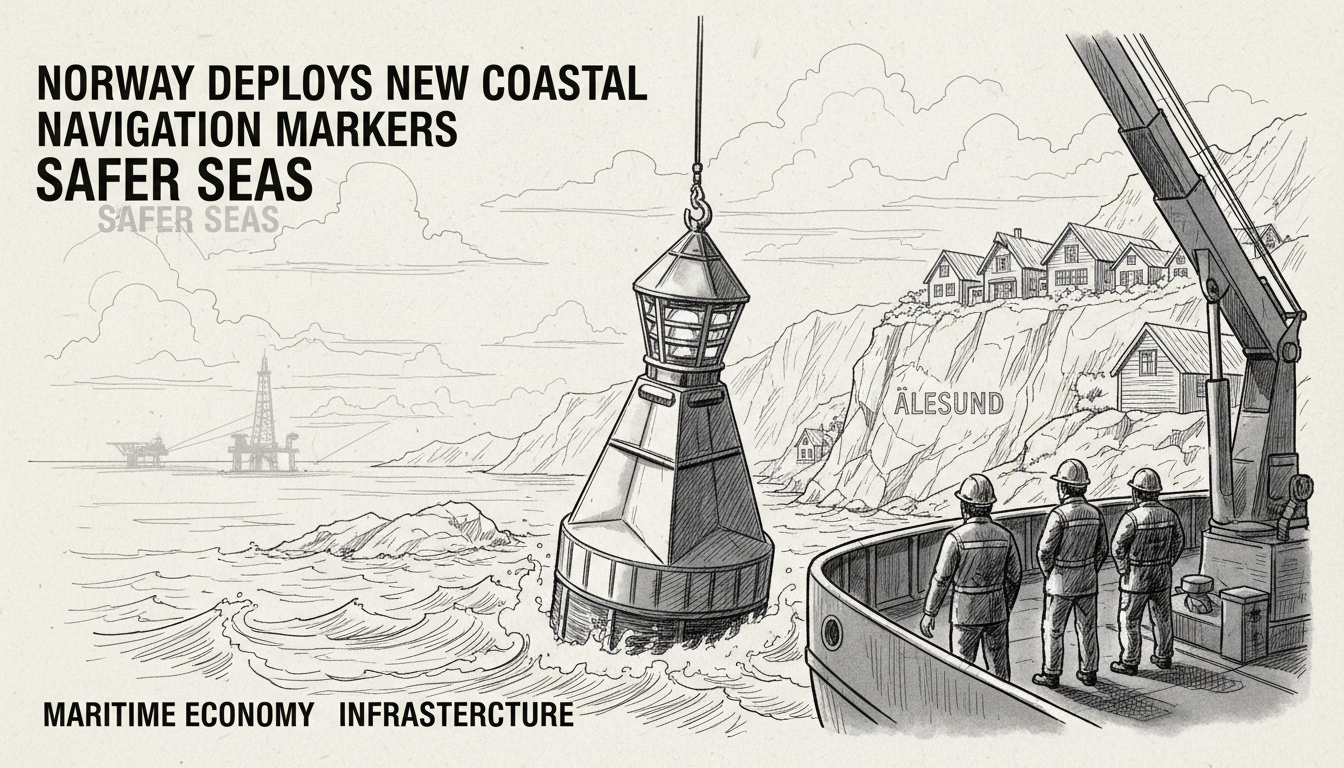
The Norwegian Coastal Administration has begun deploying a new generation of maritime navigation markers along the nation's intricate coastline. This initiative aims to enhance safety for the thousands of vessels that navigate Norway's waters, from the busy shipping lanes of the Oslofjord to the remote Arctic passages near Svalbard. The first markers are now operational outside the port city of Ålesund.
Roger Holgersen of the Coastal Administration said in a statement that the agency has already received positive feedback from boat operators on the new markers' performance. The markers were developed over several months to provide stronger light output, better weather resistance, and easier maintenance. This upgrade addresses the harsh marine environment that can quickly degrade older equipment.
This project carries significant implications for Norway's maritime-dependent economy. Safe and reliable coastal navigation is not just a matter of safety. It is a critical economic enabler. Norway's offshore oil and gas industry, a cornerstone of the national economy, relies on precise navigation to service installations in the North Sea, such as the Troll and Johan Sverdrup fields. The fishing industry and the growing coastal tourism sector also depend on these vital aids to navigation.
The deployment reflects a sustained commitment to maritime infrastructure, often overshadowed by larger energy debates in the Storting. While political discussions frequently center on oil licenses or wind farm concessions, maintaining this foundational network is a quiet, continuous priority. It is a practical example of the state's role in safeguarding both lives and economic activity. The work is funded through the national budget and is a core function of the Coastal Administration, an agency under the Ministry of Transport.
For international observers, this underscores a key aspect of Norwegian governance: high public investment in long-term infrastructure, even when it is not immediately visible. The Norwegian coastline stretches over 100,000 kilometers when including fjords and islands, making this a monumental task. The new markers must withstand extreme conditions, from North Atlantic storms to freezing Arctic winters, which explains the focus on durability.
The direct impact on the energy market is indirect but real. Any disruption to maritime logistics can delay supply ships serving offshore platforms, potentially affecting production schedules. By modernizing this network, Norway mitigates a small but tangible operational risk for its crucial oil and gas sector. Furthermore, as Arctic shipping routes see increased activity due to melting sea ice, reliable navigation aids in northern waters become even more strategically important for national security and sovereignty.
Looking ahead, the rollout will continue to other selected points along the coast. The feedback loop from users like ferry captains, fishermen, and commercial shippers will be crucial for future refinements. This is a straightforward but essential piece of public works. It demonstrates that effective governance sometimes means simply ensuring the lights on the coast stay on, guiding vessels safely through the long Nordic nights and unpredictable weather.