
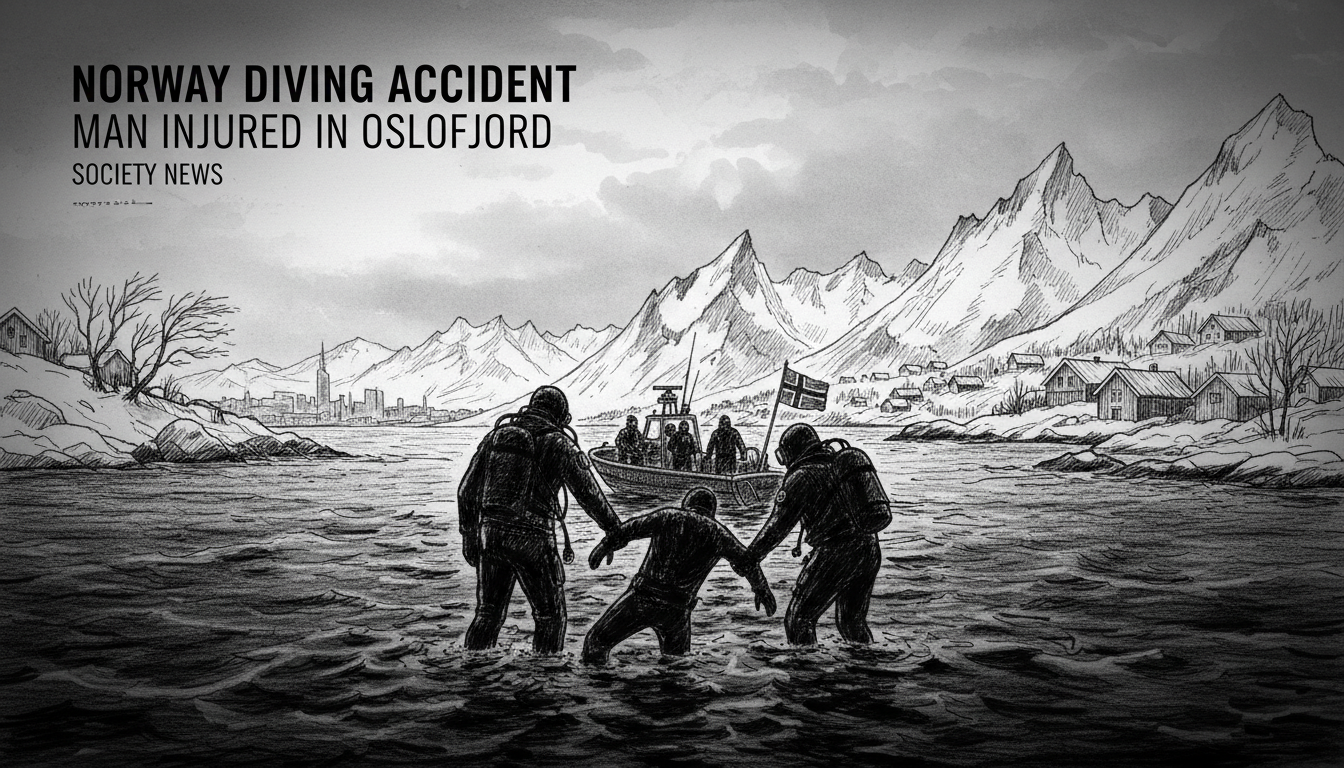
Norway diving accident in the Oslofjord has left a man in his late 50s seriously injured. The incident occurred during an organized club dive near the coastal town of Drøbak on Saturday afternoon. Police suspect a rapid ascent without proper decompression caused the emergency, which required air ambulance response.
Emergency services transported the injured diver by ambulance to Ullevål University Hospital in Oslo. His current condition remains undisclosed. Police have seized diving equipment for forensic examination and are interviewing fellow club members to reconstruct the event's precise circumstances.
A Routine Dive Turns Critical
The accident happened during what should have been a controlled recreational activity. Organized club dives typically involve thorough planning, buddy systems, and adherence to strict safety protocols. This structure makes the sudden nature of the incident particularly alarming for Norway's diving community.
Police stated their initial assessment points toward a decompression incident. "At present, it appears the diver came up to the surface too quickly without necessary decompression," police said in a statement. This failure to follow controlled ascent procedures can lead to decompression sickness, a potentially life-threatening condition.
The Silent Threat of 'The Bends'
Decompression sickness, commonly called 'the bends,' occurs when dissolved gases in the bloodstream form bubbles during a rapid reduction in surrounding pressure. Symptoms range from joint pain and rashes to paralysis, neurological damage, and death. Immediate medical treatment in a hyperbaric chamber is critical.
"The protocols for a safe ascent are not guidelines; they are physical laws written in human physiology," said Lars Hansen, a retired commercial diving supervisor and safety instructor based in Bergen. "Even in relatively shallow waters like the Oslofjord, which averages 100 meters deep, skipping decompression stops is gambling with nitrogen saturation. Your body becomes a sealed soda bottle shaken hard."
Hansen explained that recreational divers use dive tables or computers to calculate mandatory stops. These pauses allow inert gases absorbed under pressure to safely leave tissues. A panicked or uncontrolled ascent bypasses this biological necessity.
The Investigation and Safety Culture
Norwegian police have launched a standard procedure investigation for serious diving accidents. This process includes technical analysis of the diver's equipment, such as his buoyancy control device, regulator, and dive computer. The dive computer's log could provide crucial data on depth, time, and ascent rate.
Interviews with the dive buddy and other club members will establish the dive plan, the diver's experience level, and the group's actions during the emergency. The club's safety record and adherence to national diving federation standards will also come under review.
Norway has a strong culture of outdoor recreation safety, governed by organizations like the Norwegian Sub Aqua Club (Norges Dykkeforbund). The country's rugged coastline and cold waters demand rigorous training. Most organized clubs require certification from international agencies like PADI or CMAS, which teach emergency ascent procedures.
A Popular Yet Demanding Environment
The Oslofjord, stretching from the Skagerrak strait to the capital, is a common training ground. Its waters offer wrecks, marine life, and varied topography. However, conditions can be challenging with limited visibility, strong currents, and low temperatures even in summer, typically ranging from 4°C to 15°C.
Drøbak, located at the fjord's narrowest point, is a known diving spot. The area's history includes the 1940 sinking of the German cruiser Blücher, creating an artificial reef. Dives there often require careful planning due to depth and potential entanglement hazards.
This accident highlights the inherent risks of a sport that manages a hostile environment. Equipment failure, human error, or environmental factors can quickly escalate a leisure dive into a medical crisis. The presence of an organized club suggests established safety measures were likely in place, making the root cause of the rapid ascent a key question.
The Human Factor in Diving Emergencies
Experts consistently identify human factors as the primary contributor to diving incidents. "Technology is reliable; psychology is not," Hansen noted. "Panic is the diver's greatest enemy. A leaking mask, a disorienting cloud of silt, or simply losing sight of your buddy can trigger a primal flight response. Training aims to override that instinct with drilled procedures."
For a diver in his late 50s, underlying health conditions unknown to the diver or his buddies could also play a role. Medical fitness is a cornerstone of dive safety, with recommendations for regular check-ups for older divers. The investigation may review the diver's medical clearance.
The response chain worked effectively in this case. Fellow divers initiated first aid, emergency services were alerted, and the air ambulance helicopter was dispatched. The rapid transport to Ullevål Hospital, which houses advanced hyperbaric medicine facilities, gave the victim the best possible chance for recovery.
A Community on Alert
The incident sends a sobering reminder through Norway's diving circles. Club forums and social media groups were abuzz with the news, emphasizing the importance of pre-dive safety checks and maintaining calm during emergencies. Such accidents often prompt clubs to review their own protocols and encourage refresher courses.
Norwegian authorities do not publish comprehensive annual statistics on recreational diving accidents, but serious incidents are relatively rare given the activity's popularity. Each one, however, is treated with high priority due to the severe potential outcomes.
The investigation will take weeks. Police must determine if this was a tragic accident caused by a momentary error, an equipment malfunction, or a procedural failure. Their findings could influence safety advisories from the Norwegian Maritime Authority or diving federations.
For now, the diving community's thoughts are with the injured man and his family. The quiet waters of the Drøbak coast, a place of recreation and exploration, have shown their unforgiving nature. This event underscores a fundamental truth of diving in Norway's beautiful, cold waters: respect for the sea's power is the most essential piece of equipment any diver can possess.