
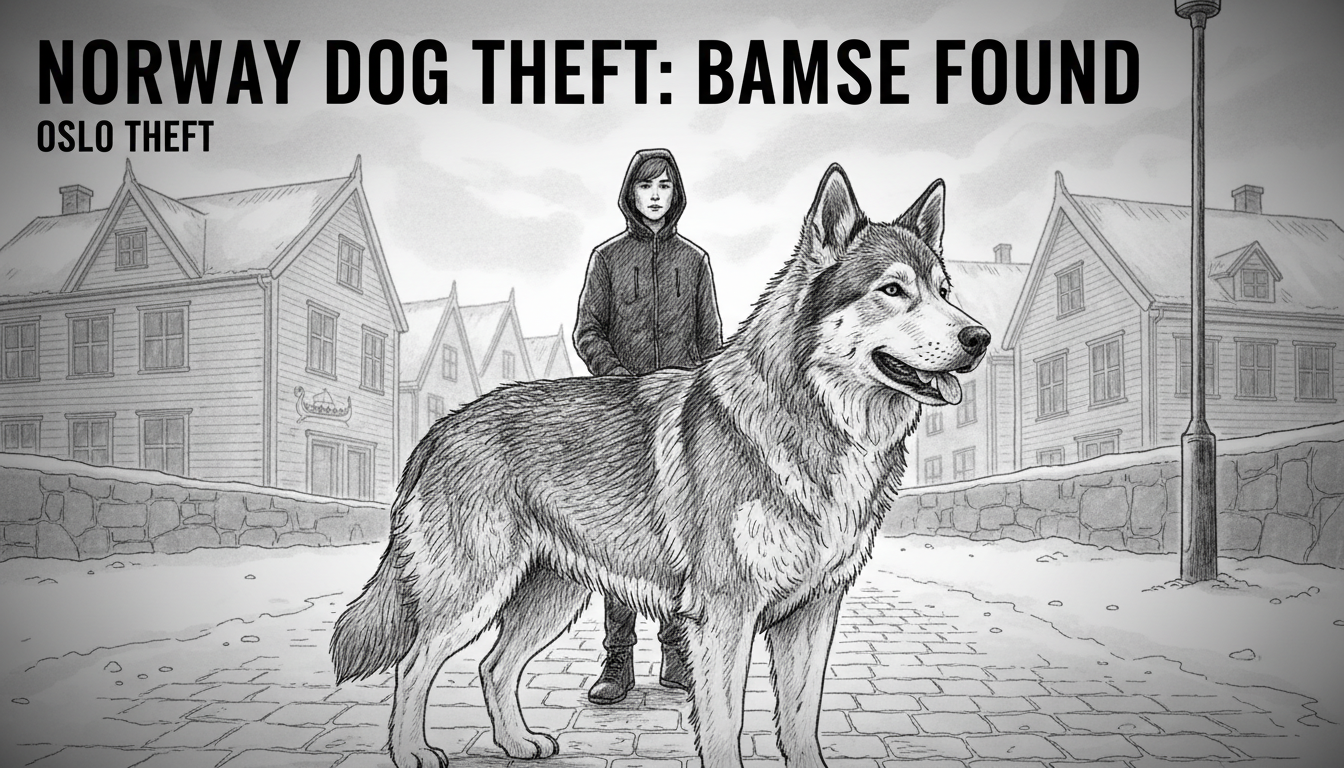
Norway pet theft cases often end in heartbreak, but a stolen 15-year-old dog named Bamse was found safe in Oslo's Old Town on Sunday. The mixed-breed dog was taken from his 82-year-old owner outside a Mega grocery store at Carl Berner on Saturday. Police located Bamse less than 24 hours later following a crucial tip from a witness. A woman has been taken into custody at the main police station in connection with the incident.
"The victim was robbed of his black and white dog outside Mega at Carl Berner. It is a cross between a Border Collie and a Flatcoat Retriever. The dog's name is Bamse and is 15 years old," police operations manager Rune Hekkelstrand wrote in the police log on Saturday evening. The quick resolution of this case highlights the effectiveness of community vigilance in a city where police resources are carefully allocated.
An Elderly Owner's Agonizing Search
The bond between an elderly person and a long-time pet is profound, making this theft particularly cruel. For over 15 years, Bamse had been a constant companion to his 82-year-old owner. The theft outside a routine shopping trip at Mega shattered that daily rhythm. Police confirmed that both the owner and officers searched extensively on Saturday night without success. The emotional toll on the elderly owner during those hours is significant, underscoring why pet theft is viewed as a deeply personal crime beyond the monetary value of the animal.
Animal welfare experts note that older dogs are rarely stolen for resale value. Their advanced age and potential health issues make them unlikely targets for profit-driven theft. This suggests different, possibly more impulsive or emotionally motivated circumstances behind the incident. The theft of a senior pet from a senior citizen strikes a chord with the Norwegian public, reinforcing values of care and respect for the elderly.
The Role of Public Vigilance in Urban Crime
Oslo police credited a witness tip for the successful recovery of Bamse in the Gamlebyen district. This sequence demonstrates a critical dynamic in urban policing. While serious violent crimes and organized crime receive priority resources, police depend on public cooperation to resolve community-level incidents. The witness who came forward provided the essential link that allowed officers to locate the dog at a specific address.
Norway has a generally low rate of pet theft compared to some European countries, but isolated incidents generate substantial media attention and public concern. The strong cultural emphasis on family and companionship extends to pets, which are often considered full-fledged family members. The swift police response and public engagement in this case reflect those societal values. The woman taken into custody for questioning will face investigation under Norwegian laws regarding theft.
Microchipping and Pet Security in Norway
While Bamse was recovered quickly, the incident serves as a reminder for pet owners across Norway. The Norwegian Food Safety Authority and animal welfare organizations consistently advocate for microchipping as the most reliable form of permanent identification. A microchip, registered with the national database, is a simple procedure that can decisively link a recovered animal to its legal owner, especially in cases of dispute or if a stolen pet is transported far from home.
For an older dog like Bamse, a microchip provides an extra layer of security. Age can sometimes bring confusion or hearing loss, making even previously reliable pets more vulnerable to becoming lost or being led away. Experts recommend microchipping as a baseline, coupled with situational awareness from owners. Leaving a dog tied outside a store, even briefly, carries inherent risk in any urban environment. Oslo is a safe city, but opportunistic crimes can occur in any major population center.
The Emotional Economics of Pet Theft
Analyzing this case requires looking beyond simple crime statistics. The theft of a pet is an emotional violation that disrupts a household's emotional stability. For an 82-year-old, the potential loss of a 15-year companion represents a devastating blow to daily routine and emotional well-being. The psychological impact of such a theft can be severe, generating anxiety and a feeling of insecurity that extends far beyond the immediate crime.
This is why the community response matters. The public outcry and shared concern on social media and local networks create pressure for a resolution. It also provides emotional support to the victim, showing they are not alone. The happy ending in this case—a reunited owner and pet—will be celebrated, but it also fuels discussion about preventing future incidents. It raises questions about support systems for elderly pet owners and community watchfulness.
A Reflection of Societal Values
The Bamse case, from theft to recovery, acts as a small but revealing mirror of Norwegian society. It shows a functioning relationship between police and the public, where tips are given and acted upon. It demonstrates community empathy for both an elderly man and an aging animal. The crime itself is an aberration, a violation of the expected trust and safety within the community.
Norway's deep-rooted principle of dugnad—communal voluntary work—was indirectly at play here. The witness who provided the tip performed a modern, civic version of dugnad, contributing to the common good by helping a neighbor in distress. The police, by dedicating resources to find a stolen dog despite many competing priorities, upheld a value system where compassion and property rights are intertwined. The case, while minor in the grand scope of law enforcement, reaffirms a social contract where vulnerability is protected.
Looking Ahead: Prevention and Awareness
The reunion between Bamse and his owner is the conclusion Oslo hoped for. However, the incident leaves behind important questions for other pet owners. How can they better safeguard their animals? Should there be more public awareness campaigns targeting the security of pets, especially those belonging to vulnerable groups like the elderly? While legislation around pet theft penalties exists, prevention remains the most effective tool.
Animal organizations will likely use this attention to reiterate their standard advice: microchip, spay/neuter, use secure leashes and harnesses, and avoid leaving pets unattended in public spaces. For the public, the lesson is to remain observant and report suspicious activity, as the witness in Gamlebyen did. A single tip can rectify a wrong and restore a family. As Bamse settles back into his home, the broader community is reminded that safety is a shared responsibility, extending even to its oldest and most loyal members.