
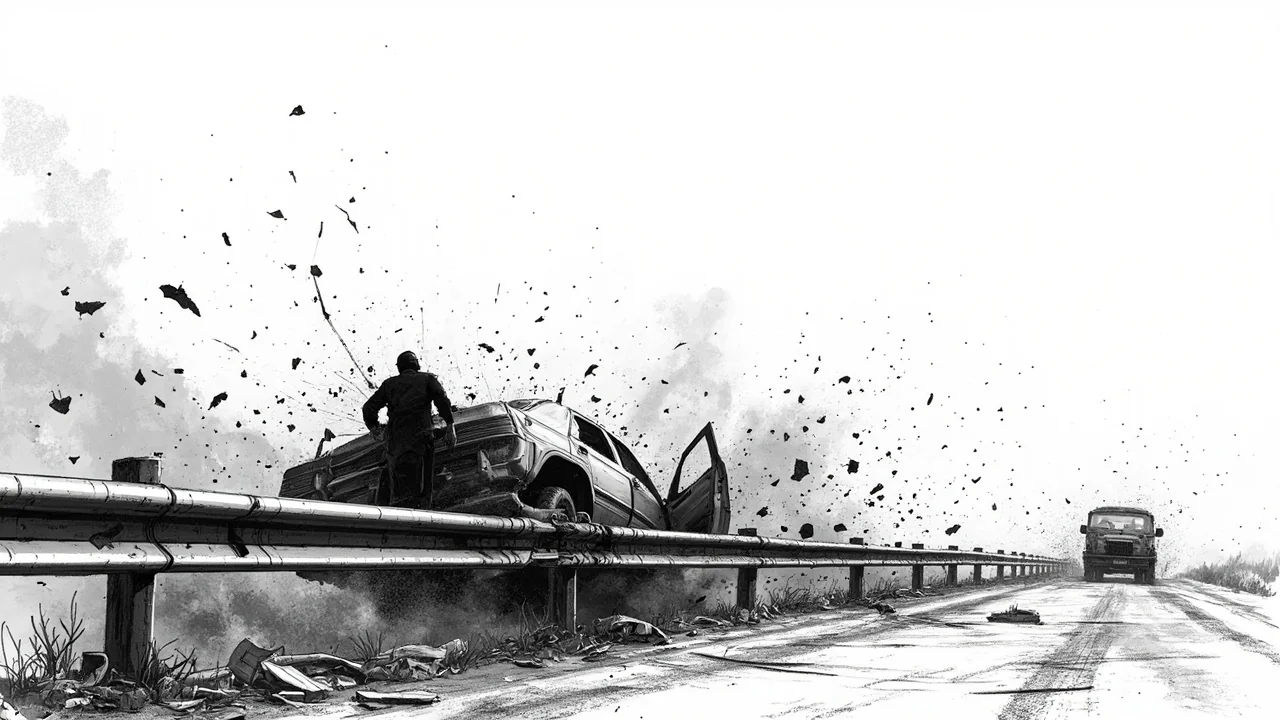
Norway police have identified the driver responsible for destroying approximately 100 meters of roadside guardrail on a major county road. The incident occurred Sunday morning on County Road 27 in Ringebu, Innlandet county. Police initially appealed for public tips, suspecting a tractor or similar vehicle was involved. The case is now considered solved after a family member of the driver contacted authorities.
"We first received tips from other motorists. Shortly after, a family member called us," said Innlandet Police District operations manager Frode Øvreås. The family member explained the driver panicked after the collision and left the scene. Øvreås praised the relative for coming forward. "It is significant damage and potentially high costs," he noted. The matter has been transferred to the Norwegian Public Roads Administration and the contractor involved, with local police following up.
A Costly Case of Roadside Destruction
Guardrails, known in Norwegian as 'autovern', are critical safety infrastructure on Norway's often challenging road network. They are designed to prevent vehicles from leaving the roadway, particularly on curves or near steep drops—a common feature in mountainous regions like Ringebu. The destruction of 100 meters represents a substantial breach. Replacing this length is not a simple repair; it involves assessing foundation posts, sourcing materials, and deploying specialized road crews, leading to significant public expense.
While the specific model of vehicle was not disclosed, police suspicion initially fell on an 'entreprenørkjøretøy'—a contractor vehicle like a tractor, excavator, or truck. These heavy machines, if operated with a raised bucket or extended arm, can easily snag and unravel steel guardrails. The incident highlights a persistent issue in Norway: the conflict between mobile construction equipment and fixed infrastructure on narrow roads. The financial liability ultimately falls to the driver or their employer's insurance, but taxpayer funds often cover initial response and temporary safety measures.
The Psychology of Flight and Responsibility
The driver's decision to flee, followed by the family member's decision to call, presents a stark contrast in responses to a traffic accident. Panic is a common, if not legally defensible, reaction. "In the immediate aftermath of an accident, especially one causing obvious major damage, fear can override rational procedure," says Dr. Anette Høye, a psychologist specializing in traffic behavior at the Institute of Transport Economics in Oslo. "The fear of consequences, of a massive bill, or of professional repercussions can trigger a flight response, even in otherwise law-abiding people."
However, Norwegian law is clear. Leaving the scene of an accident involving damage to property is a violation of the Road Traffic Act. The penalty can be a substantial fine and, in severe cases, imprisonment. The family member's intervention likely mitigated the legal situation for the driver. By contacting police, they transformed the event from a hit-and-run investigation into a reported accident, albeit with a delay. Øvreås's public praise for the relative underscores this: cooperation is viewed favorably by authorities and the courts.
Infrastructure Vulnerabilities on Local Roads
County Road 27 (Fylkesvei 27) is not a minor track; it is a designated county highway. This incident exposes the vulnerability of essential safety hardware. Guardrails are tested for vehicle impacts, not for being scraped and torn by slow-moving heavy machinery. For local residents, such damage creates a prolonged hazard. Until repairs are complete, that 100-meter section lacks its protective barrier, potentially for weeks depending on contractor availability and weather.
This creates a secondary burden for the Norwegian Public Roads Administration (Statens vegvesen). Their regional offices must quickly assess risk, possibly install temporary barriers or signage, and manage the procurement process for permanent repair. In a nation where infrastructure maintenance budgets are carefully scrutinized, unplanned incidents like this strain resources allocated for planned upgrades and wear-and-tear. The final cost will be tallied in labor, materials, and administrative hours.
A Resolution Without Court Drama
The police decision to deem the case 'oppklart' (solved) and pass it to the Vegtrafikksentralen (Road Traffic Center) and contractor suggests a path toward an administrative and insurance-led resolution, rather than a criminal prosecution. This is typical for property-damage-only incidents where the responsible party is identified and cooperates. The Road Traffic Center will handle the civil claim for damages against the driver's insurance.
This pragmatic approach is standard in Norway's traffic incident management. It focuses on restitution and repair rather than punishment, provided no injury occurred and there is no pattern of negligence. The local police follow-up will likely ensure all procedural boxes are checked. The outcome serves as a reminder: the system expects responsibility, but it also allows for human error provided it is ultimately acknowledged. The alternative—a prolonged police search, public appeals, and potential charges for leaving the scene—was avoided by one phone call.
The Broader Lesson for Norway's Roads
This event, while localized, reflects a national conversation about shared responsibility for infrastructure. Norway invests billions in its roads, tunnels, and bridges to combat a harsh climate and difficult terrain. Every citizen benefits from this network, and every citizen has a duty to use it carefully. Operators of large vehicles bear a heightened responsibility due to the potential scale of damage they can inflict.
The Ringebu incident ended with a resolution. The guardrail will be replaced. Bills will be paid. But it leaves a question for all road users: when you cause damage, do you stay or flee? The system works most efficiently, and most fairly, when individuals choose to face their mistakes. In this case, a family member helped make that choice for a panicked driver, preventing a minor disaster from becoming a major legal ordeal. The true cost, beyond kroner and øre, is the erosion of trust when public property is damaged and abandoned. This time, that cost was partially reclaimed.