
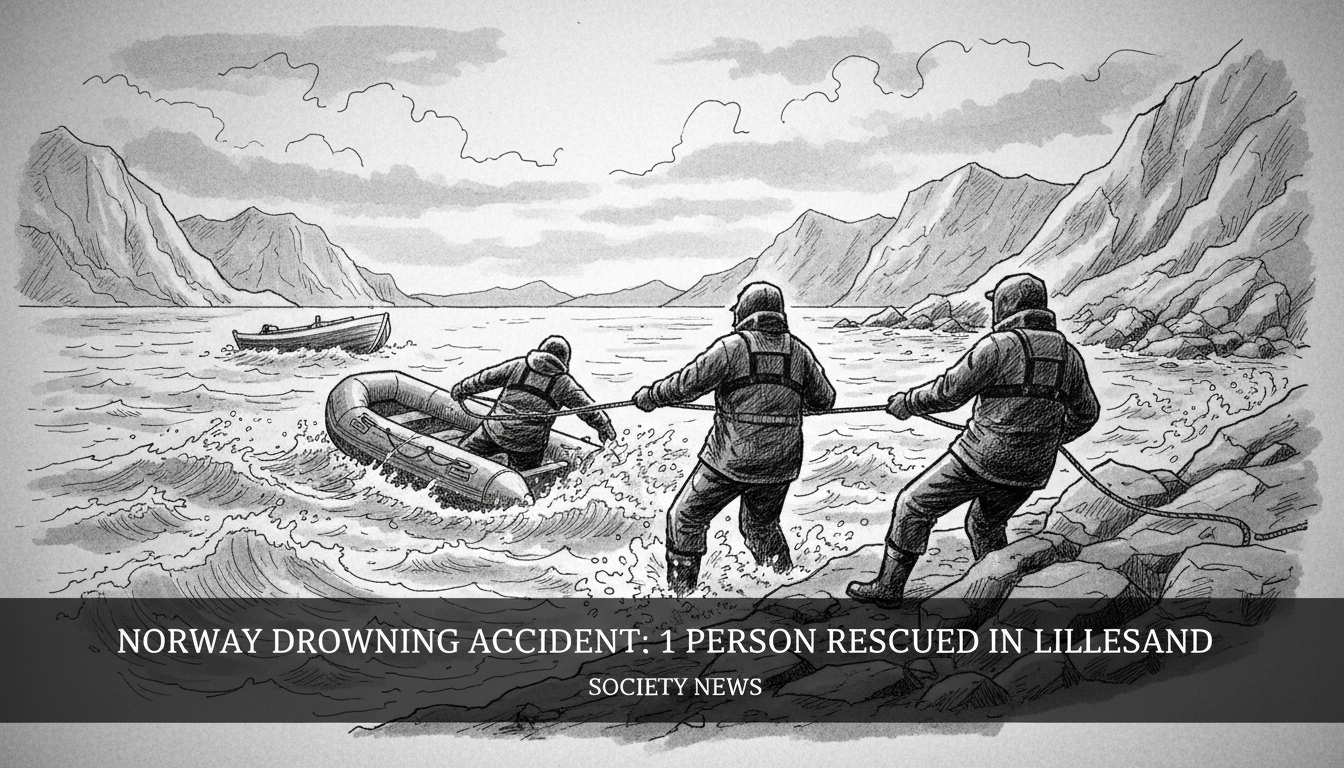
Norway drowning accidents bring emergency services to the scenic coast of Lillesand, where one adult person was pulled from the water and given life-saving CPR on Friday evening. Police in the Agder region received an alert from the Emergency Medical Communication Center (AMK) just after 5:30 PM, reporting that a person had been retrieved from a body of water and that cardiopulmonary resuscitation was in progress. Both AMK and police were dispatched to the scene. The operations leader would not disclose the patient's gender, confirming only that it was an adult and that next of kin had not yet been notified. The incident underscores the ever-present dangers associated with Norway's extensive coastline and inland waterways, even outside the peak summer season.
Emergency Response at the Water's Edge
The immediate response highlights a critical chain of survival for drowning victims. Bystander intervention with effective CPR before professional help arrives dramatically increases chances of survival. In this Lillesand case, the report to authorities specifically noted that heart and lung resuscitation was underway, indicating that someone at the scene initiated vital aid. The Agder police district, responsible for the southern coast, coordinates such responses with the national AMK system, which manages all acute medical calls. The specific location within the Lillesand municipality, known for its archipelago and boating culture, was not disclosed by officials. The focus remains on the patient's condition and supporting the family, per standard Norwegian protocol in acute medical emergencies.
A National Concern Beyond the Summer
While many associate drowning risk with warm summer holidays, accidents occur year-round. Norwegians engage in cold-water swimming, ice fishing, and coastal activities in all seasons, often underestimating the risks posed by cold water shock and fatigue. The Norwegian Life Saving Society (Norges Livredningsselskap) consistently tracks drowning fatalities to inform prevention campaigns. Their data shows that drowning is a leading cause of accidental death for young children in Norway. For adults, risk factors often include alcohol consumption, not wearing a life jacket, and venturing out alone. The Lillesand area, with its mix of open sea and sheltered sounds, requires specific local knowledge about currents and water temperatures that can challenge even experienced swimmers and boaters.
The Critical Minutes: Why CPR Matters
Medical experts stress that the actions taken in the first few minutes after a drowning incident are paramount. "When someone is pulled from the water unresponsive, immediate and quality CPR is the single most important factor for survival," says a veteran instructor with the Norwegian First Aid Council. "It manually sustains oxygen flow to the brain and heart until advanced medical care can take over." Drowning typically leads to cardiac arrest due to lack of oxygen, making prompt chest compressions and rescue breaths essential. This incident in Lillesand, where CPR was reported immediately, follows this optimal response pattern. National health authorities have pushed for widespread CPR training among the public, a initiative that has likely contributed to more bystanders feeling equipped to act in crises like this one.
Policy and Prevention on the Norwegian Coast
This event will likely resonate with local safety committees in coastal municipalities. Prevention strategies in Norway focus on education, regulation, and infrastructure. This includes promoting the use of life jackets, which are legally required for certain activities and age groups, and installing public rescue equipment like lifebuoys along popular waterfronts. The Norwegian Maritime Authority also runs safety campaigns for boaters. However, enforcement and awareness remain challenges. Local governments bear much responsibility for assessing risks at popular swimming spots, but funding for lifeguard services is not universal. Many communities rely on volunteer organizations and public signage to warn of dangers like unexpected drop-offs or strong currents, common in fjord and coastal areas.
A Community Waits for News
The human impact of such an incident radiates through a small community. Lillesand, with a population of just over 10,000, is the kind of place where news travels quickly. The police's caution in notifying next of kin before releasing details is a standard but deeply human protocol, prioritizing the family's right to private information during a traumatic time. It leaves the community in a state of anxious waiting, hoping for positive news about a neighbor or visitor. This collective concern often follows such emergencies in close-knit Norwegian towns, where the identity of the individual, once revealed, connects to many. The incident serves as a sobering reminder to all residents enjoying the region's natural beauty.
Norway's relationship with its vast water resources is fundamental to its culture and recreation, yet this tragedy in Agder highlights the fragile line between leisure and peril. As authorities investigate the precise circumstances, the broader conversation must continue: Are current safety measures and public awareness sufficient to prevent the next call to AMK? The effectiveness of the response in Lillesand shows preparedness, but the ultimate goal remains ensuring no such emergency call is ever needed.