
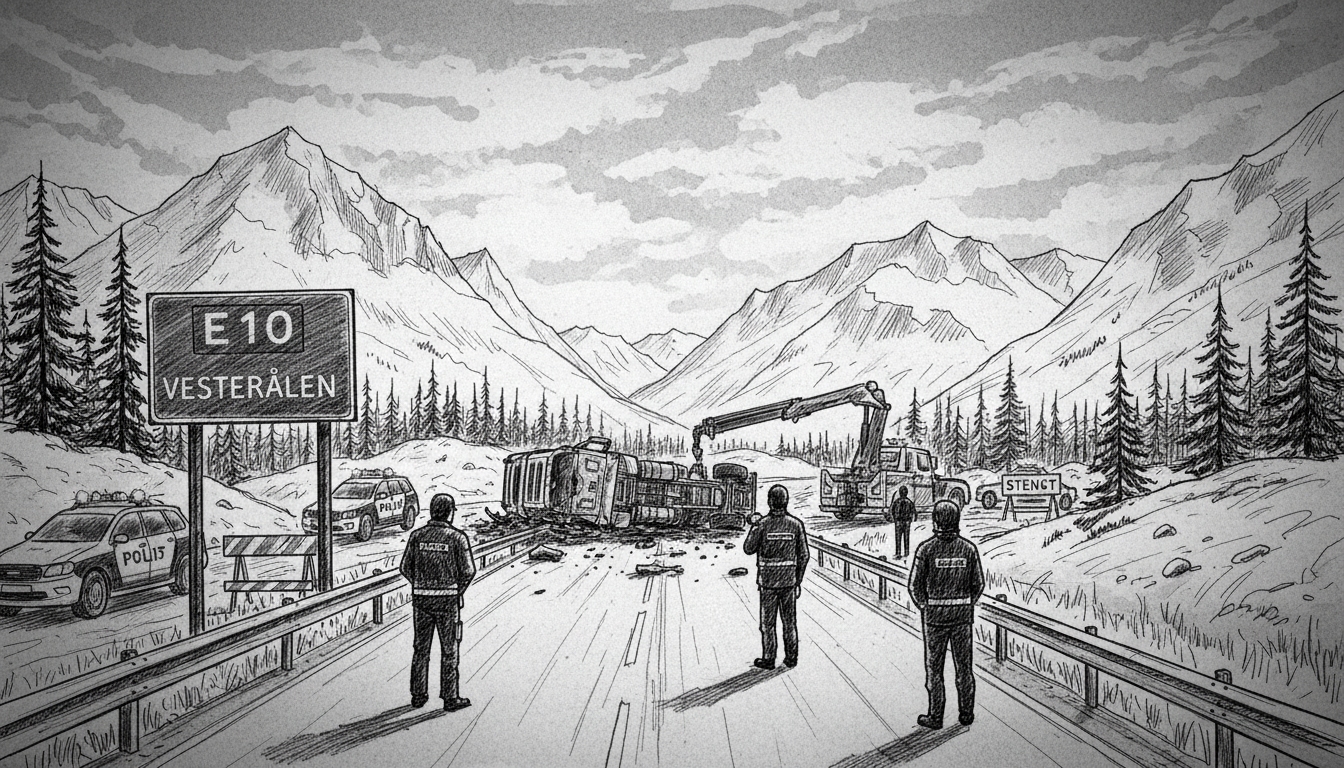
Norway's E10 highway in Vesterålen is closed following a serious traffic accident in Hadsel municipality. Police responded to reports of a crash involving one car with three people inside. The incident occurred in an 80 km/h zone on this critical northern artery. No serious injuries have been reported, according to operational leader May Wenche Hansen. This closure compounds regional travel disruption, coming hours after the main E6 highway was shut in Sørfold, over 200 kilometers to the south, due to a separate afternoon collision.
A Critical Artery Severed
The E10 is far more than a local road. Designated one of Norway's 18 National Tourist Routes, it is the essential land link for the Vesterålen and Lofoten archipelagos. This highway connects these remote, dramatic islands to the mainland, supporting everything from daily commutes and grocery deliveries to the vital seasonal flow of tourists. A closure here creates immediate logistical headaches. Local ferries experience increased demand, supply chains for businesses are interrupted, and travel plans for residents and visitors alike are thrown into disarray. The simultaneous closure of the E6, Norway's primary north-south corridor, exacerbates the situation, effectively pinching major transport routes in Nordland county.
Police have not released details on the cause of the Hadsel crash. Investigations at the scene will focus on driver behavior, vehicle condition, and the specific road conditions on that stretch of the E10. Northern Norwegian roads present unique challenges. Weather can change rapidly, with rain, fog, and strong winds common even in summer. The terrain is often rugged, with winding stretches and limited visibility. Adherence to posted speed limits, like the 80 km/h zone where this crash occurred, is frequently emphasized by traffic safety authorities as a fundamental defensive measure.
The Human and Economic Toll of Northern Road Closures
For the approximately 240,000 residents of Nordland county, road closures carry a significant personal and economic weight. Distances are vast, and alternatives are few. A closed highway can mean a several-hour detour or an unplanned overnight stay. "When the E10 or E6 closes, the entire region feels it," says Lars Bjørnstad, a transport analyst based in Bodø. "It's not just an inconvenience. It disrupts commerce, delays critical services, and isolates communities. For the tourism industry, which these regions depend on, it can mean lost bookings and a damaged reputation if access seems unreliable."
While this accident appears to have avoided the worst outcome—serious injury or loss of life—it serves as a stark reminder of road safety realities. In 2023, 107 people died on Norwegian roads. Each accident triggers a costly chain reaction of emergency response, investigation, repair, and economic disruption. The psychological impact on those involved, including first responders, is another layer of cost often overlooked in simple incident reports.
Infrastructure Under Scrutiny
Recurring accidents and closures on key northern highways like the E10 and E6 inevitably lead to questions about infrastructure investment and maintenance. Are these roads, some built to older standards, adequate for current traffic volumes and modern vehicles? The Norwegian Public Roads Administration (Statens vegvesen) continuously works on improvement projects, but the scale of the geography makes it a perpetual challenge. Upgrading mountain passes, straightening dangerous curves, and adding safety barriers are expensive and complex endeavors in remote locations with short construction seasons.
Experts point to a multi-faceted approach to improving safety. "Engineering better roads is one pillar," explains traffic safety researcher Ingrid Sund. "But we must also look at enforcement, education, and vehicle technology. Consistent speed compliance, avoiding driver distraction, and ensuring vehicles are equipped with the latest stability and braking systems are all critical, especially on demanding routes." She notes that Norway's vision zero policy, which aims to eliminate all traffic fatalities and serious injuries, requires persistent effort on all these fronts.
A Region Defined by its Roads
The situation in Hadsel underscores a fundamental truth about Northern Norway: its communities are defined by their connections. The E10 is the thread that ties Vesterålen to the rest of the country. Its closure severs that connection, turning islands back into islands. The swift response from emergency services highlights the preparedness for such events, but the disruption is felt across the region. Local businesses wait for news on reopening. Families adjust travel plans. Truck drivers calculate new routes and delays.
As police complete their on-scene investigation and clear the wreckage, the focus will shift to restoring flow. The duration of the closure depends on the severity of the crash and any damage to infrastructure. Meanwhile, the earlier E6 closure in Sørfold serves as a separate reminder of the fragility of northern transportation networks. Two unrelated incidents, hundreds of kilometers apart, can collectively strain the entire system.
Looking Beyond the Incident
This accident on the E10, while thankfully not resulting in grave injury, is a microcosm of larger issues facing Norway's remote regions. It touches on themes of safety, infrastructure resilience, economic vulnerability, and geographic isolation. As summer approaches and tourist traffic swells, the reliability of these scenic but vital highways becomes paramount. The incident will likely renew local political calls for accelerated road safety investments and perhaps a closer look at real-time traffic management and communication strategies during closures.
For now, residents and travelers are urged to check official road authority websites for the latest information on both the E10 in Hadsel and the E6 in Sørfold. The message from authorities remains consistent: drive according to conditions, respect speed limits, and be prepared for the unique challenges of Norwegian roads. The breathtaking beauty of Vesterålen, with its mountains meeting the sea, is matched by the demanding nature of the roads that weave through it. Today's closure is a pause in that journey, a moment that highlights both the strength and the vulnerability of life in Norway's magnificent north.