
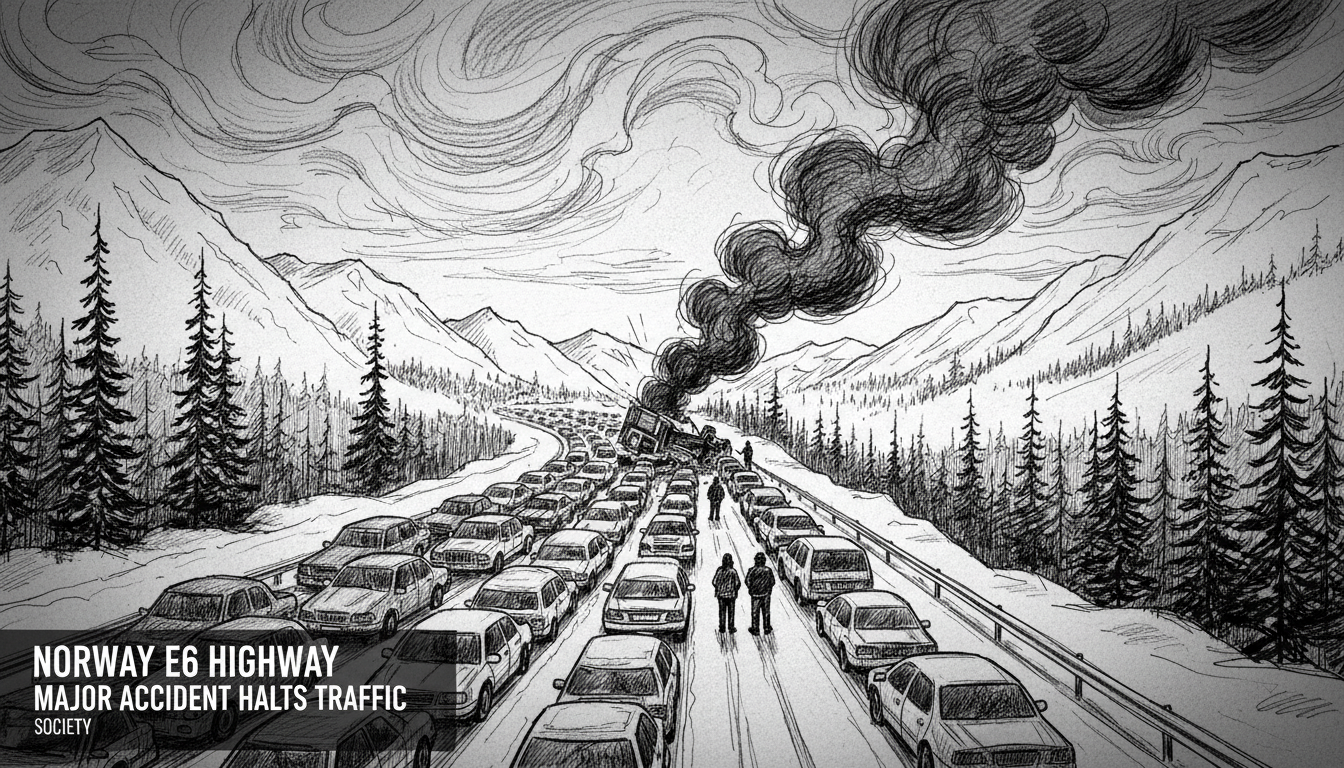
Norway's E6 highway faced a complete traffic standstill Thursday afternoon following a serious accident. Police were notified of the incident at 14:17, with emergency services rushing to the scene. The major north-south artery, critical for national transport and logistics, was brought to a halt, underscoring the vulnerability of Norway's key infrastructure to single disruptive events.
Operational manager Frode Øverås in the police log confirmed the traffic stoppage. The Road Traffic Center was immediately alerted. The exact location and severity of the collision were not initially disclosed, but a full stop on the E6 signals a significant incident requiring major emergency response. Such disruptions create immediate ripple effects across southern Norway.
The Economic Artery Paralyzed
The E6 is not just another road. It functions as Norway's primary national transport corridor, running from the Swedish border in the south to Kirkenes near the Russian border in the far north. The southern sections, particularly around major hubs like Oslo, handle immense daily traffic volumes of commuters and freight. A prolonged closure forces trucks onto lengthy detours on smaller, slower roads, delaying deliveries and increasing costs.
Logistics companies face immediate operational headaches. "Every hour a major route like the E6 is closed has a direct cost on the economy," explains a transport analyst familiar with Norwegian supply chains. "Fresh goods, industrial components, and postal services all get delayed. The knock-on effects can last for days even after the road reopens." The accident serves as a stark reminder of the concentrated risk posed by heavy reliance on single-route corridors.
Emergency Response in Focus
The response to accidents on high-speed highways like the E6 is a meticulously planned operation. Police, ambulance services, and fire brigades coordinate their approach, often requiring air ambulance support for the most critical patients. The goal is rapid medical intervention, followed by thorough scene investigation to determine cause. This process itself can extend closure times.
Road traffic centers play a crucial role in managing the fallout. Once notified, they activate electronic signs miles in advance to warn motorists, redirecting traffic via alternative routes like the E16 or RV4 where possible. However, for many stretches of the E6, especially through mountainous terrain or along fjords, few viable alternatives exist. This geographic reality magnifies the impact of any incident.
A Recurring Challenge for Norwegian Roads
While Norway boasts impressive safety standards, accidents on its major highways remain a persistent concern. The E6, with its mix of high-speed stretches, challenging weather, and heavy commercial traffic, is a focal point. Factors like sudden weather changes in mountain passes, driver fatigue on long journeys, and variable road conditions contribute to risk.
"The engineering on these roads is excellent, but human factors and environment are constant challenges," says a road safety researcher at the Institute of Transport Economics. "We see campaigns targeting speed and fatigue, especially for professional drivers. But the physics remain: when accidents happen at highway speeds, the consequences are often severe." Investment in additional safety barriers, improved lighting, and avalanche protection on sections like the Gudbrandsdalen valley are ongoing.
The Human Cost Beyond the Jam
Behind the traffic reports and economic calculations lies the human tragedy of serious collisions. For those directly involved, a routine journey transforms into a life-altering event. Extended closure times often indicate efforts by emergency services to extract individuals with care, a process that takes precedence over traffic flow.
These incidents also strain local emergency resources. Hospitals in regions like Hedmark, Trøndelag, and Østfold must be prepared to receive multiple casualties, activating trauma teams. The psychological impact on first responders who handle severe accidents is also a recognized issue within Norwegian emergency services, leading to increased focus on post-incident support.
Infrastructure Resilience Under Scrutiny
This latest stoppage prompts questions about the resilience of Norway's transport network. The government's National Transport Plan repeatedly highlights reducing accident numbers and improving road standard as key goals. Yet, with geography limiting the development of parallel motorways, the E6 will remain the indispensable backbone.
Some transport policy experts argue for greater investment in rail freight as a complementary system to relieve pressure on the road network. "A single accident shouldn't be able to sever a national corridor," one policy analyst notes. "We need to think in terms of a network with redundancy. For freight, that means making rail a more competitive alternative for north-south transport." Current projects like the Follo Line and upgrades to the Dovre Line aim to improve rail capacity.
Looking Ahead: Safety Versus Mobility
The temporary red line on the traffic map will eventually clear. Tow trucks will remove damaged vehicles, cleanup crews will sweep debris, and police will complete their initial measurements. Traffic will resume its flow, but the questions raised by the stoppage linger.
Can engineering and enforcement further reduce the frequency of such serious accidents? How does Norway balance the need for efficient mobility with the inherent risks of high-speed travel through demanding landscapes? Each major incident renews this debate among policymakers, safety advocates, and the transport industry.
The E6 will continue to be Norway's main street. Its function is too vital to the nation's economy and connectivity. Yet, as Thursday's standstill proves, its smooth operation remains a fragile condition, dependent on the vigilance of every driver navigating its long, demanding route. The journey toward zero serious accidents continues, marked by painful interruptions along the way.